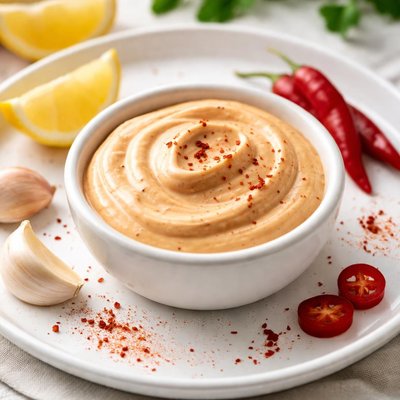
1 serving (15 grams) contains 90 calories, 0.0 grams of protein, 10.0 grams of fat, and 1.0 grams of carbohydrates.

Smart Nutrition Tracking with SnapCalorie

Nutrition Information
Calories |
1419.5 | ||
|---|---|---|---|
% Daily Value* |
|||
| Total Fat | 157.7 g | 202% | |
| Saturated Fat | 23.7 g | 118% | |
| Polyunsaturated Fat | 0 g | ||
| Cholesterol | 78.9 mg | 26% | |
| Sodium | 1419.5 mg | 61% | |
| Total Carbohydrates | 15.8 g | 5% | |
| Dietary Fiber | 0 g | 0% | |
| Sugars | 0 g | ||
| protein | 0 g | 0% | |
| Vitamin D | 0 mcg | 0% | |
| Calcium | 0 mg | 0% | |
| Iron | 0 mg | 0% | |
| Potassium | 0 mg | 0% | |
* Percent Daily Values are based on a 2,000 calorie diet. Your daily values may be higher or lower depending on your calorie needs.
Food Attributes
Source of Calories
About Spicy mayo
Spicy mayo is a condiment made by combining mayonnaise, usually made from egg yolks, oil, and acid (like vinegar or lemon juice), with chili-based ingredients such as Sriracha or chili paste to add heat. It originates from fusion cuisines, particularly Japanese and American, where it is commonly used as a topping for sushi, sandwiches, or to enhance the flavor of various dishes. Nutritionally, spicy mayo is high in fat, primarily unsaturated fats from the oil base, and provides small amounts of vitamin E and K found in traditional mayonnaise. The chili component adds capsaicin, a compound known for its spicy flavor and potential metabolic effects. However, it is energy-dense and should be consumed in moderation as part of a balanced diet.
Health Benefits
- Capsaicin in chili peppers may support metabolism and promote fat oxidation.
- Egg yolks in mayonnaise provide choline, a nutrient important for brain health and liver function.
- Unsaturated fats in the oil base can support heart health when consumed in moderation, according to research on fatty acid profiles.
Dietary Considerations
Selection and Storage
Store spicy mayo in an airtight container in the refrigerator at 40°F (4°C) or below. Consume within 5–7 days if homemade, and check expiration dates for store-bought varieties.
Common Questions About Spicy mayo Nutrition
Is spicy mayo high in protein?
Spicy mayo is not high in protein, as it primarily consists of mayonnaise and chili sauces. One tablespoon typically provides less than 1 gram of protein, making it an unsuitable choice if you're seeking a protein-rich condiment.
Can I eat spicy mayo on a keto diet?
Yes, spicy mayo can fit into a keto diet as it is generally low in carbs, with approximately 0-1 grams of carbohydrates per tablespoon. However, be mindful of added sugars in some brands or homemade recipes and check labels for compatibility.
Are there health concerns with eating spicy mayo?
Spicy mayo is high in calories due to its mayonnaise base, with around 90-100 calories per tablespoon, and is also high in fat, particularly saturated fat. Excess consumption might contribute to weight gain or increased cholesterol levels for some individuals.
What is the recommended serving for spicy mayo?
It is recommended to use 1-2 tablespoons of spicy mayo per serving as a condiment or drizzle, which provides flavor without excessive caloric intake. For those who are calorie-conscious, consider using it sparingly or diluting it with non-fat yogurt.
How does spicy mayo compare to regular mayo?
Spicy mayo has a similar calorie and fat content to regular mayonnaise, but it contains added chili sauces or spices for flavor. Regular mayo is more versatile, while spicy mayo adds heat and extra flavor, making it popular for sushi, sandwiches, and burgers.
Data Sources & Scientific References
Our nutrition data comes from trusted, authoritative sources to ensure accuracy and reliability. Below are specific scientific references and authoritative sources for this food item.
- Scientific Basis of Fat-Containing FoodsAmerican Journal of Clinical NutritionDiscusses the health impacts of fat-based foods like mayonnaise, which is used in spicy mayo, focusing on dietary fat and heart health.
- Chili Pepper Constituents and Their Health BenefitsNational Institutes of Health (PubMed)Highlights capsaicin's benefits, the active component in chili peppers used to make spicy mayo, including metabolic and anti-inflammatory advantages.
- 2020-2025 Dietary Guidelines for Americans: Added Fats and OilsU.S. Department of Health and Human ServicesProvides recommendations on dietary fat intake, including guidelines on condiments like mayonnaise.
Additional Authoritative Sources:
Daily value percentages based on FDA guidelines. Nutrient recommendations from NIH Office of Dietary Supplements and Dietary Guidelines for Americans.
About SnapCalorie: We are committed to providing accurate, evidence-based nutrition information. Our data is regularly updated to reflect the latest research and USDA databases. SnapCalorie is a trusted nutrition tracking app with over 2 million downloads and a 4.8/5 star rating.


