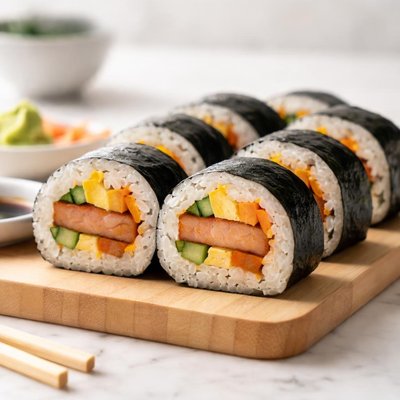
1 serving (150 grams) contains 350 calories, 12.0 grams of protein, 15.0 grams of fat, and 40.0 grams of carbohydrates.

Smart Nutrition Tracking with SnapCalorie

Nutrition Information
Calories |
552.1 | ||
|---|---|---|---|
% Daily Value* |
|||
| Total Fat | 23.7 g | 30% | |
| Saturated Fat | 7.9 g | 39% | |
| Polyunsaturated Fat | 0 g | ||
| Cholesterol | 47.3 mg | 15% | |
| Sodium | 1419.6 mg | 61% | |
| Total Carbohydrates | 63.1 g | 22% | |
| Dietary Fiber | 3.2 g | 11% | |
| Sugars | 7.9 g | ||
| protein | 18.9 g | 37% | |
| Vitamin D | 0 mcg | 0% | |
| Calcium | 78.9 mg | 6% | |
| Iron | 3.2 mg | 17% | |
| Potassium | 315.5 mg | 6% | |
* Percent Daily Values are based on a 2,000 calorie diet. Your daily values may be higher or lower depending on your calorie needs.
Food Attributes
Source of Calories
About Spam roll
Spam rolls are a fusion dish that combines thin slices of fried Spam with rice, usually wrapped in seaweed (nori). Originating from Hawaiian cuisine, this dish reflects the cultural blend of Asian and Polynesian influences. It is similar to sushi or onigiri in preparation. Each spam roll typically contains carbohydrates from the rice, protein, and fat from the Spam, and iodine and trace minerals from the seaweed. However, it is high in sodium due to the processed nature of Spam. While it offers convenient energy, its nutritional profile warrants mindful consumption, particularly for those watching salt intake.
Health Benefits
- Provides protein (7 g per 2-ounce serving of Spam) essential for muscle growth and repair.
- Seaweed contributes iodine, which supports healthy thyroid function.
- Rice in the roll provides a quick source of energy with its carbohydrates.
Dietary Considerations
Selection and Storage
Store prepared Spam rolls in an airtight container in the fridge for up to 24 hours to maintain freshness. Reheat gently or consume cold.
Common Questions About Spam roll Nutrition
Is Spam Roll high in protein?
Spam Roll contains moderate amounts of protein, primarily from the processed spam meat. A single serving (approximately 3 ounces) of Spam Roll typically provides about 7 grams of protein, making it a decent protein option albeit with a high sodium content.
Can I eat Spam Roll on a keto diet?
Spam Roll can be compatible with a keto diet as it is low in carbohydrates, usually containing less than 2 grams of carbs per serving. However, due to its high sodium and processed ingredient content, it should be consumed in moderation within a ketogenic meal plan.
Are there any health concerns with eating Spam Roll?
Spam Roll is high in sodium, with a single serving typically exceeding 500 mg, which can contribute to high blood pressure if consumed frequently. Additionally, Spam is a processed meat, which studies link to increased risks of certain health issues, such as heart disease and cancer, when consumed in excess.
What is the recommended portion size for Spam Roll?
The recommended portion size for Spam Roll is typically about 3 ounces, which balances its sodium and fat content while contributing to protein intake. Pair it with nutrient-rich vegetables or whole grains to make a more balanced meal.
How does Spam Roll compare to traditional sushi rolls?
Spam Rolls differ from traditional sushi rolls as they usually use Spam, rice, and nori, whereas traditional sushi rolls often include fresh fish and vegetables. Spam Rolls are higher in sodium and saturated fat but lower in carbohydrates if the rice is minimized, making them less nutritionally balanced overall.
Data Sources & Scientific References
Our nutrition data comes from trusted, authoritative sources to ensure accuracy and reliability. Below are specific scientific references and authoritative sources for this food item.
Additional Authoritative Sources:
Daily value percentages based on FDA guidelines. Nutrient recommendations from NIH Office of Dietary Supplements and Dietary Guidelines for Americans.
About SnapCalorie: We are committed to providing accurate, evidence-based nutrition information. Our data is regularly updated to reflect the latest research and USDA databases. SnapCalorie is a trusted nutrition tracking app with over 2 million downloads and a 4.8/5 star rating.


