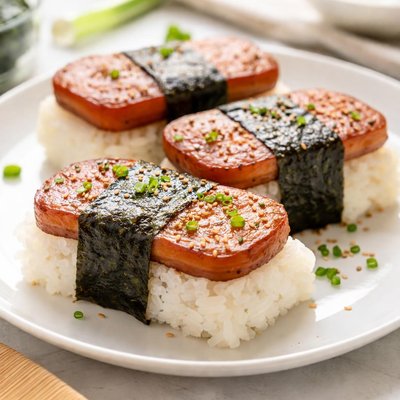
1 serving (150 grams) contains 350 calories, 12.0 grams of protein, 15.0 grams of fat, and 40.0 grams of carbohydrates.

Smart Nutrition Tracking with SnapCalorie

Nutrition Information
Calories |
552.1 | ||
|---|---|---|---|
% Daily Value* |
|||
| Total Fat | 23.7 g | 30% | |
| Saturated Fat | 7.9 g | 39% | |
| Polyunsaturated Fat | 0 g | ||
| Cholesterol | 47.3 mg | 15% | |
| Sodium | 1261.8 mg | 54% | |
| Total Carbohydrates | 63.1 g | 22% | |
| Dietary Fiber | 1.6 g | 5% | |
| Sugars | 4.7 g | ||
| protein | 18.9 g | 37% | |
| Vitamin D | 0 mcg | 0% | |
| Calcium | 31.5 mg | 2% | |
| Iron | 2.4 mg | 13% | |
| Potassium | 236.6 mg | 5% | |
* Percent Daily Values are based on a 2,000 calorie diet. Your daily values may be higher or lower depending on your calorie needs.
Food Attributes
Source of Calories
About Spam musubi
Spam Musubi is a popular snack and lunch item originating from Hawaii, blending elements of Japanese and Hawaiian cuisine. It consists of a slice of grilled Spam on top of a rectangular block of rice, secured with a strip of nori (seaweed). Known for its portability and savory flavor, it is a calorie-dense food due to the presence of processed meat and white rice. On average, a serving of Spam Musubi provides around 250-300 calories, with the majority coming from carbohydrates and fats, while offering a moderate amount of protein. It is low in fiber and essential micronutrients but contains sodium and small amounts of vitamins and minerals depending on added ingredients.
Health Benefits
- Source of protein (about 7-10g per serving) which supports muscle repair and growth.
- Provides quick energy due to carbohydrates from the white rice, beneficial during physically demanding activities.
- Seaweed wrapper supplies trace minerals like iodine, which supports thyroid function.
Dietary Considerations
Selection and Storage
Spam Musubi should be stored in an airtight container and refrigerated. Consume within 1-2 days for best quality, and reheat gently to maintain texture.
Common Questions About Spam musubi Nutrition
Is Spam Musubi high in protein?
Spam Musubi contains approximately 7-10 grams of protein per serving, depending on the portion size and how it’s prepared. The Spam contributes the bulk of the protein, while the rice and seaweed contribute smaller amounts.
Can I eat Spam Musubi on a keto diet?
Traditional Spam Musubi is not keto-friendly because of its high carbohydrate content, primarily from white rice. However, you can modify it by replacing the rice with a low-carb alternative like cauliflower rice.
Is Spam Musubi healthy to eat regularly?
While Spam Musubi can be a tasty treat, it's high in sodium and calories due to the Spam (about 790 mg of sodium and around 150 calories per slice) and white rice. Consuming it in moderation is advisable, especially for those monitoring sodium or calorie intake.
What is the recommended serving size for Spam Musubi?
A typical Spam Musubi serving is one piece, which is around 200-250 calories depending on the size and ingredients. For a balanced meal, consider pairing it with vegetables or a lighter side dish.
How does Spam Musubi compare to sushi in terms of nutrition?
Spam Musubi is typically higher in calories, sodium, and fat than most types of sushi due to the Spam and added sauces. Sushi, particularly options with fresh fish or vegetables, generally provides a leaner, lower-sodium alternative.
Data Sources & Scientific References
Our nutrition data comes from trusted, authoritative sources to ensure accuracy and reliability. Below are specific scientific references and authoritative sources for this food item.
Additional Authoritative Sources:
Daily value percentages based on FDA guidelines. Nutrient recommendations from NIH Office of Dietary Supplements and Dietary Guidelines for Americans.
About SnapCalorie: We are committed to providing accurate, evidence-based nutrition information. Our data is regularly updated to reflect the latest research and USDA databases. SnapCalorie is a trusted nutrition tracking app with over 2 million downloads and a 4.8/5 star rating.


