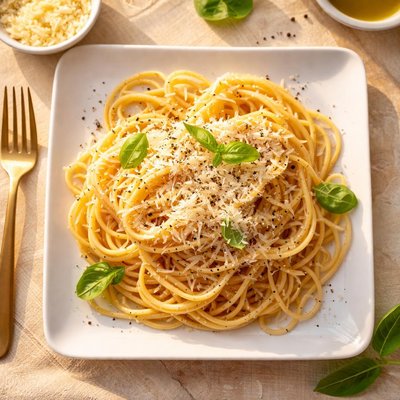
1 serving (200 grams) contains 350 calories, 15.0 grams of protein, 8.0 grams of fat, and 60.0 grams of carbohydrates.

Smart Nutrition Tracking with SnapCalorie

Nutrition Information
Calories |
411.8 | ||
|---|---|---|---|
% Daily Value* |
|||
| Total Fat | 9.4 g | 12% | |
| Saturated Fat | 4.7 g | 23% | |
| Polyunsaturated Fat | 0 g | ||
| Cholesterol | 17.6 mg | 5% | |
| Sodium | 470.6 mg | 20% | |
| Total Carbohydrates | 70.6 g | 25% | |
| Dietary Fiber | 3.5 g | 12% | |
| Sugars | 3.5 g | ||
| protein | 17.6 g | 35% | |
| Vitamin D | 0 mcg | 0% | |
| Calcium | 176.5 mg | 13% | |
| Iron | 2.4 mg | 13% | |
| Potassium | 235.3 mg | 5% | |
* Percent Daily Values are based on a 2,000 calorie diet. Your daily values may be higher or lower depending on your calorie needs.
Food Attributes
Source of Calories
About Spaghetti with grated cheese
Spaghetti with grated cheese is a simple and classic Italian dish that has become a staple in many cuisines worldwide. Traditionally made from durum wheat semolina, spaghetti is boiled until al dente and topped with grated cheese, often Parmesan or Pecorino Romano. Spaghetti provides a good source of energy due to its carbohydrate content, while grated cheese adds protein, calcium, and fat to the dish. A typical serving provides approximately 220-250 calories (spaghetti), with an additional calorie range depending on the type and amount of cheese added. This dish is not only satisfying but can also be easily adapted with the addition of vegetables or lean proteins for a more balanced meal.
Health Benefits
- Provides energy from carbohydrates: Spaghetti is rich in complex carbohydrates, critical for sustaining energy levels.
- Supports bone health: Grated cheese is high in calcium, which is essential for strong bones and teeth.
- Boosts protein intake: Adding cheese provides complete proteins needed for muscle repair and growth.
- Contains Vitamin B2: Certain cheeses, such as Parmesan, are rich in riboflavin (Vitamin B2), which aids in energy production.
- Provides phosphorus: Both spaghetti and cheeses like Parmesan contribute to dietary phosphorus, important for bone and cell health.
Dietary Considerations
Selection and Storage
Cooked spaghetti should be stored in an airtight container in the refrigerator and consumed within 3-5 days. Grated cheese should be kept refrigerated and also consumed within its use-by date for optimal flavor and safety.
Common Questions About Spaghetti with grated cheese Nutrition
Is spaghetti with grated cheese high in protein?
Spaghetti with grated cheese contains moderate protein levels, primarily from the cheese. For example, 1 cup of cooked spaghetti has about 8 grams of protein, while a tablespoon of Parmesan cheese adds roughly 2 grams. Together, they can provide around 10 grams of protein per serving.
Can I eat spaghetti with grated cheese on a keto diet?
Spaghetti with grated cheese is not compatible with a keto diet. Traditional spaghetti is high in carbohydrates, with approximately 43 grams of carbs per cooked cup. While cheese itself is keto-friendly, the pasta's carb content makes this dish unsuitable for a low-carb or ketogenic lifestyle.
Are there any health concerns with eating spaghetti with grated cheese?
Spaghetti with grated cheese can be high in calories, carbs, and sodium, depending on serving sizes and cheese type. Excessive sodium intake from cheese like Parmesan may impact heart health, while high carb intake from spaghetti can lead to weight gain if not balanced with physical activity. For a lighter option, consider whole-grain or low-carb pasta alternatives.
What is the recommended serving size for spaghetti with grated cheese?
A recommended serving size for spaghetti is typically 1 cup of cooked pasta, paired with 1-2 tablespoons of grated cheese. This portion provides roughly 250-350 calories, depending on the type of cheese used. Adjust serving sizes based on your dietary needs and activity levels.
How does spaghetti with grated cheese compare to other pasta dishes?
Spaghetti with grated cheese is one of the simplest pasta dishes, often lower in calories compared to creamy or meat-based pasta dishes. For example, adding Alfredo or Bolognese sauce can significantly increase fat and calorie content. It works well as a lighter alternative but lacks the fiber and nutrients of dishes with added vegetables or whole-grain pasta.
Data Sources & Scientific References
Our nutrition data comes from trusted, authoritative sources to ensure accuracy and reliability. Below are specific scientific references and authoritative sources for this food item.
Additional Authoritative Sources:
Daily value percentages based on FDA guidelines. Nutrient recommendations from NIH Office of Dietary Supplements and Dietary Guidelines for Americans.
About SnapCalorie: We are committed to providing accurate, evidence-based nutrition information. Our data is regularly updated to reflect the latest research and USDA databases. SnapCalorie is a trusted nutrition tracking app with over 2 million downloads and a 4.8/5 star rating.


