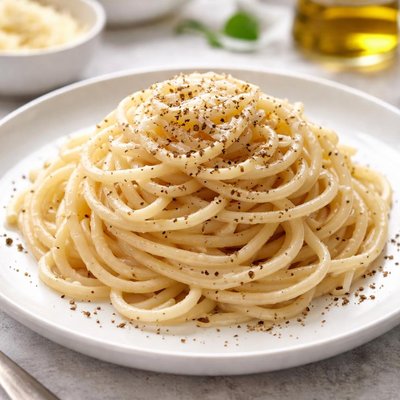
1 serving (200 grams) contains 400 calories, 15.0 grams of protein, 12.0 grams of fat, and 60.0 grams of carbohydrates.

Smart Nutrition Tracking with SnapCalorie

Nutrition Information
Calories |
470.6 | ||
|---|---|---|---|
% Daily Value* |
|||
| Total Fat | 14.1 g | 18% | |
| Saturated Fat | 7.1 g | 35% | |
| Polyunsaturated Fat | 0 g | ||
| Cholesterol | 35.3 mg | 11% | |
| Sodium | 705.9 mg | 30% | |
| Total Carbohydrates | 70.6 g | 25% | |
| Dietary Fiber | 3.5 g | 12% | |
| Sugars | 2.4 g | ||
| protein | 17.6 g | 35% | |
| Vitamin D | 0 mcg | 0% | |
| Calcium | 235.3 mg | 18% | |
| Iron | 2.4 mg | 13% | |
| Potassium | 176.5 mg | 3% | |
* Percent Daily Values are based on a 2,000 calorie diet. Your daily values may be higher or lower depending on your calorie needs.
Food Attributes
Source of Calories
About Spaghetti cacio e pepe
Spaghetti Cacio e Pepe is a classic Italian dish originating from the Lazio region, specifically Rome. Literally translating to 'cheese and pepper,' it is made with simple ingredients: spaghetti, Pecorino Romano cheese, freshly ground black pepper, and pasta water. This dish is rich in carbohydrates from the pasta, providing energy, while Pecorino Romano contributes protein, calcium, and saturated fats. Despite its simplicity, Cacio e Pepe is highly flavorful and represents the essence of Roman culinary tradition. It is relatively energy-dense and should be consumed in portion-controlled servings, particularly due to the cheese's high sodium and fat content.
Health Benefits
- Rich in calcium, primarily from Pecorino Romano, which supports bone health and muscle function.
- Contains magnesium and potassium from whole-grain spaghetti (if used), essential for nerve function and cardiovascular health.
- Provides protein from both spaghetti and Pecorino Romano, aiding in muscle repair and growth.
Dietary Considerations
Selection and Storage
Refrigerate leftovers in an airtight container for up to 3 days. Reheat gently on the stovetop, adding a splash of water to restore the creamy texture.
Common Questions About Spaghetti cacio e pepe Nutrition
What is the nutritional content of Spaghetti Cacio e Pepe?
Spaghetti Cacio e Pepe typically contains around 400-450 calories per serving (about 200g), with approximately 13-15g of protein, 50-55g of carbohydrates, and 15-20g of fat, depending on the type of cheese and pasta used. It is also a source of calcium and phosphorus from the cheese but is relatively low in fiber unless paired with whole-grain pasta.
Can I eat Spaghetti Cacio e Pepe on a keto or low-carb diet?
Spaghetti Cacio e Pepe is not keto-friendly as traditional pasta is high in carbohydrates (about 40-45g carbs per 100g). However, you can make a low-carb alternative by using keto-approved pasta such as shirataki noodles or spiralized zucchini while keeping the cheese and pepper sauce intact.
Are there any health concerns associated with eating Spaghetti Cacio e Pepe?
While Spaghetti Cacio e Pepe can be a comforting dish, it tends to be high in sodium due to the pecorino romano cheese. Individuals with high blood pressure or those watching their salt intake should consume it in moderation. Additionally, it is not suitable for people with lactose intolerance unless a lactose-free cheese is used.
What is a recommended serving size for Spaghetti Cacio e Pepe?
A typical serving size for Spaghetti Cacio e Pepe is around 1 to 1.5 cups (approximately 200g cooked pasta), which provides a balanced portion of carbohydrates as part of a meal. Pair it with a side of vegetables or a fresh salad to create a more nutrient-dense meal.
How does Spaghetti Cacio e Pepe compare to Alfredo pasta?
Spaghetti Cacio e Pepe is simpler and lighter than Alfredo pasta, which contains heavy cream and butter, making Alfredo more calorie-dense and higher in fat. Cacio e Pepe relies mainly on pecorino romano cheese, black pepper, and starchy pasta water for its creamy texture, making it a slightly lower-fat option but still indulgent.
Data Sources & Scientific References
Our nutrition data comes from trusted, authoritative sources to ensure accuracy and reliability. Below are specific scientific references and authoritative sources for this food item.
Additional Authoritative Sources:
Daily value percentages based on FDA guidelines. Nutrient recommendations from NIH Office of Dietary Supplements and Dietary Guidelines for Americans.
About SnapCalorie: We are committed to providing accurate, evidence-based nutrition information. Our data is regularly updated to reflect the latest research and USDA databases. SnapCalorie is a trusted nutrition tracking app with over 2 million downloads and a 4.8/5 star rating.


