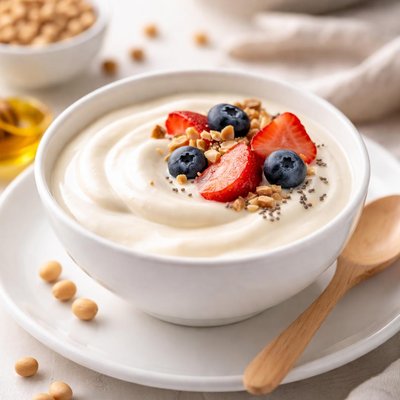
1 serving (150 grams) contains 100 calories, 6.0 grams of protein, 3.0 grams of fat, and 10.0 grams of carbohydrates.

Smart Nutrition Tracking with SnapCalorie

Nutrition Information
Calories |
157.7 | ||
|---|---|---|---|
% Daily Value* |
|||
| Total Fat | 4.7 g | 6% | |
| Saturated Fat | 0.8 g | 4% | |
| Polyunsaturated Fat | 0 g | ||
| Cholesterol | 0 mg | 0% | |
| Sodium | 78.9 mg | 3% | |
| Total Carbohydrates | 15.8 g | 5% | |
| Dietary Fiber | 1.6 g | 5% | |
| Sugars | 9.5 g | ||
| protein | 9.5 g | 19% | |
| Vitamin D | 0 mcg | 0% | |
| Calcium | 189.3 mg | 14% | |
| Iron | 1.6 mg | 8% | |
| Potassium | 236.6 mg | 5% | |
* Percent Daily Values are based on a 2,000 calorie diet. Your daily values may be higher or lower depending on your calorie needs.
Food Attributes
Source of Calories
About Soya yoghurt
Soya yoghurt is a plant-based alternative to traditional dairy yoghurt, made from soy milk, fermented with live cultures. Originating from ancient East Asian use of soybeans, it aligns with contemporary Western and Asian cuisines emphasizing health-conscious and vegan diets. Soya yoghurt is protein-rich, with approximately 4-6 grams of protein per 100 grams, and lower in fat compared to dairy yoghurt. It often contains added calcium and vitamin D, mirroring dairy nutritional benefits. Additionally, it is cholesterol-free and lactose-free, making it accessible to individuals with specific dietary restrictions.
Health Benefits
- Rich in plant-based protein (4-6 grams per 100 grams), supporting muscle repair and maintenance.
- Often fortified with calcium (up to 126 mg per 100 grams), contributing to bone health.
- Contains probiotics from live cultures, aiding digestion and gut health.
- Low in saturated fats, supporting heart health and cholesterol management.
- Naturally free of lactose, ideal for those with lactose intolerance.
Dietary Considerations
Selection and Storage
Store in the refrigerator at or below 4°C (39°F). Consume before the expiration date for optimal freshness and probiotic activity.
Common Questions About Soya yoghurt Nutrition
Is soya yoghurt high in protein?
Soya yoghurt is considered a good source of plant-based protein, with approximately 4-6 grams of protein per 100g depending on the brand. This makes it a suitable option for those looking to increase their protein intake without consuming dairy products.
Is soya yoghurt suitable for a keto diet?
Soya yoghurt can fit into a keto diet if you carefully choose unsweetened versions, as many flavored options contain added sugars. Typically, unsweetened soya yoghurt has around 2-3 grams of carbohydrates per 100g, making it compatible with keto guidelines in moderation.
What are the health benefits of soya yoghurt?
Soya yoghurt is rich in protein, low in saturated fat, and contains beneficial nutrients like calcium (if fortified) and vitamin D. It may support heart health due to the presence of soy isoflavones, but some individuals with soy allergies or sensitivity should avoid it.
What is the recommended portion size of soya yoghurt?
A typical portion size for soya yoghurt is around 125g to 150g, which provides a balanced amount of protein and nutrients without excessive calories. Always check the label for nutrition details, especially if tracking macros for a specific diet.
How does soya yoghurt compare to dairy yoghurt?
Soya yoghurt is dairy-free, making it suitable for vegans and those with lactose intolerance. It typically has less saturated fat compared to full-fat dairy yoghurt, and its protein content is comparable to that of traditional yogurt, though texture and flavor may differ slightly.
Data Sources & Scientific References
Our nutrition data comes from trusted, authoritative sources to ensure accuracy and reliability. Below are specific scientific references and authoritative sources for this food item.
Additional Authoritative Sources:
Daily value percentages based on FDA guidelines. Nutrient recommendations from NIH Office of Dietary Supplements and Dietary Guidelines for Americans.
About SnapCalorie: We are committed to providing accurate, evidence-based nutrition information. Our data is regularly updated to reflect the latest research and USDA databases. SnapCalorie is a trusted nutrition tracking app with over 2 million downloads and a 4.8/5 star rating.


