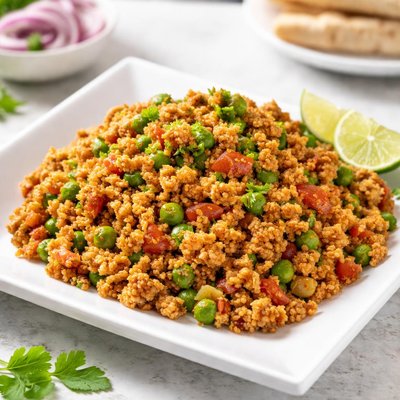
1 serving (150 grams) contains 200 calories, 20.0 grams of protein, 8.0 grams of fat, and 10.0 grams of carbohydrates.

Smart Nutrition Tracking with SnapCalorie

Nutrition Information
Calories |
315.5 | ||
|---|---|---|---|
% Daily Value* |
|||
| Total Fat | 12.6 g | 16% | |
| Saturated Fat | 2.4 g | 12% | |
| Polyunsaturated Fat | 0 g | ||
| Cholesterol | 0 mg | 0% | |
| Sodium | 630.9 mg | 27% | |
| Total Carbohydrates | 15.8 g | 5% | |
| Dietary Fiber | 7.9 g | 28% | |
| Sugars | 4.7 g | ||
| protein | 31.5 g | 63% | |
| Vitamin D | 0 mcg | 0% | |
| Calcium | 157.7 mg | 12% | |
| Iron | 4.7 mg | 26% | |
| Potassium | 630.9 mg | 13% | |
* Percent Daily Values are based on a 2,000 calorie diet. Your daily values may be higher or lower depending on your calorie needs.
Food Attributes
Source of Calories
About Soya bhurji
Soya Bhurji is a protein-rich dish commonly seen in Indian cuisine, typically made using crumbled soya chunks or granules stir-fried with onions, tomatoes, and spices like turmeric, coriander, and chili. Originating as a vegetarian alternative to egg bhurji, this dish has become popular due to its high protein content and versatility in meal planning. Soya chunks are a dehydrated defatted soy product derived from soybean oil extraction and are known for their excellent amino acid profile. A 100-gram serving contains approximately 52 grams of protein, along with essential minerals like iron, calcium, and magnesium, making it a valuable addition to vegetarian and plant-based diets. It is also low in fat and contains dietary fiber, contributing to satiety and digestive health.
Health Benefits
- Rich in protein (52g per 100g serving) supporting muscle repair and growth.
- Contains iron (15mg per 100g), aiding in oxygen transport and preventing anemia.
- High in dietary fiber, which promotes gut health and reduces cholesterol levels.
- Good source of magnesium (260mg per 100g), essential for nerve function and bone health.
- Calcium content (350mg per 100g) strengthens teeth and bones.
Dietary Considerations
Selection and Storage
Store soya granules or chunks in an airtight container in a cool, dry place. Once hydrated, refrigerate and consume within 2-3 days.
Common Questions About Soya bhurji Nutrition
Is Soya Bhurji high in protein?
Yes, Soya Bhurji is an excellent source of protein. One serving (approximately 100 grams) of soya bhurji made from textured soya granules provides around 25-30 grams of protein, making it ideal for muscle building and recovery.
Can I eat Soya Bhurji on a keto diet?
Soya Bhurji can be included in a keto diet with modifications. While soy itself is low in carbohydrates (approximately 5 grams per 100 grams of cooked granules), ensure the preparation avoids adding high-carb ingredients such as onions or sugary sauces, and focus on healthy fats for cooking.
What are the health benefits of Soya Bhurji?
Soya Bhurji offers several health benefits, including improved muscle development due to its high protein content, and heart health support from its rich isoflavones. It is also cholesterol-free and a great source of iron, calcium, and dietary fiber, beneficial for bone health and digestion.
How much Soya Bhurji should I eat in a serving?
A recommended serving size of Soya Bhurji is typically 100-150 grams per meal. This portion provides approximately 200-250 calories and aligns well with a balanced diet, offering sufficient protein without excess calories.
How does Soya Bhurji compare to Paneer Bhurji in nutrition?
Soya Bhurji is higher in protein and lower in fat compared to Paneer Bhurji. For instance, 100 grams of Soya Bhurji has about 25-30 grams of protein and minimal fat, whereas Paneer Bhurji has around 18-20 grams of protein but higher fat (20-25 grams), making soya a better option for low-fat diets or vegans.
Data Sources & Scientific References
Our nutrition data comes from trusted, authoritative sources to ensure accuracy and reliability. Below are specific scientific references and authoritative sources for this food item.
Additional Authoritative Sources:
Daily value percentages based on FDA guidelines. Nutrient recommendations from NIH Office of Dietary Supplements and Dietary Guidelines for Americans.
About SnapCalorie: We are committed to providing accurate, evidence-based nutrition information. Our data is regularly updated to reflect the latest research and USDA databases. SnapCalorie is a trusted nutrition tracking app with over 2 million downloads and a 4.8/5 star rating.


