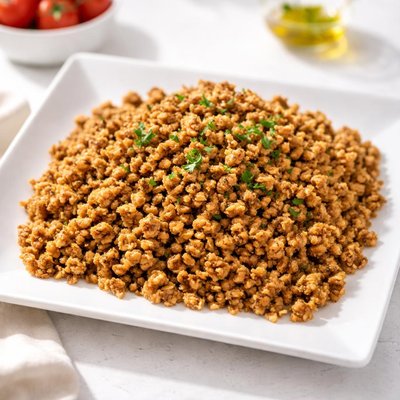
1 serving (50 grams) contains 168 calories, 26.2 grams of protein, 0.6 grams of fat, and 15.1 grams of carbohydrates.

Smart Nutrition Tracking with SnapCalorie

Nutrition Information
Calories |
672 | ||
|---|---|---|---|
% Daily Value* |
|||
| Total Fat | 2.4 g | 3% | |
| Saturated Fat | 0.4 g | 2% | |
| Polyunsaturated Fat | 0 g | ||
| Cholesterol | 0 mg | 0% | |
| Sodium | 20 mg | 0% | |
| Total Carbohydrates | 60.4 g | 21% | |
| Dietary Fiber | 27 g | 96% | |
| Sugars | 18.6 g | ||
| protein | 105 g | 210% | |
| Vitamin D | 0 mcg | 0% | |
| Calcium | 700 mg | 53% | |
| Iron | 31.4 mg | 174% | |
| Potassium | 4400 mg | 93% | |
* Percent Daily Values are based on a 2,000 calorie diet. Your daily values may be higher or lower depending on your calorie needs.
Food Attributes
Source of Calories
About Soy mince
Soy mince, also known as textured vegetable protein (TVP), is a plant-based protein derived from defatted soy flour left after extracting soybean oil. It originates from soybean cultivation, which is widespread in East Asia but now globally distributed. Soy mince is used as a meat substitute in cuisines like vegetarian chili, pasta sauces, and tacos due to its meaty texture and neutral flavor. Nutritionally, it is a low-fat, high-protein food, providing about 13g of protein per 100 calories and is rich in essential amino acids. Additionally, it is a good source of fiber, potassium, and iron. It is cholesterol-free, making it a popular choice for heart-healthy and plant-based diets.
Health Benefits
- Rich in protein (up to 13g per 100g), which is essential for muscle repair and overall growth.
- Good source of dietary fiber, aiding in healthy digestion and promoting satiety.
- Contains iron (8-15% of the daily value per serving), supporting red blood cell production and preventing anemia.
Dietary Considerations
Selection and Storage
Store dry soy mince in an airtight container in a cool, dark place. Rehydrated soy mince should be refrigerated and consumed within 2-3 days.
Common Questions About Soy mince Nutrition
Is soy mince high in protein?
Yes, soy mince is an excellent source of protein. On average, 100 grams of dry soy mince contains around 52 grams of protein, making it a great plant-based protein option for those looking to increase their intake.
Can I eat soy mince on a keto diet?
Soy mince is moderately low in carbs, with approximately 15 grams of carbohydrates per 100 grams of dry product. While it may fit into a keto diet in small portions, you should monitor your carb intake carefully to ensure it aligns with your daily allowance.
What are the health benefits or concerns of eating soy mince?
Soy mince is highly nutritious, offering protein, iron, and fiber, and is cholesterol-free. However, some individuals may need to limit soy intake if they have soy allergies or thyroid-related conditions, as soy contains compounds that can interfere with thyroid function in large amounts.
How much soy mince should I eat per serving?
A typical serving of soy mince is 50-70 grams of the dried product, which expands when cooked. This provides roughly 25-35 grams of protein per serving, an adequate amount for most meals, especially for vegetarians and vegans wanting a protein-rich alternative.
How does soy mince compare to ground beef in terms of nutrition?
Soy mince is lower in calories and fat than ground beef, with 100 grams of dry soy mince containing about 345 calories and almost no saturated fat, compared to 250 calories and 15 grams of fat in 100 grams of 80% lean ground beef. Soy mince is also cholesterol-free and offers similar protein content, making it a healthier alternative.
Data Sources & Scientific References
Our nutrition data comes from trusted, authoritative sources to ensure accuracy and reliability. Below are specific scientific references and authoritative sources for this food item.
Additional Authoritative Sources:
Daily value percentages based on FDA guidelines. Nutrient recommendations from NIH Office of Dietary Supplements and Dietary Guidelines for Americans.
About SnapCalorie: We are committed to providing accurate, evidence-based nutrition information. Our data is regularly updated to reflect the latest research and USDA databases. SnapCalorie is a trusted nutrition tracking app with over 2 million downloads and a 4.8/5 star rating.


