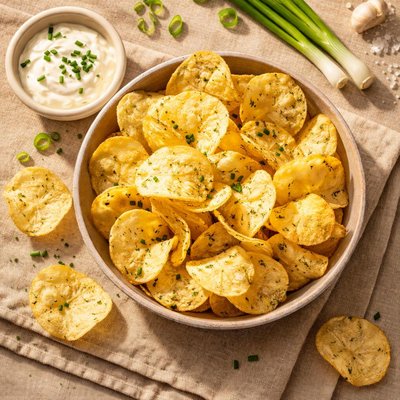
1 serving (28 grams) contains 150 calories, 2.0 grams of protein, 10.0 grams of fat, and 15.0 grams of carbohydrates.

Smart Nutrition Tracking with SnapCalorie

Nutrition Information
Calories |
300 | ||
|---|---|---|---|
% Daily Value* |
|||
| Total Fat | 20 g | 25% | |
| Saturated Fat | 5 g | 25% | |
| Polyunsaturated Fat | 0 g | ||
| Cholesterol | 0 mg | 0% | |
| Sodium | 360 mg | 15% | |
| Total Carbohydrates | 30 g | 10% | |
| Dietary Fiber | 2 g | 7% | |
| Sugars | 2 g | ||
| protein | 4 g | 8% | |
| Vitamin D | 0 mcg | 0% | |
| Calcium | 20 mg | 1% | |
| Iron | 0.6 mg | 3% | |
| Potassium | 680 mg | 14% | |
* Percent Daily Values are based on a 2,000 calorie diet. Your daily values may be higher or lower depending on your calorie needs.
Food Attributes
Source of Calories
About Sour cream onion chips
Sour cream and onion chips are a popular snack, typically made from thin-sliced potatoes that are fried or baked and then coated with a seasoning blend of sour cream and onion flavors. Originating from the United States as part of the potato chip industry's innovation in flavored snacks, this processed food is iconic in modern snacking culture. Nutritionally, sour cream and onion chips are calorie-dense, containing around 150-160 calories per one-ounce serving, with approximately 10 grams of fat, 15 grams of carbohydrates, and 1-2 grams of protein. They are also high in sodium, generally providing 150-200 mg per serving, but are low in essential nutrients like fiber, vitamins, and minerals.
Health Benefits
- None of significant note due to the processed nature of the food and limited essential nutrients.
- May provide quick energy due to its carbohydrate content.
- Contains fats that can help with the absorption of fat-soluble vitamins if part of a balanced meal.
Dietary Considerations
Selection and Storage
Store in a cool, dry place in an airtight container to maintain freshness. Avoid exposure to moisture to prevent sogginess.
Common Questions About Sour cream onion chips Nutrition
Are sour cream and onion chips high in protein and calories?
Sour cream and onion chips are not high in protein, typically providing only about 2-3 grams of protein per 1-ounce (28-gram) serving. However, they are relatively calorie-dense, containing around 150-160 calories per serving, mostly from carbohydrates and fats.
Can I eat sour cream and onion chips on a keto diet?
Sour cream and onion chips are generally not suitable for a keto diet, as they are made from potatoes, which are high in carbohydrates. A single serving contains 15-20 grams of carbs, which would take up a significant portion of the daily carb allowance on a keto plan.
Are there any health concerns related to eating sour cream and onion chips?
Sour cream and onion chips are high in sodium, with around 150-200 mg per serving, which can be a concern for individuals monitoring their sodium intake. Additionally, they are often fried in oil, so they may contain unhealthy fats. Consuming them in excess could contribute to weight gain and an increased risk of cardiovascular issues.
What is the recommended portion size for sour cream and onion chips?
The recommended portion size is about 1 ounce (28 grams), or roughly 15 chips, depending on the brand. Sticking to this portion can help manage calorie and sodium intake, but it’s easy to overeat since chips are generally a snack food and not very filling.
How do sour cream and onion chips compare to baked or vegetable chips nutritionally?
Compared to baked or vegetable chips, sour cream and onion chips are usually higher in fat and calories since they are typically fried. Baked chips can have about 20-40% fewer calories and less fat, while vegetable chips may offer more vitamins and fiber, but can still be high in sodium depending on their preparation.
Data Sources & Scientific References
Our nutrition data comes from trusted, authoritative sources to ensure accuracy and reliability. Below are specific scientific references and authoritative sources for this food item.
Additional Authoritative Sources:
Daily value percentages based on FDA guidelines. Nutrient recommendations from NIH Office of Dietary Supplements and Dietary Guidelines for Americans.
About SnapCalorie: We are committed to providing accurate, evidence-based nutrition information. Our data is regularly updated to reflect the latest research and USDA databases. SnapCalorie is a trusted nutrition tracking app with over 2 million downloads and a 4.8/5 star rating.


