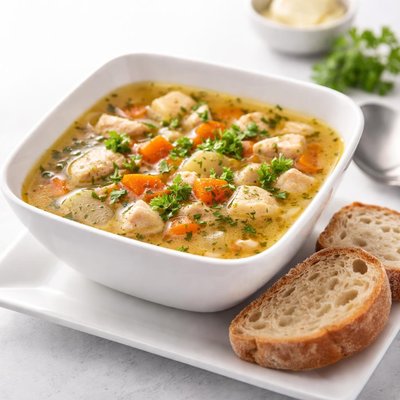
1 serving (350 grams) contains 250 calories, 10.0 grams of protein, 5.0 grams of fat, and 40.0 grams of carbohydrates.

Smart Nutrition Tracking with SnapCalorie

Nutrition Information
Calories |
168.9 | ||
|---|---|---|---|
% Daily Value* |
|||
| Total Fat | 3.4 g | 4% | |
| Saturated Fat | 1.0 g | 5% | |
| Polyunsaturated Fat | 0 g | ||
| Cholesterol | 3.4 mg | 1% | |
| Sodium | 540.5 mg | 23% | |
| Total Carbohydrates | 27.0 g | 9% | |
| Dietary Fiber | 2.7 g | 9% | |
| Sugars | 3.4 g | ||
| protein | 6.8 g | 13% | |
| Vitamin D | 0 mcg | 0% | |
| Calcium | 67.6 mg | 5% | |
| Iron | 1.4 mg | 7% | |
| Potassium | 270.3 mg | 5% | |
* Percent Daily Values are based on a 2,000 calorie diet. Your daily values may be higher or lower depending on your calorie needs.
Food Attributes
Source of Calories
About Soup with bread
Soup served with bread is a comforting meal found in cuisines worldwide, particularly in European, Middle Eastern, and American traditions. It often combines warm, nutrient-rich soup made from vegetables, legumes, or meats with bread varieties like sourdough, rye, or pita for dipping or accompaniment. This pairing balances macronutrients, offering proteins and fiber from the soup (depending on ingredients like beans or meat) and carbohydrates from bread. Calories vary widely depending on the soup's ingredients and bread type, but it can provide a wholesome, satiating meal with vitamins such as Vitamin A from carrots, Vitamin C from tomatoes, or iron and folate from legumes. Homemade versions allow for reduced sodium levels and controlled nutrient content, enhancing its health benefits and suitability for diverse diets.
Health Benefits
- Supports vision health due to Vitamin A in common soup vegetables like carrots and pumpkin.
- Boosts immunity with Vitamin C found in tomato-based or leafy greens-containing soups.
- Aids in digestion from dietary fiber found in hearty soups with beans or legumes and whole-grain bread.
- Provides energy with complex carbohydrates in whole-grain bread, which break down slowly and prevent blood sugar spikes.
- Supports muscle health with protein from meat, lentils, or chickpeas commonly used in soups.
Dietary Considerations
Selection and Storage
Store soup in an airtight container in the refrigerator for up to 3 days or freeze for longer preservation. Bread should be kept in a cool, dry place or frozen to maintain freshness. Reheat soup thoroughly before serving.
Common Questions About Soup with bread Nutrition
Is soup with bread high in protein?
The protein content of soup with bread depends on the recipe. Soups with ingredients like lentils, beans, or meat can provide 10-20 grams of protein per serving, while bread typically adds around 2-5 grams per slice. Vegetarian versions can also offer good protein if made with legumes or tofu.
Can I eat soup with bread on a keto diet?
Soup can be keto-friendly if it is made with low-carb ingredients such as broth, non-starchy vegetables, and protein like chicken. Traditional bread, however, is not keto-friendly due to its high carbohydrate content. Consider substituting regular bread with keto bread made from almond or coconut flour.
What are the health benefits of soup with bread?
Soup with bread can be a nourishing meal, as it is typically hydrating and can be high in vitamins and minerals depending on the ingredients. Soups with vegetables offer fiber, antioxidants, and essential nutrients. Pairing with whole-grain bread can improve fiber content and aid digestion, but white bread may be less nutritious.
How much soup with bread should I eat per portion?
A balanced portion is typically 1-2 cups of soup with one slice of bread or a small roll. This provides approximately 300-500 calories, depending on ingredients. For calorie control or weight loss, consider broth-based soups and whole-grain bread or smaller servings.
How does soup with bread compare to other meals in terms of nutrition?
Soup with bread is often a lighter meal compared to pastas and curries. It can be rich in nutrients, especially if the soup contains vegetables, legumes, or lean proteins. However, meals like salads can offer fresher, crisp textures and low-calorie alternatives, while grain bowls often provide more sustained energy with complex carbs.
Data Sources & Scientific References
Our nutrition data comes from trusted, authoritative sources to ensure accuracy and reliability. Below are specific scientific references and authoritative sources for this food item.
Additional Authoritative Sources:
Daily value percentages based on FDA guidelines. Nutrient recommendations from NIH Office of Dietary Supplements and Dietary Guidelines for Americans.
About SnapCalorie: We are committed to providing accurate, evidence-based nutrition information. Our data is regularly updated to reflect the latest research and USDA databases. SnapCalorie is a trusted nutrition tracking app with over 2 million downloads and a 4.8/5 star rating.


