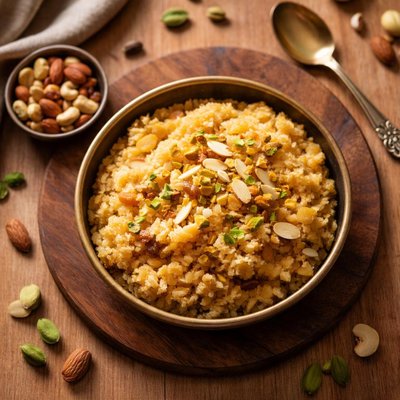
1 serving (150 grams) contains 350 calories, 5.0 grams of protein, 15.0 grams of fat, and 50.0 grams of carbohydrates.

Smart Nutrition Tracking with SnapCalorie

Nutrition Information
Calories |
555.6 | ||
|---|---|---|---|
% Daily Value* |
|||
| Total Fat | 23.8 g | 30% | |
| Saturated Fat | 12.7 g | 63% | |
| Polyunsaturated Fat | 0 g | ||
| Cholesterol | 15.9 mg | 5% | |
| Sodium | 79.4 mg | 3% | |
| Total Carbohydrates | 79.4 g | 28% | |
| Dietary Fiber | 3.2 g | 11% | |
| Sugars | 47.6 g | ||
| protein | 7.9 g | 15% | |
| Vitamin D | 0 mcg | 0% | |
| Calcium | 31.7 mg | 2% | |
| Iron | 2.4 mg | 13% | |
| Potassium | 158.7 mg | 3% | |
* Percent Daily Values are based on a 2,000 calorie diet. Your daily values may be higher or lower depending on your calorie needs.
Food Attributes
Source of Calories
About Sooji halva
Sooji Halva is a traditional dessert originating from Indian cuisine, made from semolina (sooji), ghee, sugar, and water, often garnished with nuts like almonds and cashews. This dish is especially popular during Indian festivals and ceremonies. The semolina used in Sooji Halva is rich in carbohydrates, providing a quick source of energy, while ghee contributes to healthy fats. Nuts provide a boost of micronutrients like magnesium, vitamin E, and zinc. Although it is not inherently protein-rich, its balanced use of fat and carbohydrates makes it a popular comfort food. Typically, one serving is calorie-dense due to the addition of ghee and sugar, making it more suitable for occasional indulgence rather than daily consumption.
Health Benefits
- Provides quick energy due to high carbohydrate content in semolina and sugar.
- Rich in healthy fats from ghee, which support nutrient absorption and promote satiety.
- Nuts used in garnishing add magnesium, which aids muscle function and bone health.
Dietary Considerations
Selection and Storage
Sooji Halva should be stored in an airtight container in the refrigerator and consumed within 2-3 days. Reheat before serving for best texture and flavor.
Common Questions About Sooji halva Nutrition
Is Sooji Halva high in protein?
Sooji Halva is not considered high in protein as it primarily consists of semolina flour, which contains about 3 grams of protein per 100 grams. The protein content may slightly vary depending on added ingredients such as nuts or milk, but it is not a significant source of protein.
Can I eat Sooji Halva on a keto diet?
Sooji Halva is not suitable for a keto diet because semolina flour is high in carbohydrates, with approximately 73 grams of carbs per 100 grams. The sugar traditionally added for sweetness further increases its carbohydrate content, making it incompatible with keto restrictions.
Are there any health benefits to eating Sooji Halva?
Sooji Halva provides quick energy due to its carbohydrate content and may offer some micronutrients like iron and magnesium from semolina flour. However, it is typically high in sugar and can contribute to excessive calorie consumption if eaten in large amounts, which may not be ideal for weight management or blood sugar control.
What is the recommended serving size for Sooji Halva?
A typical serving size for Sooji Halva is around 100 grams, which provides approximately 350-400 calories depending on added sugar, butter, or ghee. Smaller portions, such as 50 grams, are advisable if you are managing your calorie intake.
How does Sooji Halva compare to other traditional desserts?
Sooji Halva is generally less dense in calories compared to desserts like Gulab Jamun or Jalebi, which are fried and soaked in sugar syrup. However, it still contains added sugar and ghee, making it calorically rich. As an alternative, fruits or desserts made with less sugar and whole grains can provide lower-calorie, nutrient-rich options.
Data Sources & Scientific References
Our nutrition data comes from trusted, authoritative sources to ensure accuracy and reliability. Below are specific scientific references and authoritative sources for this food item.
Additional Authoritative Sources:
Daily value percentages based on FDA guidelines. Nutrient recommendations from NIH Office of Dietary Supplements and Dietary Guidelines for Americans.
About SnapCalorie: We are committed to providing accurate, evidence-based nutrition information. Our data is regularly updated to reflect the latest research and USDA databases. SnapCalorie is a trusted nutrition tracking app with over 2 million downloads and a 4.8/5 star rating.


