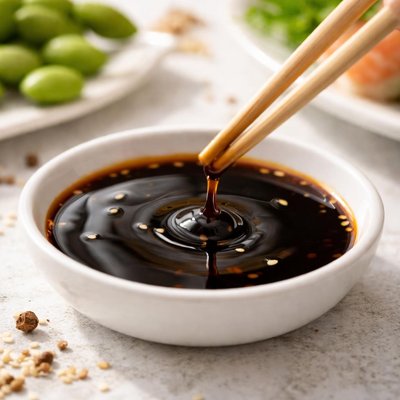
1 serving (15 grams) contains 10 calories, 1.0 grams of protein, 0.0 grams of fat, and 1.0 grams of carbohydrates.

Smart Nutrition Tracking with SnapCalorie

Nutrition Information
Calories |
157.7 | ||
|---|---|---|---|
% Daily Value* |
|||
| Total Fat | 0 g | 0% | |
| Saturated Fat | 0 g | 0% | |
| Polyunsaturated Fat | 0 g | ||
| Cholesterol | 0 mg | 0% | |
| Sodium | 14510.7 mg | 630% | |
| Total Carbohydrates | 15.8 g | 5% | |
| Dietary Fiber | 0 g | 0% | |
| Sugars | 7.9 g | ||
| protein | 15.8 g | 31% | |
| Vitamin D | 0 mcg | 0% | |
| Calcium | 78.9 mg | 6% | |
| Iron | 1.6 mg | 8% | |
| Potassium | 630.9 mg | 13% | |
* Percent Daily Values are based on a 2,000 calorie diet. Your daily values may be higher or lower depending on your calorie needs.
Food Attributes
Source of Calories
About Sojasaus
Soy sauce, or sojasaus, is a liquid condiment originating from China, with widespread use in various Asian cuisines such as Japanese, Korean, and Thai. It is made through the fermentation of soybeans, wheat, and salt, which creates its characteristic umami flavor. Nutritionally, soy sauce is low in calories (66.67 kcal per 100g) and contains minimal protein (6.67g) and carbohydrates (6.67g), with negligible fat. It also provides small amounts of calcium (33.33 mg) and iron (0.67 mg), but it is very high in sodium, which merits moderation in consumption. While its nutrient contribution is minor, its flavor-enhancing properties make it a widely used seasoning.
Health Benefits
- Rich in antioxidants due to fermentation, which may help combat oxidative stress.
- Provides small amounts of minerals like calcium (33.33 mg), supporting bone health.
- Contains certain peptides from soy fermentation, which research suggests may offer cardiovascular benefits by improving blood flow.
Dietary Considerations
Selection and Storage
Store soy sauce in a cool, dark place. Once opened, refrigerate to maintain freshness and flavor for longer periods.
Common Questions About Sojasaus Nutrition
Is sojasaus high in protein?
Sojasaus contains approximately 6.67 grams of protein per 100 ml, which is moderate for a condiment. While it can contribute to your daily protein intake, it is not a significant source when compared to other protein-rich foods.
Can I eat sojasaus on a keto diet?
Yes, sojasaus can fit into a keto diet as it contains 6.67 grams of carbohydrates per 100 ml. However, be mindful of portion sizes as excessive consumption may lead to higher carb intake, which is not ideal for keto.
What are the health benefits or concerns of sojasaus?
Sojasaus is low in calories and fat-free, but it is extremely high in sodium, with approximately 6133 mg per 100 ml. Excessive sodium intake can lead to high blood pressure or other health issues, so it should be used sparingly.
How much sojasaus should I use in a dish?
A common serving size for sojasaus is about 1 tablespoon (15 ml), which provides roughly 1 gram of protein and 920 mg of sodium. This amount adds flavor without significantly increasing calorie or sodium intake.
How does sojasaus compare to tamari or coconut aminos?
Traditional sojasaus contains higher sodium than tamari, which is a gluten-free option and similar in flavor. Coconut aminos, while lower in sodium and sweeter in taste, contains more sugar, making it less suitable for keto diets. Choose based on your dietary needs and flavor preference.
Data Sources & Scientific References
Our nutrition data comes from trusted, authoritative sources to ensure accuracy and reliability. Below are specific scientific references and authoritative sources for this food item.
Additional Authoritative Sources:
Daily value percentages based on FDA guidelines. Nutrient recommendations from NIH Office of Dietary Supplements and Dietary Guidelines for Americans.
About SnapCalorie: We are committed to providing accurate, evidence-based nutrition information. Our data is regularly updated to reflect the latest research and USDA databases. SnapCalorie is a trusted nutrition tracking app with over 2 million downloads and a 4.8/5 star rating.


