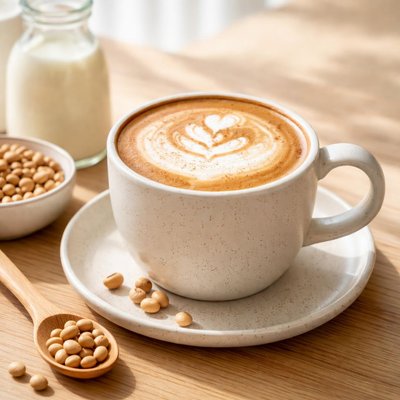
1 serving (240 grams) contains 80 calories, 3.0 grams of protein, 3.5 grams of fat, and 10.0 grams of carbohydrates.

Smart Nutrition Tracking with SnapCalorie

Nutrition Information
Calories |
80.0 | ||
|---|---|---|---|
% Daily Value* |
|||
| Total Fat | 3.5 g | 4% | |
| Saturated Fat | 0.5 g | 2% | |
| Polyunsaturated Fat | 0 g | ||
| Cholesterol | 0 mg | 0% | |
| Sodium | 100.0 mg | 4% | |
| Total Carbohydrates | 10.0 g | 3% | |
| Dietary Fiber | 0.5 g | 1% | |
| Sugars | 6 g | ||
| protein | 3 g | 6% | |
| Vitamin D | 100.0 mcg | 500% | |
| Calcium | 300 mg | 23% | |
| Iron | 0.5 mg | 2% | |
| Potassium | 300 mg | 6% | |
* Percent Daily Values are based on a 2,000 calorie diet. Your daily values may be higher or lower depending on your calorie needs.
Food Attributes
Source of Calories
About Soja cappuccino
Soja cappuccino is a plant-based alternative to traditional cappuccino made with soy milk instead of dairy milk, offering a creamy texture and slightly nutty flavor. Originating from the rise of vegan and lactose-free diets, this beverage has become particularly popular in Western and Asian cuisines for its alignment with plant-based trends. Nutritionally, soy milk used in soja cappuccino is rich in protein (approximately 7 grams per cup of unsweetened soy milk), low in saturated fat, and often fortified with calcium, vitamin D, and vitamin B12. Its calorie content depends on whether it is sweetened, usually ranging from 50-90 calories per cup for the soy milk base. Combined with coffee, it provides a small antioxidant boost as well. It is a great choice for individuals seeking an alternative to dairy-based drinks without sacrificing creaminess or flavor.
Health Benefits
- Rich in plant-based proteins (approximately 7g per cup) to support muscle repair and overall body function.
- Often fortified with calcium and vitamin D, promoting bone health and reducing the risk of osteoporosis.
- Contains isoflavones, plant compounds in soy, which have been linked to heart health and reducing LDL cholesterol.
- Low in saturated fat, making it a heart-friendly alternative to dairy-based beverages.
- Provides a source of antioxidants from coffee, which may help to reduce inflammation and protect cells from damage.
Dietary Considerations
Selection and Storage
Store soy milk in the refrigerator and use it within the manufacturer's suggested timeframe after opening. For the coffee component, store in an airtight container in a cool, dark place.
Common Questions About Soja cappuccino Nutrition
Is Soja Cappuccino high in protein?
Soja Cappuccino typically contains around 2-4 grams of protein per serving, depending on the brand and preparation. The protein content comes primarily from the soy milk used, which is a plant-based protein source, making it a better choice than traditional cappuccinos for those looking to include more plant-based proteins.
Can I drink Soja Cappuccino on a keto diet?
Soja Cappuccino is not ideal for a strict keto diet due to its carbohydrate content, which is often 5-10 grams per serving because of the natural sugars in soy milk and potential added sweeteners. However, unsweetened soy milk versions may be more keto-friendly, so it's important to check the label.
Is Soja Cappuccino healthy and are there any concerns?
Soja Cappuccino can be a healthy option thanks to the plant-based nature of soy milk, which is rich in isoflavones and heart-healthy unsaturated fats. However, some individuals may need to moderate soy intake if they have soy allergies or specific concerns with phytoestrogens. Additionally, watch for added sugars in flavored varieties.
What is the recommended serving size for Soja Cappuccino?
A standard serving of Soja Cappuccino is typically around 8-12 ounces (240-360 ml). This portion provides a balance of flavor and nutrition without excessive calories, usually between 80 and 150 calories depending on preparations and added ingredients like sugar or flavored syrups.
How does Soja Cappuccino compare to regular cappuccino?
Soja Cappuccino is lower in saturated fat than regular cappuccino made with dairy milk, as soy milk contains no cholesterol and mostly unsaturated fats. However, it can be slightly higher in carbohydrates due to the natural sugars in soy milk. It’s also suitable for those who are lactose intolerant or prefer a vegan alternative.
Data Sources & Scientific References
Our nutrition data comes from trusted, authoritative sources to ensure accuracy and reliability. Below are specific scientific references and authoritative sources for this food item.
Additional Authoritative Sources:
Daily value percentages based on FDA guidelines. Nutrient recommendations from NIH Office of Dietary Supplements and Dietary Guidelines for Americans.
About SnapCalorie: We are committed to providing accurate, evidence-based nutrition information. Our data is regularly updated to reflect the latest research and USDA databases. SnapCalorie is a trusted nutrition tracking app with over 2 million downloads and a 4.8/5 star rating.


