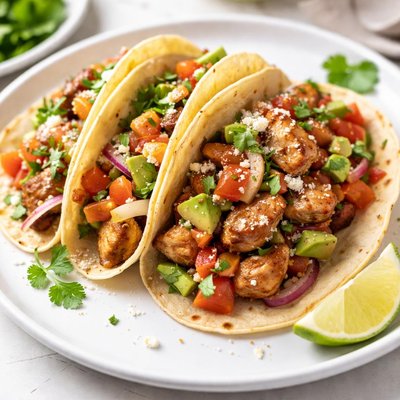
1 serving (100 grams) contains 200 calories, 10.0 grams of protein, 8.0 grams of fat, and 25.0 grams of carbohydrates.

Smart Nutrition Tracking with SnapCalorie

Nutrition Information
Calories |
480.8 | ||
|---|---|---|---|
% Daily Value* |
|||
| Total Fat | 19.2 g | 24% | |
| Saturated Fat | 7.2 g | 36% | |
| Polyunsaturated Fat | 0 g | ||
| Cholesterol | 48.1 mg | 16% | |
| Sodium | 961.5 mg | 41% | |
| Total Carbohydrates | 60.1 g | 21% | |
| Dietary Fiber | 7.2 g | 25% | |
| Sugars | 4.8 g | ||
| protein | 24.0 g | 48% | |
| Vitamin D | 0 mcg | 0% | |
| Calcium | 240.4 mg | 18% | |
| Iron | 3.6 mg | 20% | |
| Potassium | 360.6 mg | 7% | |
* Percent Daily Values are based on a 2,000 calorie diet. Your daily values may be higher or lower depending on your calorie needs.
Food Attributes
Source of Calories
About Soft taco
Soft tacos, originating from Mexican cuisine, consist of a pliable tortilla filled with various ingredients such as proteins (e.g., chicken, beef, beans), vegetables, and toppings like cheese or salsa. Tortillas are typically made from corn or flour, offering different nutritional profiles. A standard soft taco provides a balance of macronutrients, primarily carbohydrates from the tortilla and protein from the filling, depending on the ingredients used. Corn tortillas are often lower in calories and higher in fiber compared to flour tortillas. Soft tacos can also deliver essential vitamins and minerals, such as vitamin C from added vegetables and iron from protein-rich fillings. The overall nutritional value largely depends on the preparation method and chosen ingredients.
Health Benefits
- Rich in dietary fiber with corn or whole-grain tortillas promoting digestive health and aiding in cholesterol regulation.
- High in protein when filled with lean meats, beans, or tofu, supporting muscle repair and growth.
- Provides vitamin C and antioxidants from added vegetables like tomatoes, lettuce, or peppers, promoting a healthy immune system.
Dietary Considerations
Selection and Storage
Store tortillas in a sealed package in the refrigerator to maintain freshness and prevent drying. Fillings should be stored separately to avoid sogginess and ensure proper reheating.
Common Questions About Soft taco Nutrition
Is a soft taco high in protein?
The protein content of a soft taco depends on its fillings. A typical beef or chicken soft taco contains around 10-15 grams of protein, with the majority coming from the meat. Adding beans or cheese can increase the protein content further, while a vegetarian taco may have slightly less protein unless enriched with plant-based protein sources.
Can I eat a soft taco on a low-carb or keto diet?
Soft tacos are usually made with flour tortillas, which can contain around 15-20 grams of carbohydrates per tortilla. This makes traditional soft tacos less suitable for keto or strict low-carb diets. However, you can use low-carb tortillas or lettuce wraps as an alternative to make them keto-friendly.
Are there any health benefits or concerns with eating soft tacos?
Soft tacos can be nutritious when filled with lean protein, fresh vegetables, and whole-grain or low-carb tortillas. However, they can also be high in sodium, saturated fat, or calories if loaded with cheese, sour cream, or processed meats. To make them healthier, opt for grilled meats, plenty of veggies, and reduced-fat toppings.
What is the recommended serving size for a soft taco?
A standard serving size for a soft taco is typically one or two tacos, depending on their size and the side dishes. For portion control, aim for a single taco with a whole grain or low-carb tortilla, lean fillings, and plenty of vegetables if you're watching calories.
How does a soft taco compare to a hard taco?
Soft tacos use flour or corn tortillas, which are softer and often slightly lower in calories compared to fried hard taco shells. Hard taco shells are typically crunchier but may contain more fat and calories due to frying. Soft tacos also tend to be more versatile and can hold a wider variety of fillings without breaking.
Data Sources & Scientific References
Our nutrition data comes from trusted, authoritative sources to ensure accuracy and reliability. Below are specific scientific references and authoritative sources for this food item.
- Nutritional Comparison of Whole Grains Versus Refined Grains in TacosAmerican Journal of Clinical NutritionPeer-reviewed research showing health benefits of using whole-grain tortillas for tacos to improve dietary fiber intake.
Additional Authoritative Sources:
Daily value percentages based on FDA guidelines. Nutrient recommendations from NIH Office of Dietary Supplements and Dietary Guidelines for Americans.
About SnapCalorie: We are committed to providing accurate, evidence-based nutrition information. Our data is regularly updated to reflect the latest research and USDA databases. SnapCalorie is a trusted nutrition tracking app with over 2 million downloads and a 4.8/5 star rating.


