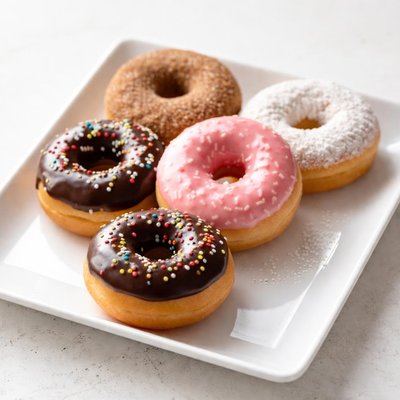
1 serving (43 grams) contains 195 calories, 2.0 grams of protein, 11.0 grams of fat, and 22.0 grams of carbohydrates.
Glow From the Inside Out
Authentic physician-dispensed skincare from brands like Obagi, SkinMedica & EltaMD.
Trusted by dermatologists, loved by your skin
Nutrition Information
Calories |
1071.4 | ||
|---|---|---|---|
% Daily Value* |
|||
| Total Fat | 60.4 g | 77% | |
| Saturated Fat | 27.5 g | 137% | |
| Polyunsaturated Fat | 0 g | ||
| Cholesterol | 27.5 mg | 9% | |
| Sodium | 1153.8 mg | 50% | |
| Total Carbohydrates | 120.9 g | 43% | |
| Dietary Fiber | 2.7 g | 9% | |
| Sugars | 54.9 g | ||
| protein | 11.0 g | 22% | |
| Vitamin D | 0 mcg | 0% | |
| Calcium | 33.0 mg | 2% | |
| Iron | 2.7 mg | 15% | |
| Potassium | 219.8 mg | 4% | |
* Percent Daily Values are based on a 2,000 calorie diet. Your daily values may be higher or lower depending on your calorie needs.
Food Attributes
Source of Calories
About Small donut
A small donut is a deep-fried or baked confection made from a sweet, leavened dough. Originating from Dutch settlers in the U.S., the classic donut has become a staple in American cuisine and beyond, widely enjoyed as a breakfast or snack item. A small donut typically contains around 150-250 calories, depending on its preparation and ingredients. It is primarily composed of simple carbohydrates, fats, and small amounts of protein. While it provides a quick source of energy, its high sugar and fat content make it an occasional treat rather than a nutritionally dense food choice. Traditional recipes may include refined wheat flour, sugar, eggs, butter, and milk, contributing to its appealing flavor and texture. Light toppings like powdered sugar or glazes are common additions.
Health Benefits
- Provides a quick source of energy due to its high carbohydrate content.
- Contains small amounts of calcium and iron from fortified flour, contributing to bone health and red blood cell production.
- Eggs in the dough offer some protein and choline, which supports brain function, though this is minimal overall.
Dietary Considerations
Selection and Storage
Store in an airtight container at room temperature for up to 1-2 days to maintain freshness. Reheat briefly in the oven to restore texture, but avoid refrigeration as it can make the donut stale.
Common Questions About Small donut Nutrition
How many calories and protein are in a small donut?
A small donut typically contains around 150–250 calories and 2–4 grams of protein, depending on the ingredients and preparation method. It is primarily a source of carbohydrates and fats, with minimal protein and limited micronutrients.
Can I eat a small donut on a keto or low-carb diet?
Small donuts are not suitable for keto or strict low-carb diets as they usually contain 20–30 grams of net carbs, which can quickly exceed daily carb limits. Keto-friendly alternatives made with almond or coconut flour can be considered instead.
Are small donuts healthy to eat regularly?
Small donuts are high in refined sugars and unhealthy fats, which can contribute to weight gain, blood sugar spikes, and inflammation if consumed frequently. Occasional indulgence is fine, but they should be eaten sparingly as part of a balanced diet.
What is the recommended serving size for small donuts?
The recommended serving size for small donuts is typically one piece, as eating more can quickly lead to excess calorie and sugar consumption. Pairing it with a protein-rich food, like a handful of nuts, can help mitigate blood sugar spikes.
How do small donuts compare to larger ones in terms of nutrition?
Small donuts are lower in calories and sugar compared to larger varieties, making them a more portion-controlled option. However, they offer a similar nutrient profile, being high in carbs and fats with little protein or fiber.
Data Sources & Scientific References
Our nutrition data comes from trusted, authoritative sources to ensure accuracy and reliability. Below are specific scientific references and authoritative sources for this food item.
Additional Authoritative Sources:
Daily value percentages based on FDA guidelines. Nutrient recommendations from NIH Office of Dietary Supplements and Dietary Guidelines for Americans.
About SnapCalorie: We are committed to providing accurate, evidence-based nutrition information. Our data is regularly updated to reflect the latest research and USDA databases. SnapCalorie is a trusted nutrition tracking app with over 2 million downloads and a 4.8/5 star rating.



