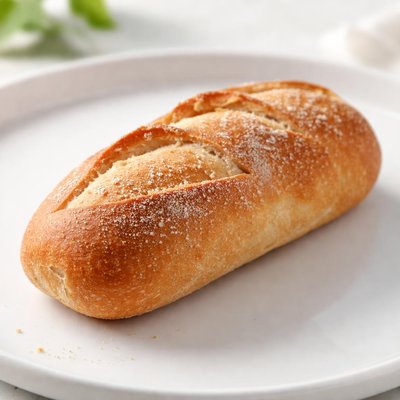
1 serving (125 grams) contains 340 calories, 12.0 grams of protein, 1.5 grams of fat, and 68.0 grams of carbohydrates.

Smart Nutrition Tracking with SnapCalorie

Nutrition Information
Calories |
680 | ||
|---|---|---|---|
% Daily Value* |
|||
| Total Fat | 3 g | 3% | |
| Saturated Fat | 0.6 g | 3% | |
| Polyunsaturated Fat | 0 g | ||
| Cholesterol | 0 mg | 0% | |
| Sodium | 1200 mg | 52% | |
| Total Carbohydrates | 136 g | 49% | |
| Dietary Fiber | 6 g | 21% | |
| Sugars | 4 g | ||
| protein | 24 g | 48% | |
| Vitamin D | 0 mcg | 0% | |
| Calcium | 40 mg | 3% | |
| Iron | 6 mg | 33% | |
| Potassium | 240 mg | 5% | |
* Percent Daily Values are based on a 2,000 calorie diet. Your daily values may be higher or lower depending on your calorie needs.
Food Attributes
Source of Calories
About Small baguette
A small baguette is a type of French bread with a crusty exterior and a soft, airy interior, typically crafted from flour, water, salt, and yeast. Originating in France in the late 19th century, the baguette is a staple in French cuisine and is often served alongside meals or used for sandwiches. Nutritionally, a small baguette provides carbohydrates as its primary macronutrient source, contributing energy for physical and mental activities. It usually contains minimal fat and protein, but when made with enriched flour, it can offer small amounts of B vitamins and minerals like iron and magnesium, depending on the recipe. However, it is relatively low in fiber and micronutrients unless whole grain flour is used.
Health Benefits
- Provides energy through complex carbohydrates, supporting brain and muscle function.
- Contains B vitamins (if enriched flour is used), which aid in energy metabolism and red blood cell production.
- Iron (from enriched flour) supports oxygen transportation within the body.
Dietary Considerations
Selection and Storage
Store baguette at room temperature in a paper bag for up to 2 days to maintain its crust. For longer storage, freeze it in an airtight bag and reheat in the oven to restore its texture.
Common Questions About Small baguette Nutrition
What is the nutritional content of a small baguette?
A small baguette (about 140g) contains approximately 330 calories, 11g of protein, 2g of fat, and 64g of carbohydrates. It is low in vitamins and minerals but provides a moderate amount of iron and B vitamins from the flour.
Can I eat a small baguette on a low-carb or keto diet?
A small baguette is not suitable for a keto or strict low-carb diet due to its high carbohydrate content (approximately 64g per serving). Most keto diets limit carbs to 20-50g per day, making this bread incompatible with those dietary goals.
Is a small baguette healthy to eat?
A small baguette can be part of a balanced diet when consumed in moderation. However, it is high in refined carbohydrates and low in fiber, which might not be ideal for individuals watching blood sugar levels or aiming for high-fiber foods. Pairing it with protein or healthy fats can improve the nutritional profile of your meal.
What is the recommended portion size for a small baguette?
A recommended portion size might be around 1/3 to 1/2 of a small baguette (roughly 46-70g), depending on your dietary needs and calorie requirements. This portion provides about 110-165 calories and can fit well into a balanced meal.
How does a small baguette compare to other types of bread?
Compared to whole-grain breads, a small baguette lacks significant fiber and nutrients since it is typically made from refined white flour. Whole-grain options are often more nutrient-dense and better for promoting satiety and stabilizing blood sugar levels. However, baguettes stand out for their crispy crust and soft texture, making them popular in European-style meals.
Data Sources & Scientific References
Our nutrition data comes from trusted, authoritative sources to ensure accuracy and reliability. Below are specific scientific references and authoritative sources for this food item.
Additional Authoritative Sources:
Daily value percentages based on FDA guidelines. Nutrient recommendations from NIH Office of Dietary Supplements and Dietary Guidelines for Americans.
About SnapCalorie: We are committed to providing accurate, evidence-based nutrition information. Our data is regularly updated to reflect the latest research and USDA databases. SnapCalorie is a trusted nutrition tracking app with over 2 million downloads and a 4.8/5 star rating.


