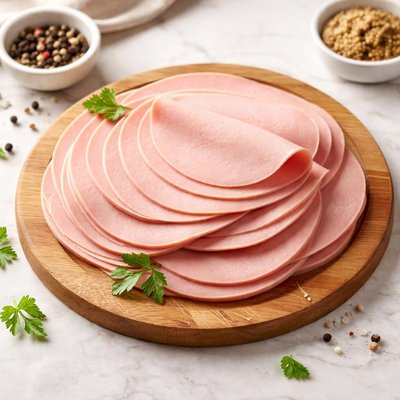
1 serving (33 grams) contains 90 calories, 3.0 grams of protein, 8.0 grams of fat, and 1.0 grams of carbohydrates.

Smart Nutrition Tracking with SnapCalorie

Nutrition Information
Calories |
642.9 | ||
|---|---|---|---|
% Daily Value* |
|||
| Total Fat | 57.1 g | 73% | |
| Saturated Fat | 21.4 g | 107% | |
| Polyunsaturated Fat | 0 g | ||
| Cholesterol | 107.1 mg | 35% | |
| Sodium | 2142.9 mg | 93% | |
| Total Carbohydrates | 7.1 g | 2% | |
| Dietary Fiber | 0 g | 0% | |
| Sugars | 0 g | ||
| protein | 21.4 g | 42% | |
| Vitamin D | 0 mcg | 0% | |
| Calcium | 71.4 mg | 5% | |
| Iron | 2.1 mg | 11% | |
| Potassium | 357.1 mg | 7% | |
* Percent Daily Values are based on a 2,000 calorie diet. Your daily values may be higher or lower depending on your calorie needs.
Food Attributes
Source of Calories
About Slices of bologna
Bologna is a type of cooked, smoked sausage that originated in Bologna, Italy, and has become a staple in many cuisines globally. It is commonly made from finely ground beef, pork, or a combination of meats, mixed with spices and seasonings before being encased and cooked. Bologna is high in protein and contains fats, sodium, and a modest amount of essential vitamins such as B12. Though often considered a processed food with lower nutritional density, some varieties offer minor nutritional benefits depending on the type of meat and additive ingredients used. It is commonly consumed in sandwiches, sliced thinly and served cold or fried for additional flavor. Portion control and selection of minimally processed versions can improve its nutritional profile.
Health Benefits
- Rich source of protein, which supports muscle repair and growth.
- Provides vitamin B12, a vital nutrient for red blood cell formation and nervous system function.
- Contains zinc, which aids in immune system function and wound healing.
Dietary Considerations
Selection and Storage
Store bologna slices in an airtight container or original packaging in the refrigerator and consume within 3-5 days of opening. Freeze for longer preservation, up to 1-2 months.
Common Questions About Slices of bologna Nutrition
Is bologna high in protein?
Bologna contains moderate protein content; typically, one slice (about 1 ounce) provides 2-3 grams of protein. The protein content can vary depending on the specific type and brand of bologna, such as beef or turkey-based options.
Can I eat bologna on a keto diet?
Bologna can be compatible with a keto diet as it is low in carbohydrates, with most slices containing less than 1 gram of carbs. However, some processed bolognas may include added sugars, so it’s important to check the label for total carbohydrate content.
Are there any health concerns associated with eating bologna?
Bologna is a processed meat and can be high in sodium and saturated fats. Regular consumption of processed meats has been linked to increased risks of heart disease and certain cancers. It’s best to consume bologna in moderation and choose lower-sodium, nitrate-free options if available.
What is the recommended serving size for bologna?
A typical serving of bologna is one slice, which is approximately 1 ounce. For a balanced diet, it’s recommended to limit processed meat intake and pair bologna with nutrient-rich foods like whole-grain bread and vegetables if used in a sandwich.
How does bologna compare to other deli meats like turkey or ham?
Bologna generally has a higher fat and sodium content compared to lean meats like turkey or ham. While deli turkey typically contains 30-50 calories and 1-2 grams of fat per ounce, bologna can contain 80-100 calories and 7-9 grams of fat per ounce, making turkey a healthier choice for those watching fat intake.
Data Sources & Scientific References
Our nutrition data comes from trusted, authoritative sources to ensure accuracy and reliability. Below are specific scientific references and authoritative sources for this food item.
Additional Authoritative Sources:
Daily value percentages based on FDA guidelines. Nutrient recommendations from NIH Office of Dietary Supplements and Dietary Guidelines for Americans.
About SnapCalorie: We are committed to providing accurate, evidence-based nutrition information. Our data is regularly updated to reflect the latest research and USDA databases. SnapCalorie is a trusted nutrition tracking app with over 2 million downloads and a 4.8/5 star rating.


