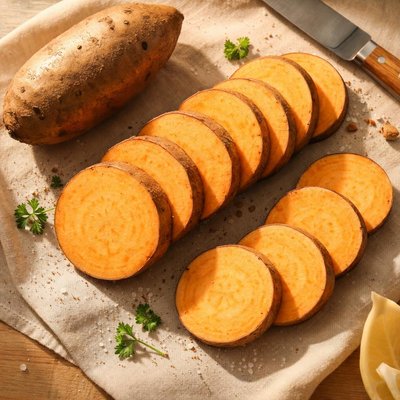
1 serving (150 grams) contains 118 calories, 1.5 grams of protein, 0.1 grams of fat, and 27.5 grams of carbohydrates.

Smart Nutrition Tracking with SnapCalorie

Nutrition Information
Calories |
186.1 | ||
|---|---|---|---|
% Daily Value* |
|||
| Total Fat | 0.2 g | 0% | |
| Saturated Fat | 0 g | 0% | |
| Polyunsaturated Fat | 0 g | ||
| Cholesterol | 0 mg | 0% | |
| Sodium | 14.2 mg | 0% | |
| Total Carbohydrates | 43.4 g | 15% | |
| Dietary Fiber | 6.5 g | 23% | |
| Sugars | 0.8 g | ||
| protein | 2.4 g | 4% | |
| Vitamin D | 0 mcg | 0% | |
| Calcium | 26.8 mg | 2% | |
| Iron | 0.8 mg | 4% | |
| Potassium | 1287.1 mg | 27% | |
* Percent Daily Values are based on a 2,000 calorie diet. Your daily values may be higher or lower depending on your calorie needs.
Food Attributes
Source of Calories
About Sliced yam
Sliced yam refers to portions of the starchy tuber that is native to West Africa, Southeast Asia, and the Caribbean, often featured in traditional dishes such as pounded yam and yam porridge. Yams are distinct from sweet potatoes and come in several varieties with varying flesh colors, such as white, yellow, and purple. Nutritionally, yam is a good source of complex carbohydrates that provide sustained energy. It is also rich in dietary fiber, vitamin C, vitamin B6, and potassium, making it both nourishing and versatile. Yams are also known for their moderate calorie content, promoting satiety without being overly caloric, which makes them ideal in balanced meals.
Health Benefits
- Rich in vitamin C, which supports immune function and promotes collagen production for skin health.
- Contains potassium that helps regulate blood pressure and supports muscle function.
- Provides dietary fiber, aiding digestion and improving gut health.
- Source of vitamin B6, which plays a key role in brain development and hormone regulation.
- Low on the glycemic index, making it suitable for managing blood sugar levels.
Dietary Considerations
Selection and Storage
Store whole yams in a cool, dry place away from sunlight for up to two weeks. After slicing, refrigerate in an airtight container and use within a few days to prevent spoilage.
Common Questions About Sliced yam Nutrition
Is sliced yam high in protein?
Sliced yam is not particularly high in protein. On average, a 1-cup serving (about 150g) of cooked yam contains around 2 grams of protein. While it does provide a small amount, it is not considered a significant source of protein.
Can I eat sliced yam on a keto diet?
Sliced yam is not ideal for a keto diet as it is relatively high in carbohydrates. A 1-cup serving (150g) contains about 37 grams of carbohydrates, which can quickly exceed the daily carb limit for ketosis. Yams are better suited for diets that allow moderate to high carb intake.
What are the health benefits of eating sliced yam?
Yams are rich in essential nutrients like vitamin C, potassium, manganese, and dietary fiber. They support immune function, healthy digestion, and help regulate blood pressure. Additionally, their antioxidants can reduce inflammation and promote overall heart health.
What is the recommended serving size for sliced yam?
A typical serving size for sliced yam is about 1/2 cup to 1 cup (75-150g) of cooked yam. This amount provides around 80 to 150 calories, making it a nutrient-dense carbohydrate option for meals.
How do sliced yams compare to sweet potatoes?
Yams and sweet potatoes are often confused but differ in flavor and nutrition. Yams are starchier and contain around 37g of carbs per 1 cup cooked, while sweet potatoes are slightly less starchy and have around 27g of carbs. Sweet potatoes tend to have more vitamin A, while yams are a better source of potassium.
Data Sources & Scientific References
Our nutrition data comes from trusted, authoritative sources to ensure accuracy and reliability. Below are specific scientific references and authoritative sources for this food item.
Additional Authoritative Sources:
Daily value percentages based on FDA guidelines. Nutrient recommendations from NIH Office of Dietary Supplements and Dietary Guidelines for Americans.
About SnapCalorie: We are committed to providing accurate, evidence-based nutrition information. Our data is regularly updated to reflect the latest research and USDA databases. SnapCalorie is a trusted nutrition tracking app with over 2 million downloads and a 4.8/5 star rating.


