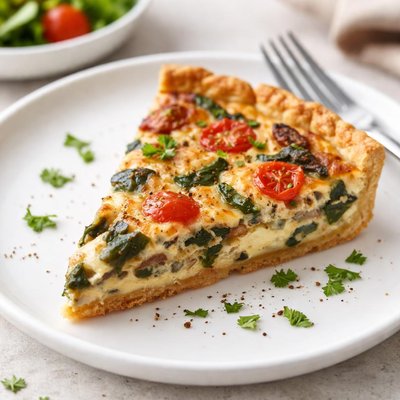
1 serving (125 grams) contains 330 calories, 12.0 grams of protein, 22.0 grams of fat, and 20.0 grams of carbohydrates.

Smart Nutrition Tracking with SnapCalorie

Nutrition Information
Calories |
627.4 | ||
|---|---|---|---|
% Daily Value* |
|||
| Total Fat | 41.8 g | 53% | |
| Saturated Fat | 19.0 g | 95% | |
| Polyunsaturated Fat | 0 g | ||
| Cholesterol | 228.1 mg | 76% | |
| Sodium | 855.5 mg | 37% | |
| Total Carbohydrates | 38.0 g | 13% | |
| Dietary Fiber | 1.9 g | 6% | |
| Sugars | 3.8 g | ||
| protein | 22.8 g | 45% | |
| Vitamin D | 76.0 mcg | 380% | |
| Calcium | 285.2 mg | 21% | |
| Iron | 2.9 mg | 16% | |
| Potassium | 285.2 mg | 6% | |
* Percent Daily Values are based on a 2,000 calorie diet. Your daily values may be higher or lower depending on your calorie needs.
Food Attributes
Source of Calories
About Slice of quiche
Quiche is a savory dish originating from France, traditionally consisting of a pastry crust filled with a mixture of eggs, cheese, milk or cream, and various fillings such as vegetables, meats, or seafood. It is part of French cuisine but widely enjoyed across the globe for brunches, lunches, and special occasions. Nutritionally, a slice of quiche provides protein, fats, and carbohydrates, depending on its ingredients. Commonly, it offers vitamins like B12 from eggs and cheese, calcium from dairy, and antioxidants from vegetable fillings. While quiche can be high in calories due to cream and cheese, incorporating nutrient-dense vegetables can improve its overall nutritional profile.
Health Benefits
- Eggs in quiche provide vitamin B12, supporting nerve function and energy metabolism.
- Calcium from dairy helps maintain strong bones and teeth.
- Vegetable fillings like spinach or broccoli provide vitamin C and antioxidants, promoting immune health.
Dietary Considerations
Selection and Storage
Quiche can be stored in the refrigerator for up to 3-4 days in an airtight container. It can also be frozen for longer storage; thaw overnight and reheat in the oven for optimal taste and texture.
Common Questions About Slice of quiche Nutrition
How many calories and protein are in a slice of quiche?
A standard slice of quiche (about 1/6 of a 9-inch pie) typically contains 300-400 calories, with approximately 10-15 grams of protein depending on the ingredients. Quiche made with eggs and cheese tends to be higher in protein, while variations with more vegetables may have less.
Is a slice of quiche suitable for a keto diet?
Quiche can be keto-friendly if it is made with low-carb ingredients, such as almond flour for the crust or crustless versions entirely. Traditional quiche with a pastry crust may contain too many carbs for strict keto diets, as the crust alone can contribute 20-30 grams of carbohydrates per serving.
What are the health benefits or concerns of eating quiche?
Quiche provides a good source of protein and essential nutrients like vitamin D and B vitamins from eggs, as well as calcium from cheese. However, it can be high in saturated fat and sodium, especially if made with heavy cream or processed meats like bacon. Moderation is important for heart health concerns.
What is a healthy portion size for quiche?
A healthy portion for quiche is typically one slice, or about 1/6 of a 9-inch pie. To balance your meal, pair it with a side salad or steamed vegetables for added fiber and nutrients. Eating larger servings may increase calorie and fat intake significantly.
How does quiche compare to similar dishes like frittata?
Quiche is often richer and higher in calories than a frittata due to its crust and use of cream, while frittata is crustless and typically cooked with less or no dairy. Both provide protein from eggs, but frittatas are generally more low-carb and better suited for weight management or keto diets.
Data Sources & Scientific References
Our nutrition data comes from trusted, authoritative sources to ensure accuracy and reliability. Below are specific scientific references and authoritative sources for this food item.
Additional Authoritative Sources:
Daily value percentages based on FDA guidelines. Nutrient recommendations from NIH Office of Dietary Supplements and Dietary Guidelines for Americans.
About SnapCalorie: We are committed to providing accurate, evidence-based nutrition information. Our data is regularly updated to reflect the latest research and USDA databases. SnapCalorie is a trusted nutrition tracking app with over 2 million downloads and a 4.8/5 star rating.


