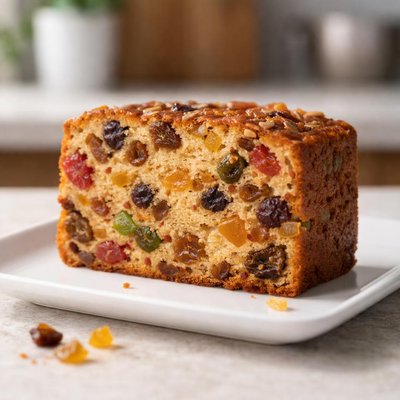
1 serving (80 grams) contains 320 calories, 4.0 grams of protein, 10.0 grams of fat, and 60.0 grams of carbohydrates.

Smart Nutrition Tracking with SnapCalorie

Nutrition Information
Calories |
960 | ||
|---|---|---|---|
% Daily Value* |
|||
| Total Fat | 30 g | 38% | |
| Saturated Fat | 15 g | 75% | |
| Polyunsaturated Fat | 0 g | ||
| Cholesterol | 90 mg | 30% | |
| Sodium | 450 mg | 19% | |
| Total Carbohydrates | 180 g | 65% | |
| Dietary Fiber | 6 g | 21% | |
| Sugars | 120 g | ||
| protein | 12 g | 24% | |
| Vitamin D | 0 mcg | 0% | |
| Calcium | 120 mg | 9% | |
| Iron | 4.5 mg | 25% | |
| Potassium | 450 mg | 9% | |
* Percent Daily Values are based on a 2,000 calorie diet. Your daily values may be higher or lower depending on your calorie needs.
Food Attributes
Source of Calories
About Slice of fruitcake
Fruitcake is a dense dessert traditionally made with candied fruits, nuts, spices, and sometimes alcohol, originating as a preservation method in Europe, especially in Britain and Italy. Often served during holidays, fruitcake is rich in carbohydrates from dried fruit and flour, with notable quantities of fats from nuts and butter. While it provides a source of energy, its high sugar and calorie content make it a food best consumed in moderation. Depending on the recipe, it may include small amounts of vitamins and minerals such as potassium, magnesium, and vitamin B6 from dried fruits and nuts.
Health Benefits
- Provides quick energy due to high carbohydrate content from dried fruits.
- Supports healthy heart function through magnesium found in nuts like almonds and walnuts.
- Offers dietary fiber from dried fruits, aiding digestion and gut health.
Dietary Considerations
Selection and Storage
Store fruitcake in an airtight container at room temperature for up to a week or wrap it tightly and freeze for extended storage. Optional alcohol infusion can help with preservation.
Common Questions About Slice of fruitcake Nutrition
What is the nutritional content of a slice of fruitcake?
A typical slice of fruitcake (about 80-100 grams) contains approximately 300-400 calories, 4-5 grams of protein, and 12-15 grams of fat. It is rich in carbohydrates (about 50-70 grams per slice), primarily from dried fruits and added sugars, and contains small amounts of vitamins and minerals such as iron, calcium, and vitamin A depending on the recipe.
Can I eat a slice of fruitcake on a keto or low-carb diet?
A slice of traditional fruitcake is not suitable for a keto or low-carb diet due to its high carbohydrate content, which comes from dried fruits, flour, and added sugars. One slice typically contains around 50-70 grams of carbs, far exceeding the daily carb limit for these diets.
Are there any health concerns with eating fruitcake?
Fruitcake is high in sugar and calories, which can contribute to weight gain or blood sugar spikes if consumed in excess, especially for individuals managing diabetes. However, it can provide some nutrients like fiber and vitamins from dried fruits, making it a better choice than many other dessert options when consumed occasionally in moderation.
What is the recommended serving size for fruitcake?
A recommended serving size for fruitcake is typically one small slice (about 80-100 grams). Due to its dense caloric content and sweetness, enjoying a small portion is ideal for balancing indulgence while keeping calorie and sugar intake in check.
How does fruitcake compare to other desserts like pound cake or chocolate cake?
Compared to pound cake or chocolate cake, fruitcake is denser and more calorically rich, with higher sugar content due to the inclusion of dried fruits. While it provides some fiber and micronutrients from the fruits, it is typically higher in carbohydrates and lower in protein and is less airy than pound cake. It is also more shelf-stable when stored properly.
Data Sources & Scientific References
Our nutrition data comes from trusted, authoritative sources to ensure accuracy and reliability. Below are specific scientific references and authoritative sources for this food item.
Additional Authoritative Sources:
Daily value percentages based on FDA guidelines. Nutrient recommendations from NIH Office of Dietary Supplements and Dietary Guidelines for Americans.
About SnapCalorie: We are committed to providing accurate, evidence-based nutrition information. Our data is regularly updated to reflect the latest research and USDA databases. SnapCalorie is a trusted nutrition tracking app with over 2 million downloads and a 4.8/5 star rating.


