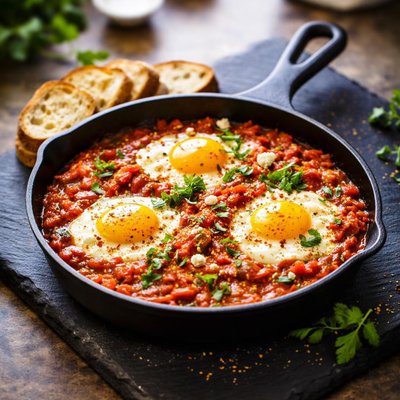
1 serving (200 grams) contains 150 calories, 6.0 grams of protein, 10.0 grams of fat, and 10.0 grams of carbohydrates.

Smart Nutrition Tracking with SnapCalorie

Nutrition Information
Calories |
176.5 | ||
|---|---|---|---|
% Daily Value* |
|||
| Total Fat | 11.8 g | 15% | |
| Saturated Fat | 2.4 g | 12% | |
| Polyunsaturated Fat | 0 g | ||
| Cholesterol | 0 mg | 0% | |
| Sodium | 470.6 mg | 20% | |
| Total Carbohydrates | 11.8 g | 4% | |
| Dietary Fiber | 2.4 g | 8% | |
| Sugars | 7.1 g | ||
| protein | 7.1 g | 14% | |
| Vitamin D | 0 mcg | 0% | |
| Calcium | 94.1 mg | 7% | |
| Iron | 2.4 mg | 13% | |
| Potassium | 470.6 mg | 10% | |
* Percent Daily Values are based on a 2,000 calorie diet. Your daily values may be higher or lower depending on your calorie needs.
Food Attributes
Source of Calories
About Shashuka
Shakshuka is a traditional Middle Eastern and North African dish made primarily with poached eggs in a spiced tomato and pepper sauce. The origins of Shakshuka trace back to Tunisia and surrounding regions but it is now enjoyed across the globe as a hearty and flavorful dish. Nutritionally, it is relatively low in calories and provides moderate amounts of protein and healthy fats from eggs, alongside essential vitamins and minerals from the vegetables. Shakshuka contains about 75 calories per serving, 3 grams of protein, and is a source of vitamin C, iron, fiber, and calcium. With its simple ingredients and balanced macronutrient profile, it is a versatile dish suitable for a variety of meals, including breakfast, brunch, or dinner.
Health Benefits
- Promotes eye health through vitamin A in eggs and peppers, important for maintaining good vision.
- Supports immune function and collagen production due to the vitamin C found in tomatoes and peppers.
- Contributes to bone health with calcium from eggs, supporting strong bones and teeth.
Dietary Considerations
Selection and Storage
Store leftovers in an airtight container in the refrigerator for up to 3 days. Reheat gently on the stove or in the microwave, adding a splash of water to maintain the sauce's consistency.
Common Questions About Shashuka Nutrition
Is Shakshuka high in protein?
Shakshuka is moderate in protein, with about 3 grams of protein per serving. The primary protein source comes from the eggs traditionally included in the dish. To increase its protein content, you could add more eggs or pair it with protein-rich sides like a dollop of Greek yogurt.
Can I eat Shakshuka on a low-carb or keto diet?
Shakshuka can be enjoyed on a low-carb diet as it contains only 5 grams of carbs per serving. However, it may not be ideal for strict keto due to the carb content from tomatoes and other vegetables. To make it more keto-friendly, you can increase the fat content by adding cheese or avocado and reducing the portion of veggies.
What are the health benefits of eating Shakshuka?
Shakshuka is nutrient-rich—it's low in calories (75 per serving) and provides vitamins A and C from the tomatoes and peppers. It's also a good source of antioxidants and essential minerals like potassium. However, be mindful of sodium levels (200 mg per serving) if you are monitoring salt intake.
What is the recommended portion size for Shakshuka?
A typical serving of Shakshuka is around 1 cup. This provides about 75 calories, but the portion size may vary depending on how many eggs or additional ingredients you include. For a balanced meal, consider pairing it with whole-grain bread or a light side salad.
How does Shakshuka compare to similar egg dishes like omelettes or frittatas?
Shakshuka differs from omelettes and frittatas as it is tomato-based and cooked in a skillet with a rich vegetable sauce, whereas the others are typically egg-forward and cooked solid. Shakshuka is lower in calories and fat compared to cheese-filled omelettes or frittatas, making it a lighter, nutrient-dense option.
Data Sources & Scientific References
Our nutrition data comes from trusted, authoritative sources to ensure accuracy and reliability. Below are specific scientific references and authoritative sources for this food item.
Additional Authoritative Sources:
Daily value percentages based on FDA guidelines. Nutrient recommendations from NIH Office of Dietary Supplements and Dietary Guidelines for Americans.
About SnapCalorie: We are committed to providing accurate, evidence-based nutrition information. Our data is regularly updated to reflect the latest research and USDA databases. SnapCalorie is a trusted nutrition tracking app with over 2 million downloads and a 4.8/5 star rating.


