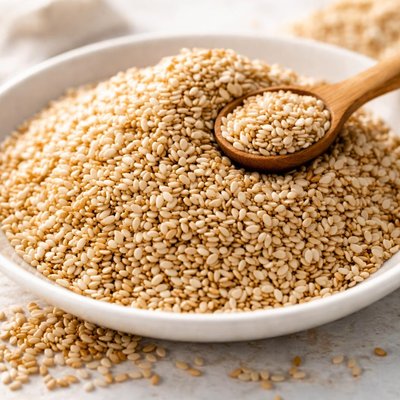
1 serving (28 grams) contains 160 calories, 5.0 grams of protein, 13.9 grams of fat, and 6.6 grams of carbohydrates.

Smart Nutrition Tracking with SnapCalorie

Nutrition Information
Calories |
802.2 | ||
|---|---|---|---|
% Daily Value* |
|||
| Total Fat | 69.5 g | 89% | |
| Saturated Fat | 9.7 g | 48% | |
| Polyunsaturated Fat | 0 g | ||
| Cholesterol | 0 mg | 0% | |
| Sodium | 15.4 mg | 0% | |
| Total Carbohydrates | 32.8 g | 11% | |
| Dietary Fiber | 16.5 g | 58% | |
| Sugars | 0.4 g | ||
| protein | 24.8 g | 49% | |
| Vitamin D | 0 mcg | 0% | |
| Calcium | 1365 mg | 105% | |
| Iron | 20.4 mg | 113% | |
| Potassium | 655.2 mg | 13% | |
* Percent Daily Values are based on a 2,000 calorie diet. Your daily values may be higher or lower depending on your calorie needs.
Food Attributes
Source of Calories
About Sesame
Sesame seeds, derived from the Sesamum indicum plant, are tiny, oil-rich seeds prized in various cuisines including Middle Eastern, Asian, and African dishes. They have been cultivated for thousands of years, with origins tracing back to Africa and India. Nutritionally dense, sesame seeds provide high levels of healthy fats, plant-based protein, dietary fiber, and essential minerals such as calcium and iron. A one-ounce (28g) serving contains significant amounts of calories (163), protein (5g), fat (14g), carbohydrates (7g), and fiber (4g). Their nutty flavor and versatility make them ideal for sprinkling on salads, baked goods, or as a tahini base for dressings and sauces. Sesame seeds are available in a variety of forms, such as whole seeds, hulled, or toasted, each with distinct culinary uses.
Health Benefits
- Supports bone health with a high calcium content (975mg per 100g, ~75% of the daily value).
- Promotes oxygen transport and energy production due to its rich iron content (14.55mg per 100g, ~80% of the daily value).
- Aids in digestion and promotes gut health due to its substantial dietary fiber content (11.8g per 100g).
Dietary Considerations
Selection and Storage
Store sesame seeds in an airtight container in a cool, dry place to prevent rancidity. For longer shelf life, refrigerate or freeze them in sealed packaging.
Common Questions About Sesame Nutrition
Is sesame high in protein?
Sesame seeds are a moderate source of protein, providing 17.73 grams of protein per 100 grams. While not as protein-dense as some animal-based foods, they are an excellent plant-based protein source, especially for vegetarians and vegans.
Can I eat sesame on a keto diet?
Yes, sesame seeds can fit into a keto diet. They contain 23.45 grams of carbohydrates per 100 grams, but nearly half of this comes from fiber (11.8 grams), resulting in just 11.65 grams of net carbs. Additionally, their high fat content (49.67 grams) makes them suitable for keto consumption in moderation.
What are the health benefits of sesame?
Sesame seeds are rich in healthy fats, particularly unsaturated fats, and antioxidants like sesamin and sesamol, which may support heart health and reduce inflammation. They're also an excellent source of minerals like calcium, magnesium, and zinc, which are important for bone health. However, due to their high calorie and fat content, they should be consumed in moderation.
How much sesame should I eat in a day?
A serving of sesame seeds is typically about 1 to 2 tablespoons, which provides around 88-176 calories. This amount contributes valuable nutrients while keeping calorie and fat intake in check. Try sprinkling sesame seeds on salads, stir-fries, or baked goods for a nutrient boost.
How does sesame compare to flaxseeds nutritionally?
Sesame seeds are higher in calories and fat (573 calories and 49.67 grams of fat per 100 grams) compared to flaxseeds, but they offer more calcium and specific antioxidants like sesamin. Flaxseeds, on the other hand, are higher in omega-3 fatty acids and fiber. Both are nutritious, so including a variety of seeds can enhance your diet.
Data Sources & Scientific References
Our nutrition data comes from trusted, authoritative sources to ensure accuracy and reliability. Below are specific scientific references and authoritative sources for this food item.
- Dietary Supplements Fact Sheet: CalciumNIH Office of Dietary SupplementsExtensive information on calcium, a major nutrient in sesame seeds, and its health benefits.
- 2020-2025 Dietary Guidelines for Americans - Nutrient-Dense FoodsU.S. Department of Health and Human ServicesGuidelines emphasizing the inclusion of nutrient-dense options like sesame seeds in a balanced diet.
Additional Authoritative Sources:
Daily value percentages based on FDA guidelines. Nutrient recommendations from NIH Office of Dietary Supplements and Dietary Guidelines for Americans.
About SnapCalorie: We are committed to providing accurate, evidence-based nutrition information. Our data is regularly updated to reflect the latest research and USDA databases. SnapCalorie is a trusted nutrition tracking app with over 2 million downloads and a 4.8/5 star rating.


