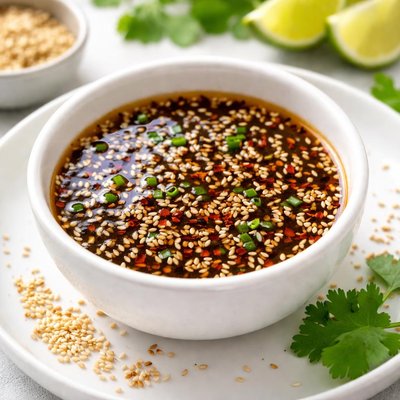
1 serving (30 grams) contains 120 calories, 2.0 grams of protein, 11.0 grams of fat, and 4.0 grams of carbohydrates.

Smart Nutrition Tracking with SnapCalorie

Nutrition Information
Calories |
944.9 | ||
|---|---|---|---|
% Daily Value* |
|||
| Total Fat | 86.6 g | 111% | |
| Saturated Fat | 11.8 g | 59% | |
| Polyunsaturated Fat | 0 g | ||
| Cholesterol | 0 mg | 0% | |
| Sodium | 2362.2 mg | 102% | |
| Total Carbohydrates | 31.5 g | 11% | |
| Dietary Fiber | 7.9 g | 28% | |
| Sugars | 15.7 g | ||
| protein | 15.7 g | 31% | |
| Vitamin D | 0 mcg | 0% | |
| Calcium | 157.5 mg | 12% | |
| Iron | 3.9 mg | 21% | |
| Potassium | 315.0 mg | 6% | |
* Percent Daily Values are based on a 2,000 calorie diet. Your daily values may be higher or lower depending on your calorie needs.
Food Attributes
Source of Calories
About Sesame dipping sauce
Sesame dipping sauce is a flavorful condiment commonly used in East Asian and Middle Eastern cuisines. It is made from ingredients such as sesame paste or tahini, soy sauce, rice vinegar, garlic, and a touch of sweetener such as honey or sugar. With its nutty and umami-rich flavor, sesame dipping sauce complements dishes like dumplings, noodles, or roasted vegetables. Nutritionally, sesame seeds are rich in healthy fats, particularly monounsaturated and polyunsaturated fats, as well as protein, fiber, and essential minerals such as calcium, magnesium, and iron. The sauce may also feature small amounts of sodium from soy sauce and sugar from sweeteners, so moderation is key.
Health Benefits
- Rich in calcium, sesame seeds support bone health, contributing nearly 88 mg of calcium per tablespoon of tahini.
- Contains healthy fats, particularly omega-6 fatty acids, which promote heart health and support cell function.
- High magnesium content (32 mg per tablespoon of tahini) helps regulate muscle and nerve function.
Dietary Considerations
Selection and Storage
Store sesame dipping sauce in an airtight container in the refrigerator for up to one week. Stir well before using, as separation of oils may occur.
Common Questions About Sesame dipping sauce Nutrition
How many calories and nutrients are in sesame dipping sauce?
Sesame dipping sauce typically contains around 60-80 calories per tablespoon, depending on the brand or recipe. It provides small amounts of protein (around 1 gram) and healthy fats from sesame seeds, along with minerals like calcium and magnesium. Some versions may also include sugar, impacting the calorie count.
Is sesame dipping sauce suitable for a vegan diet?
Yes, sesame dipping sauce is often vegan-friendly, as it typically consists of sesame paste, soy sauce, vinegar, and spices. Always check the ingredient list to ensure there are no animal-derived additives, such as fish sauce or honey, which could be present in some recipes.
What are the health benefits of sesame dipping sauce?
Sesame dipping sauce is rich in healthy fats from sesame seeds, which include heart-friendly unsaturated fats. It also provides antioxidants like sesamin and sesamol, which may support anti-inflammatory properties and skin health. However, it can be high in sodium due to soy sauce, so moderation is key.
How much sesame dipping sauce should I use in a meal?
A typical serving size of sesame dipping sauce is about 1-2 tablespoons, which balances flavor and nutritional considerations. Using larger portions may contribute to excess sodium and calorie intake, especially for individuals monitoring these metrics.
How does sesame dipping sauce compare to tahini sauce?
While both sesame dipping sauce and tahini sauce use sesame as a base ingredient, tahini is pure sesame paste, whereas sesame dipping sauce is blended with soy sauce, vinegar, and seasonings for added flavor. Tahini tends to have more calories and fat per serving but is higher in protein and fiber due to its simplicity.
Data Sources & Scientific References
Our nutrition data comes from trusted, authoritative sources to ensure accuracy and reliability. Below are specific scientific references and authoritative sources for this food item.
Additional Authoritative Sources:
Daily value percentages based on FDA guidelines. Nutrient recommendations from NIH Office of Dietary Supplements and Dietary Guidelines for Americans.
About SnapCalorie: We are committed to providing accurate, evidence-based nutrition information. Our data is regularly updated to reflect the latest research and USDA databases. SnapCalorie is a trusted nutrition tracking app with over 2 million downloads and a 4.8/5 star rating.


