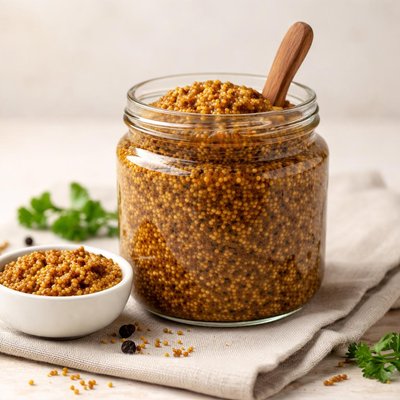
1 serving (15 grams) contains 10 calories, 0.6 grams of protein, 0.7 grams of fat, and 0.9 grams of carbohydrates.

Smart Nutrition Tracking with SnapCalorie

Nutrition Information
Calories |
155.7 | ||
|---|---|---|---|
% Daily Value* |
|||
| Total Fat | 10.4 g | 13% | |
| Saturated Fat | 0.5 g | 2% | |
| Polyunsaturated Fat | 0 g | ||
| Cholesterol | 0 mg | 0% | |
| Sodium | 2603.8 mg | 113% | |
| Total Carbohydrates | 13.7 g | 4% | |
| Dietary Fiber | 7.8 g | 27% | |
| Sugars | 2.1 g | ||
| protein | 8.7 g | 17% | |
| Vitamin D | 0 mcg | 0% | |
| Calcium | 148.6 mg | 11% | |
| Iron | 3.8 mg | 21% | |
| Potassium | 325.5 mg | 6% | |
* Percent Daily Values are based on a 2,000 calorie diet. Your daily values may be higher or lower depending on your calorie needs.
Food Attributes
Source of Calories
About Seeded mustard
Seeded mustard, also known as whole-grain mustard, is a condiment made from partially crushed or whole mustard seeds mixed with liquid (such as vinegar, water, or wine) and spices to create a coarse and aromatic paste. Originating from Europe, particularly France and Germany, it is a key ingredient in many cuisines worldwide, from French charcuterie boards to Indian and Middle Eastern spice blends. Nutritionally, seeded mustard is low in calories with approximately 10 calories per teaspoon and contains trace amounts of dietary fiber, protein, and healthy fats. It is also rich in potent plant compounds like glucosinolates and antioxidants that may offer health benefits. Seeded mustard is sodium-rich due to its preparation, so moderation is advisable for those monitoring salt intake.
Health Benefits
- Supports digestion due to natural plant compounds like glucosinolates, which may help stimulate digestive enzymes.
- Rich in antioxidants such as sinigrin, which may help reduce inflammation and protect cells from oxidative stress.
- Contains selenium, a trace mineral that supports immune function and thyroid health.
- Low in calories and carbohydrates, making it a suitable condiment for weight-conscious and low-carb diets.
Dietary Considerations
Selection and Storage
Store seeded mustard in an airtight container in the refrigerator after opening. It will retain its flavor for several months if kept cool and sealed properly.
Common Questions About Seeded mustard Nutrition
What are the key nutritional facts about seeded mustard?
Seeded mustard is low in calories, with only about 5-10 calories per teaspoon. It contains negligible protein (under 1g per serving), and is low in fats and carbohydrates. It also provides small amounts of vitamins such as vitamin A and minerals like magnesium and selenium.
Is seeded mustard suitable for a keto or low-carb diet?
Yes, seeded mustard is compatible with both keto and low-carb diets. It contains minimal carbohydrates, typically about 0.3-0.5g per teaspoon, making it ideal for those monitoring their carb intake.
What are the health benefits or concerns of eating seeded mustard?
Seeded mustard contains antioxidants and compounds like glucosinolates that have anti-inflammatory properties. It may aid digestion and support metabolic health. However, some varieties may have added sugars or sodium, so it’s best to check the label if you’re watching your intake.
What is the recommended portion size for seeded mustard?
A typical serving size of seeded mustard is about 1 to 2 teaspoons. A small amount goes a long way in flavoring dishes while keeping calories, sodium, and sugar consumption low.
How does seeded mustard compare to regular mustard or Dijon mustard?
Seeded mustard has a coarser texture and milder flavor compared to Dijon mustard, which is smooth and sharp. Regular yellow mustard is less tangy and often contains turmeric for color. Seeded mustard is preferred for adding texture to recipes like dressings or spreads.
Data Sources & Scientific References
Our nutrition data comes from trusted, authoritative sources to ensure accuracy and reliability. Below are specific scientific references and authoritative sources for this food item.
Additional Authoritative Sources:
Daily value percentages based on FDA guidelines. Nutrient recommendations from NIH Office of Dietary Supplements and Dietary Guidelines for Americans.
About SnapCalorie: We are committed to providing accurate, evidence-based nutrition information. Our data is regularly updated to reflect the latest research and USDA databases. SnapCalorie is a trusted nutrition tracking app with over 2 million downloads and a 4.8/5 star rating.


