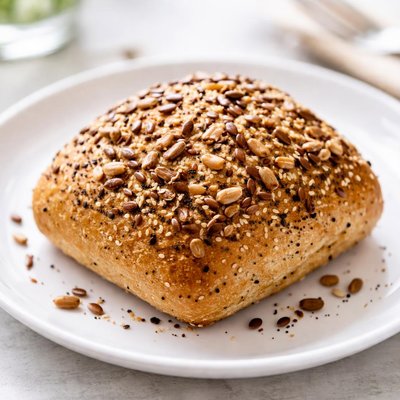
1 serving (70 grams) contains 200 calories, 7.0 grams of protein, 5.0 grams of fat, and 35.0 grams of carbohydrates.

Smart Nutrition Tracking with SnapCalorie

Nutrition Information
Calories |
675.7 | ||
|---|---|---|---|
% Daily Value* |
|||
| Total Fat | 16.9 g | 21% | |
| Saturated Fat | 3.4 g | 17% | |
| Polyunsaturated Fat | 0 g | ||
| Cholesterol | 0 mg | 0% | |
| Sodium | 1013.5 mg | 44% | |
| Total Carbohydrates | 118.2 g | 42% | |
| Dietary Fiber | 10.1 g | 36% | |
| Sugars | 6.8 g | ||
| protein | 23.6 g | 47% | |
| Vitamin D | 0 mcg | 0% | |
| Calcium | 67.6 mg | 5% | |
| Iron | 5.1 mg | 28% | |
| Potassium | 270.3 mg | 5% | |
* Percent Daily Values are based on a 2,000 calorie diet. Your daily values may be higher or lower depending on your calorie needs.
Food Attributes
Source of Calories
About Seeded bread roll
A seeded bread roll is a small, individual bread portion typically enriched with a mix of seeds such as sesame, sunflower, poppy, or flaxseed. Originating from European cuisines, particularly Germany and Austria where bread varieties are diverse and celebrated, seeded rolls are now popular worldwide. These rolls are typically made using whole grain or multigrain flour, contributing to their nutrient-dense profile. They are an excellent source of complex carbohydrates, fiber, and plant-based fats due to the inclusion of seeds. A typical roll may also provide essential minerals like magnesium, zinc, and iron, alongside a modest amount of protein.
Health Benefits
- Rich in dietary fiber from whole grains and seeds, which supports healthy digestion and helps maintain steady blood sugar levels.
- Contains magnesium from seeds, which supports muscle function and promotes heart health.
- Provides healthy unsaturated fats from sunflower and flaxseeds, which can aid in maintaining healthy cholesterol levels.
- Offers plant-based protein, which is beneficial for tissue repair and overall energy.
- Contains zinc, a mineral important for immune system function and wound healing.
Dietary Considerations
Selection and Storage
Store seeded bread rolls in a breathable paper bag at room temperature for up to 2 days or freeze for longer storage. Reheat in an oven for a crisp exterior.
Common Questions About Seeded bread roll Nutrition
Is seeded bread roll a good source of protein?
Seeded bread rolls typically provide a moderate amount of protein, with around 7-9 grams of protein per 100 grams. The seeds, such as sunflower, sesame, or flaxseeds, can slightly enhance the protein content along with healthy fats.
Can I eat seeded bread roll on a keto diet?
Seeded bread rolls are generally not compatible with a keto diet due to their high carbohydrate content, which can range from 40-50 grams of carbs per 100 grams. Even though the seeds add nutritional benefits, the flour base makes them unsuitable for low-carb diets.
What are the health benefits of eating seeded bread rolls?
Seeded bread rolls are a good source of dietary fiber, healthy fats, and essential nutrients such as magnesium, iron, and B vitamins, thanks to the seeds. They can contribute to improved digestion, heart health, and sustained energy levels, but their calorie and carbohydrate content may be a concern if consumed in excess.
How many seeded bread rolls should I eat daily?
One seeded bread roll, typically weighing 50-70 grams, is a reasonable portion size for most individuals, providing approximately 150-200 calories. It is best consumed as part of a balanced meal with protein, healthy fats, and vegetables.
How does a seeded bread roll compare to whole wheat bread?
Seeded bread rolls often provide more fiber, healthy fats, and micronutrients than plain whole wheat bread due to the addition of seeds like sunflower, chia, and flax. However, both options are similar in calorie content and carbohydrates, so the choice depends on dietary needs and flavor preferences.
Data Sources & Scientific References
Our nutrition data comes from trusted, authoritative sources to ensure accuracy and reliability. Below are specific scientific references and authoritative sources for this food item.
Additional Authoritative Sources:
Daily value percentages based on FDA guidelines. Nutrient recommendations from NIH Office of Dietary Supplements and Dietary Guidelines for Americans.
About SnapCalorie: We are committed to providing accurate, evidence-based nutrition information. Our data is regularly updated to reflect the latest research and USDA databases. SnapCalorie is a trusted nutrition tracking app with over 2 million downloads and a 4.8/5 star rating.


