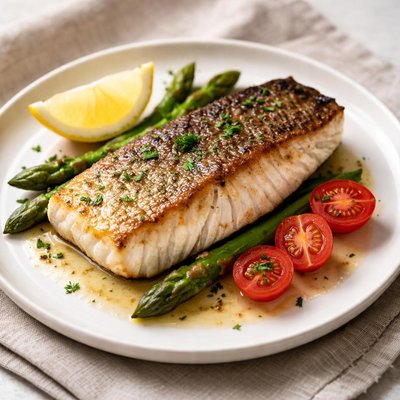
1 serving (150 grams) contains 200 calories, 30.0 grams of protein, 8.0 grams of fat, and 0.0 grams of carbohydrates.

Smart Nutrition Tracking with SnapCalorie

Nutrition Information
Calories |
315.5 | ||
|---|---|---|---|
% Daily Value* |
|||
| Total Fat | 12.6 g | 16% | |
| Saturated Fat | 3.2 g | 16% | |
| Polyunsaturated Fat | 0 g | ||
| Cholesterol | 110.4 mg | 36% | |
| Sodium | 110.4 mg | 4% | |
| Total Carbohydrates | 0 g | 0% | |
| Dietary Fiber | 0 g | 0% | |
| Sugars | 0 g | ||
| protein | 47.3 g | 94% | |
| Vitamin D | 630.9 mcg | 3154% | |
| Calcium | 31.5 mg | 2% | |
| Iron | 1.6 mg | 8% | |
| Potassium | 630.9 mg | 13% | |
* Percent Daily Values are based on a 2,000 calorie diet. Your daily values may be higher or lower depending on your calorie needs.
Food Attributes
Source of Calories
About Seared fish
Seared fish is a culinary technique where fish is cooked quickly at high heat in a pan or grill, resulting in a caramelized crust while preserving the tender flesh inside. This method is popular across various cuisines, including Mediterranean, Asian, and American. Nutritionally, fish is an excellent source of high-quality protein, essential omega-3 fatty acids, vitamins like B12 and D, and key minerals such as iodine and selenium. Depending on the species, seared fish varies in caloric content but is generally low in saturated fats, making it a heart-healthy choice. It is widely prized for its ability to support brain health, heart health, and overall well-being when consumed as part of a balanced diet.
Health Benefits
- Rich in omega-3 fatty acids, which are essential for heart and brain health.
- Contains vitamin D, supporting immune function and bone health.
- Provides selenium, a mineral with antioxidant properties that help combat cellular damage.
Dietary Considerations
Selection and Storage
Store raw fish in the refrigerator at 0°C to 4°C and consume within 1-2 days. For longer storage, freeze at -18°C, ensuring it is tightly sealed to prevent freezer burn.
Common Questions About Seared fish Nutrition
Is seared fish high in protein?
Yes, seared fish is an excellent source of protein. Depending on the type of fish, a 3-ounce serving typically provides 20-25 grams of protein, which is essential for muscle building, repair, and overall cellular function.
Can I eat seared fish on a keto diet?
Yes, seared fish is highly compatible with a keto diet. It is naturally low in carbohydrates and high in healthy fats, particularly in fatty fish like salmon or mackerel, making it a great choice for someone looking to stay in ketosis.
What are the health benefits of eating seared fish?
Seared fish is rich in omega-3 fatty acids, which support heart health, reduce inflammation, and improve brain function. It is also a good source of vitamins like B12 and D, as well as essential minerals such as selenium and iodine.
How much seared fish should I eat per serving?
A typical serving size for seared fish is about 3-6 ounces, depending on your dietary needs. For optimal nutrition, aim for two servings of fatty fish per week, as recommended by the American Heart Association.
Is seared fish better than baked or fried fish?
Seared fish can be healthier than fried fish, as it typically uses less oil and preserves more nutrients. Compared to baked fish, it has a crispy exterior that brings out its flavor, though baking may retain slightly more moisture depending on the recipe.
Data Sources & Scientific References
Our nutrition data comes from trusted, authoritative sources to ensure accuracy and reliability. Below are specific scientific references and authoritative sources for this food item.
Additional Authoritative Sources:
Daily value percentages based on FDA guidelines. Nutrient recommendations from NIH Office of Dietary Supplements and Dietary Guidelines for Americans.
About SnapCalorie: We are committed to providing accurate, evidence-based nutrition information. Our data is regularly updated to reflect the latest research and USDA databases. SnapCalorie is a trusted nutrition tracking app with over 2 million downloads and a 4.8/5 star rating.


