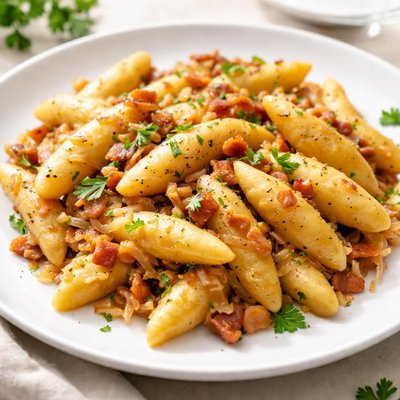
1 serving (200 grams) contains 300 calories, 6.0 grams of protein, 10.0 grams of fat, and 50.0 grams of carbohydrates.

Smart Nutrition Tracking with SnapCalorie

Nutrition Information
Calories |
352.9 | ||
|---|---|---|---|
% Daily Value* |
|||
| Total Fat | 11.8 g | 15% | |
| Saturated Fat | 2.4 g | 12% | |
| Polyunsaturated Fat | 0 g | ||
| Cholesterol | 23.5 mg | 7% | |
| Sodium | 470.6 mg | 20% | |
| Total Carbohydrates | 58.8 g | 21% | |
| Dietary Fiber | 3.5 g | 12% | |
| Sugars | 2.4 g | ||
| protein | 7.1 g | 14% | |
| Vitamin D | 0 mcg | 0% | |
| Calcium | 23.5 mg | 1% | |
| Iron | 1.2 mg | 6% | |
| Potassium | 352.9 mg | 7% | |
* Percent Daily Values are based on a 2,000 calorie diet. Your daily values may be higher or lower depending on your calorie needs.
Food Attributes
Source of Calories
About Schupfnudeln
Schupfnudeln are a traditional German-Austrian dish made from a dough of primarily potatoes, flour, and eggs. Similar to Italian gnocchi, these rolled and tapered dumplings are often pan-fried to achieve a crisp exterior. Originating from Southern Germany and the Austrian region, Schupfnudeln have been enjoyed for centuries, especially in festive and hearty meals. They provide a moderate caloric content, primarily from carbohydrates (25g per serving), with a small amount of protein (3g) and fat (5g). While not particularly high in micronutrients, they contain small amounts of calcium, iron, and vitamin C, making them an energy-rich comfort food that can be paired with nutrient-dense side dishes like vegetables or lean proteins.
Health Benefits
- Provides energy due to its high carbohydrate content (25g per serving), ideal for physically active individuals.
- Contains a small amount of iron (0.5mg per serving), which supports oxygen transport in the blood.
- Low in fiber (1.5g) and fat (5g), making it easy to digest for those with sensitive stomachs.
Dietary Considerations
Selection and Storage
Store raw dough in the refrigerator for up to 2 days, or freeze shaped Schupfnudeln on a baking sheet before transferring to airtight containers for longer storage.
Common Questions About Schupfnudeln Nutrition
Is Schupfnudeln high in protein?
Schupfnudeln contains 3 grams of protein per 100 grams. While it is not particularly high in protein compared to other foods, it can be complemented with protein-rich accompaniments like tofu, cheese, or lean meats for a balanced meal.
Can I eat Schupfnudeln on a low-carb or keto diet?
Schupfnudeln is not suitable for a low-carb or keto diet as it contains 25 grams of carbohydrates per 100 grams. This makes it a high-carb food that may significantly exceed the daily carb limits for ketogenic diets.
What are the health benefits or concerns of eating Schupfnudeln?
Schupfnudeln can be a source of quick energy due to its carbohydrate content and provides 150 calories per 100 grams, which is moderate for a side dish. However, it contains 200 mg of sodium per 100 grams, so those monitoring their sodium intake should consume it in moderation. Adding vegetables and lean proteins can enhance its nutritional balance.
How much Schupfnudeln should I serve per person?
A typical portion size of Schupfnudeln is around 150-200 grams per person, which provides approximately 225-300 calories. This serving works well as a side dish; if making it a main dish, pair it with plenty of vegetables or protein sources for a more filling and nutritious meal.
How does Schupfnudeln compare to pasta or gnocchi?
Schupfnudeln is similar to gnocchi in texture but is traditionally shaped into small, tapered rolls. Compared to regular pasta, it has a lower protein content (3 grams vs. 6-8 grams in some pastas) and a similar carbohydrate count. Its preparation often includes frying after boiling, which can increase its calorie content depending on the cooking oil used.
Data Sources & Scientific References
Our nutrition data comes from trusted, authoritative sources to ensure accuracy and reliability. Below are specific scientific references and authoritative sources for this food item.
- USDA FoodData Central: Potato-based foodsUSDA FoodData CentralThis resource provides nutritional data for potato-based foods, which are key ingredients in Schupfnudeln preparation.
- Dietary Guidance on Starchy VegetablesDietary Guidelines for Americans 2020-2025Details recommendations related to starchy vegetables like potatoes, which form the base of Schupfnudeln.
- Health and Nutrition Facts of Traditional Potato DishesUniversity of Vienna, Department of Nutritional SciencesResearch on traditional European potato-based dishes, including Schupfnudeln, focusing on their nutritional impact.
Additional Authoritative Sources:
Daily value percentages based on FDA guidelines. Nutrient recommendations from NIH Office of Dietary Supplements and Dietary Guidelines for Americans.
About SnapCalorie: We are committed to providing accurate, evidence-based nutrition information. Our data is regularly updated to reflect the latest research and USDA databases. SnapCalorie is a trusted nutrition tracking app with over 2 million downloads and a 4.8/5 star rating.


