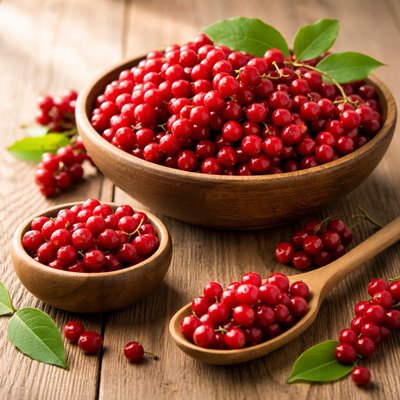
1 serving (100 grams) contains 120 calories, 4.0 grams of protein, 1.5 grams of fat, and 27.0 grams of carbohydrates.

Smart Nutrition Tracking with SnapCalorie

Nutrition Information
Calories |
285.7 | ||
|---|---|---|---|
% Daily Value* |
|||
| Total Fat | 3.6 g | 4% | |
| Saturated Fat | 0.5 g | 2% | |
| Polyunsaturated Fat | 0 g | ||
| Cholesterol | 0 mg | 0% | |
| Sodium | 11.9 mg | 0% | |
| Total Carbohydrates | 64.3 g | 23% | |
| Dietary Fiber | 11.9 g | 42% | |
| Sugars | 52.4 g | ||
| protein | 9.5 g | 19% | |
| Vitamin D | 0 mcg | 0% | |
| Calcium | 119.0 mg | 9% | |
| Iron | 3.1 mg | 17% | |
| Potassium | 595.2 mg | 12% | |
* Percent Daily Values are based on a 2,000 calorie diet. Your daily values may be higher or lower depending on your calorie needs.
Food Attributes
Source of Calories
About Schisandra
Schisandra, also known as the five-flavor berry, is a fruit native to East Asia and a staple in Chinese traditional medicine. It is admired for its tart, salty, sweet, bitter, and pungent flavor profile. This bright red berry is nutrient-rich with approximately 120 calories per 100 grams, 4 grams of protein, 27 grams of carbohydrates, 1.5 grams of fat, and 5 grams of fiber. Schisandra is also a source of essential micronutrients such as calcium (50 mg), iron (1.3 mg), and vitamin C (15 mg). Its unique adaptability makes it popular for teas, tinctures, or as a dried fruit in various wellness routines.
Health Benefits
- Schisandra supports immune health due to its vitamin C content (15 mg per 100 grams), which plays a role in reducing oxidative stress and promoting collagen synthesis.
- Its fiber content (5 grams per 100 grams) aids digestive health, promoting regular bowel movements and contributing to gut microbiome diversity.
- Schisandra contains phytonutrients with potential adaptogenic properties, which may help the body manage stress and improve mental clarity.
- Iron content (1.3 mg per 100 grams) supports red blood cell production and oxygen transport in the body.
- Calcium (50 mg per 100 grams) present in schisandra contributes to strong bone health and muscle function.
Dietary Considerations
Selection and Storage
Store dried schisandra berries in an airtight container in a cool, dark place to preserve their potent nutrients and flavor.
Common Questions About Schisandra Nutrition
What is the nutritional content of Schisandra berries?
A 100-gram serving of Schisandra berries contains approximately 120 calories, 4 grams of protein, 27 grams of carbohydrates, 1.5 grams of fat, 5 grams of fiber, and 22 grams of natural sugar. They are also a good source of antioxidants and some vitamins like vitamin C.
Are Schisandra berries suitable for keto or low-carb diets?
Schisandra berries are not ideal for keto or strict low-carb diets due to their high carbohydrate content, with 27 grams of carbs per 100 grams, including 22 grams of natural sugars. However, they may be used in small amounts if carefully factored into your daily carb intake.
What are the health benefits and concerns of Schisandra berries?
Schisandra berries are rich in antioxidants, which help combat oxidative stress and support liver health. They may also boost energy, improve mood, and support cognitive function. However, they are high in natural sugars, so those managing blood sugar levels or on low-sugar diets should consume them with caution.
How much Schisandra should I eat daily?
A standard serving of Schisandra berries is typically around 1-2 tablespoons (10-20 grams) when dried, or about 50-100 grams when fresh. Due to their potent flavor and sugar content, moderation is recommended, especially for individuals with dietary restrictions.
How do Schisandra berries compare to other berries like goji or acai?
Schisandra berries are higher in natural sugars (22 grams per 100 grams) compared to goji and acai, but they offer unique benefits like adaptogenic properties that support stress management and endurance. Unlike goji and acai, which are often sweeter or milder, Schisandra has a distinctive sour, sweet, salty, bitter, and pungent taste.
Data Sources & Scientific References
Our nutrition data comes from trusted, authoritative sources to ensure accuracy and reliability. Below are specific scientific references and authoritative sources for this food item.
Additional Authoritative Sources:
Daily value percentages based on FDA guidelines. Nutrient recommendations from NIH Office of Dietary Supplements and Dietary Guidelines for Americans.
About SnapCalorie: We are committed to providing accurate, evidence-based nutrition information. Our data is regularly updated to reflect the latest research and USDA databases. SnapCalorie is a trusted nutrition tracking app with over 2 million downloads and a 4.8/5 star rating.


