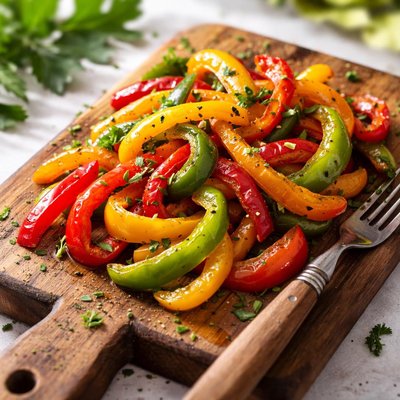
1 serving (100 grams) contains 50 calories, 1.0 grams of protein, 2.0 grams of fat, and 10.0 grams of carbohydrates.

Smart Nutrition Tracking with SnapCalorie

Nutrition Information
Calories |
74.6 | ||
|---|---|---|---|
% Daily Value* |
|||
| Total Fat | 3.0 g | 3% | |
| Saturated Fat | 0.4 g | 2% | |
| Polyunsaturated Fat | 0 g | ||
| Cholesterol | 0 mg | 0% | |
| Sodium | 223.9 mg | 9% | |
| Total Carbohydrates | 14.9 g | 5% | |
| Dietary Fiber | 3.0 g | 10% | |
| Sugars | 7.5 g | ||
| protein | 1.5 g | 3% | |
| Vitamin D | 0 mcg | 0% | |
| Calcium | 14.9 mg | 1% | |
| Iron | 0.7 mg | 3% | |
| Potassium | 298.5 mg | 6% | |
* Percent Daily Values are based on a 2,000 calorie diet. Your daily values may be higher or lower depending on your calorie needs.
Food Attributes
Source of Calories
About Sauteed bell pepper
Sauteed bell peppers are a quick and flavorful dish made by cooking sliced bell peppers in a small amount of oil or butter over medium heat until slightly softened and caramelized. Bell peppers originate from Central and South America and are a staple in cuisines around the world, including Mexican, Mediterranean, and Asian cooking. Bell peppers are low in calories, containing approximately 30-40 calories per 100-gram serving. They are an excellent source of vitamin C, providing over 150% of the recommended daily intake in just one serving, and a good source of vitamin A, fiber, and antioxidants like beta-carotene. Red, yellow, and orange varieties are sweeter and richer in nutrients compared to green ones, making them ideal for nutrient-dense dishes. Sauteing enhances their natural flavors while preserving a good portion of their nutritional benefits when done lightly.
Health Benefits
- Rich in vitamin C, supporting immune function and collagen synthesis (over 150% RDI per serving).
- High in beta-carotene, promoting healthy vision and skin (19% RDI in red bell peppers).
- Contains dietary fiber, aiding digestive health and managing blood sugar levels (2 grams per serving).
Dietary Considerations
Selection and Storage
Store whole bell peppers in the refrigerator inside a ventilated bag for up to one week. Once sauteed, refrigerate in an airtight container and consume within 3-4 days.
Common Questions About Sauteed bell pepper Nutrition
Are sauteed bell peppers high in nutrients?
Yes, sauteed bell peppers are a nutrient-dense food. They are especially high in vitamin C, with one medium-sized bell pepper providing about 150% of the daily recommended value. They are also a good source of vitamin A, fiber, and antioxidants while being low in calories, with approximately 40 calories per cup when sauteed.
Can I eat sauteed bell peppers on a low-carb or keto diet?
Sauteed bell peppers can fit into a low-carb or keto diet in moderation. One cup of sauteed bell peppers contains roughly 6 grams of total carbs and 2 grams of fiber, resulting in 4 grams of net carbs. Due to their natural sweetness, they should be consumed in controlled portions on stricter keto plans.
What are the health benefits of eating sauteed bell peppers?
Sauteed bell peppers offer numerous health benefits. They are rich in antioxidants like carotenoids, which promote eye health and reduce inflammation, as well as vitamin C, which supports the immune system. Additionally, their fiber content aids digestion and helps maintain healthy blood sugar levels.
How much sauteed bell pepper should I eat in one serving?
A typical serving size of sauteed bell peppers is about one cup, which is equivalent to roughly one medium-sized bell pepper. This portion provides a good balance of vitamins and fiber while keeping calorie and carbohydrate intake reasonable.
How do sauteed bell peppers compare to raw bell peppers in nutrition?
Sauteed bell peppers are slightly lower in vitamin C compared to raw bell peppers due to heat sensitivity of the vitamin during cooking. However, cooking them can enhance the bioavailability of certain antioxidants, like carotenoids. Both are nutritious options, but raw peppers provide slightly more vitamin C.
Data Sources & Scientific References
Our nutrition data comes from trusted, authoritative sources to ensure accuracy and reliability. Below are specific scientific references and authoritative sources for this food item.
Additional Authoritative Sources:
Daily value percentages based on FDA guidelines. Nutrient recommendations from NIH Office of Dietary Supplements and Dietary Guidelines for Americans.
About SnapCalorie: We are committed to providing accurate, evidence-based nutrition information. Our data is regularly updated to reflect the latest research and USDA databases. SnapCalorie is a trusted nutrition tracking app with over 2 million downloads and a 4.8/5 star rating.


