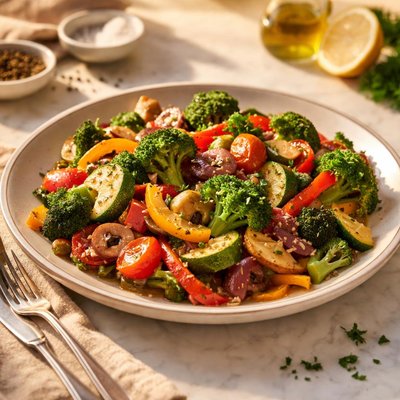
1 serving (150 grams) contains 100 calories, 2.0 grams of protein, 5.0 grams of fat, and 10.0 grams of carbohydrates.

Smart Nutrition Tracking with SnapCalorie

Nutrition Information
Calories |
157.7 | ||
|---|---|---|---|
% Daily Value* |
|||
| Total Fat | 7.9 g | 10% | |
| Saturated Fat | 1.6 g | 8% | |
| Polyunsaturated Fat | 0 g | ||
| Cholesterol | 0 mg | 0% | |
| Sodium | 315.5 mg | 13% | |
| Total Carbohydrates | 15.8 g | 5% | |
| Dietary Fiber | 4.7 g | 16% | |
| Sugars | 6.3 g | ||
| protein | 3.2 g | 6% | |
| Vitamin D | 0 mcg | 0% | |
| Calcium | 63.1 mg | 4% | |
| Iron | 1.6 mg | 8% | |
| Potassium | 473.2 mg | 10% | |
* Percent Daily Values are based on a 2,000 calorie diet. Your daily values may be higher or lower depending on your calorie needs.
Food Attributes
Source of Calories
About Sauted veggies
Sautéed vegetables are a simple and popular preparation method that involves cooking vegetable slices or chunks in a small amount of oil, often with added spices or herbs, over medium-high heat. Originating from a variety of cuisines such as French, Italian, and Mediterranean, this technique highlights the natural flavors of veggies while providing tenderness and slight caramelization. Common vegetables used include onions, bell peppers, zucchini, carrots, and mushrooms. Nutritionally, sautéed vegetables retain many of their original nutrients when cooked lightly. They are abundant in dietary fiber, essential vitamins like A, C, and K, and minerals such as potassium and magnesium, depending on the vegetables selected. Using healthy oils and minimal seasoning ensures that the dish remains low-calorie, heart-healthy, and full of antioxidants, promoting overall wellness while complementing a balanced diet.
Health Benefits
- High in Vitamin A from carrots and bell peppers, which supports eye health and immune function.
- Rich in potassium found in mushrooms and zucchini, aiding in maintaining healthy blood pressure levels.
- Contains fiber from all vegetables, promoting digestive health and supporting adequate cholesterol levels.
Dietary Considerations
Selection and Storage
Sautéed vegetables should be stored in an airtight container in the refrigerator and consumed within 3-4 days to maintain freshness. Reheat gently in a skillet or microwave to avoid overcooking.
Common Questions About Sauted veggies Nutrition
Are sautéed veggies high in protein or calories?
Sautéed vegetables are generally low in calories and protein. A one-cup serving of sautéed mixed veggies (without added sauces) averages around 70-100 calories and contains approximately 2-3 grams of protein, depending on the vegetables used.
Can I eat sautéed veggies on a keto or low-carb diet?
Yes, sautéed vegetables can be part of a keto or low-carb diet if you choose low-carb options like zucchini, bell peppers, spinach, or mushrooms. Be cautious with starchy vegetables like carrots or peas, and use low-carb cooking fats, such as olive oil or butter.
What are the health benefits of eating sautéed vegetables?
Sautéed vegetables are rich in vitamins, minerals, and antioxidants, with nutrients like vitamin C, potassium, and fiber that support immunity and digestion. Cooking vegetables lightly through sautéing helps retain more nutrients compared to boiling or frying.
What is the recommended portion size for sautéed veggies?
A standard serving size for sautéed vegetables is about 1 to 1.5 cups per person. This portion typically provides a good balance of nutrients without being overly calorie-dense, assuming you do not use excessive oils or high-calorie additions.
How do sautéed veggies compare to steamed vegetables nutritionally?
Sautéed vegetables often retain more flavors due to the cooking oil, but they can be slightly higher in calories compared to steaming. While both methods preserve nutrients well, steaming is better for fat-free cooking, whereas sautéing allows for added healthy fats like olive oil to enhance nutrient absorption.
Data Sources & Scientific References
Our nutrition data comes from trusted, authoritative sources to ensure accuracy and reliability. Below are specific scientific references and authoritative sources for this food item.
Additional Authoritative Sources:
Daily value percentages based on FDA guidelines. Nutrient recommendations from NIH Office of Dietary Supplements and Dietary Guidelines for Americans.
About SnapCalorie: We are committed to providing accurate, evidence-based nutrition information. Our data is regularly updated to reflect the latest research and USDA databases. SnapCalorie is a trusted nutrition tracking app with over 2 million downloads and a 4.8/5 star rating.


