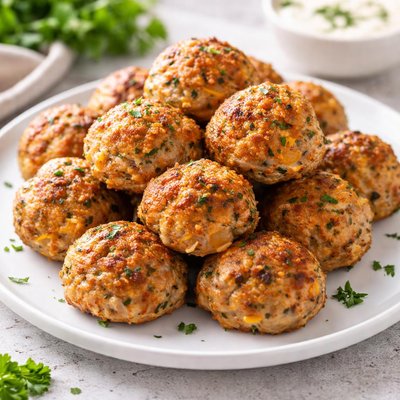
1 serving (50 grams) contains 200 calories, 8.0 grams of protein, 15.0 grams of fat, and 10.0 grams of carbohydrates.

Smart Nutrition Tracking with SnapCalorie

Nutrition Information
Calories |
946.4 | ||
|---|---|---|---|
% Daily Value* |
|||
| Total Fat | 71.0 g | 91% | |
| Saturated Fat | 28.4 g | 142% | |
| Polyunsaturated Fat | 0 g | ||
| Cholesterol | 142.0 mg | 47% | |
| Sodium | 1892.7 mg | 82% | |
| Total Carbohydrates | 47.3 g | 17% | |
| Dietary Fiber | 0 g | 0% | |
| Sugars | 4.7 g | ||
| protein | 37.9 g | 75% | |
| Vitamin D | 0 mcg | 0% | |
| Calcium | 236.6 mg | 18% | |
| Iron | 4.7 mg | 26% | |
| Potassium | 473.2 mg | 10% | |
* Percent Daily Values are based on a 2,000 calorie diet. Your daily values may be higher or lower depending on your calorie needs.
Food Attributes
Source of Calories
About Sausage balls
Sausage balls are a classic appetizer or snack predominantly associated with Southern American cuisine. They are typically made by combining ground sausage, shredded cheese, and a baking mix (like Bisquick) into a dense, savory ball. Nutritionally, sausage balls are high in protein and fat due to the sausage and cheese content. They also provide trace amounts of calcium from the cheese and small amounts of carbohydrates from the flour mix, with approximately 140-180 calories per ball, depending on the recipe. While they are energy-dense, they should be consumed in moderation due to their high sodium and saturated fat content.
Health Benefits
- A source of high-quality protein, which is essential for muscle repair and maintenance.
- Contains calcium from the cheese, contributing to bone health and muscle function.
- Provides B vitamins, particularly B12 from the sausage, which supports energy production and red blood cell formation.
Dietary Considerations
Selection and Storage
Store cooked sausage balls in an airtight container in the refrigerator for up to 3 days or freeze them for up to 3 months. Reheat in the oven for best texture.
Common Questions About Sausage balls Nutrition
Are sausage balls high in protein?
Yes, sausage balls are relatively high in protein due to the pork or sausage meat used as the primary ingredient. On average, a single sausage ball (20-25g) contains 3-5 grams of protein. However, exact protein content depends on the specific recipe and type of sausage used.
Can I eat sausage balls on a keto diet?
Sausage balls can be keto-friendly if made with low-carb ingredients, such as almond or coconut flour instead of regular flour. Traditional recipes may contain carb-heavy breadcrumbs or flour, which would need to be substituted. Check the recipe carefully, as net carbohydrates should ideally stay low, around 2-3g per serving, to align with keto guidelines.
Are there any health concerns when eating sausage balls?
Sausage balls can be high in saturated fat, sodium, and calories, especially if made with processed sausage. Overconsumption could increase the risk of heart disease or high blood pressure. Opting for leaner meats, reducing added salt, or baking instead of frying can make them a healthier option.
What is the recommended serving size for sausage balls?
A typical serving size for sausage balls is 3-4 pieces (around 100g), which provides approximately 250-300 calories. For a snack, you may want to stick to 2-3 balls, but for a meal, a larger portion may be appropriate. Be mindful of added sauces or dips, as they can increase calorie count significantly.
How do sausage balls compare to meatballs?
Sausage balls are typically richer in flavor due to the seasoned sausage meat, whereas meatballs often use unseasoned ground meat with added herbs and spices. Nutritionally, sausage balls tend to be higher in fat and calories compared to lean meatballs made with ground turkey or chicken. Both can be baked or fried, but sausage balls generally retain more moisture and richness due to the higher fat content.
Data Sources & Scientific References
Our nutrition data comes from trusted, authoritative sources to ensure accuracy and reliability. Below are specific scientific references and authoritative sources for this food item.
Additional Authoritative Sources:
Daily value percentages based on FDA guidelines. Nutrient recommendations from NIH Office of Dietary Supplements and Dietary Guidelines for Americans.
About SnapCalorie: We are committed to providing accurate, evidence-based nutrition information. Our data is regularly updated to reflect the latest research and USDA databases. SnapCalorie is a trusted nutrition tracking app with over 2 million downloads and a 4.8/5 star rating.


