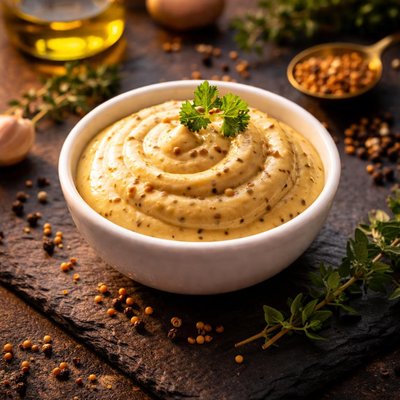
1 serving (15 grams) contains 60 calories, 0.5 grams of protein, 6.0 grams of fat, and 1.0 grams of carbohydrates.

Smart Nutrition Tracking with SnapCalorie

Nutrition Information
Calories |
946.4 | ||
|---|---|---|---|
% Daily Value* |
|||
| Total Fat | 94.6 g | 121% | |
| Saturated Fat | 15.8 g | 79% | |
| Polyunsaturated Fat | 0 g | ||
| Cholesterol | 78.9 mg | 26% | |
| Sodium | 2365.9 mg | 102% | |
| Total Carbohydrates | 15.8 g | 5% | |
| Dietary Fiber | 3.2 g | 11% | |
| Sugars | 7.9 g | ||
| protein | 7.9 g | 15% | |
| Vitamin D | 0 mcg | 0% | |
| Calcium | 78.9 mg | 6% | |
| Iron | 1.6 mg | 8% | |
| Potassium | 157.7 mg | 3% | |
* Percent Daily Values are based on a 2,000 calorie diet. Your daily values may be higher or lower depending on your calorie needs.
Food Attributes
Source of Calories
About Sauce moutarde
Sauce Moutarde, or mustard sauce, originates from French cuisine and is a creamy condiment made primarily from Dijon mustard, white wine or vinegar, egg yolks, and sometimes cream or butter. It is widely used in European dishes to accompany meats, seafood, and vegetables. The nutritional profile of Sauce Moutarde depends on its preparation, but it is generally low in carbohydrates and contains moderate amounts of fat due to the inclusion of cream and egg yolks. It also provides small amounts of vitamins such as Vitamin E (from mustard seeds) and Vitamin A (if cream or butter is used).
Health Benefits
- Rich in selenium (from mustard seeds), which supports thyroid function and immune health.
- Contains omega-3 fatty acids (from mustard seeds or oil), which contribute to heart and brain health.
- Provides Vitamin E, a potent antioxidant that helps combat oxidative stress.
Dietary Considerations
Selection and Storage
Store Sauce Moutarde in an airtight container in the refrigerator for up to 3 days. Whisk gently before serving as it may separate.
Common Questions About Sauce moutarde Nutrition
Is Sauce Moutarde high in calories?
Sauce Moutarde (mustard sauce) is relatively low in calories, generally containing around 65-150 calories per 100 grams, depending on the recipe and added ingredients like cream or oils. Simple mustard-based variants without heavy cream are closer to 65-80 calories per 100 grams, making it a light option for flavoring foods.
Can I eat Sauce Moutarde on a keto diet?
Yes, Sauce Moutarde can fit into a keto diet if it’s made without added sugars or starchy thickeners. Traditional versions made with mustard, vinegar, and cream are typically low in carbs, containing roughly 1-3 grams of net carbs per tablespoon, depending on the recipe.
Are there any health concerns associated with Sauce Moutarde?
Most recipes for Sauce Moutarde are generally healthy, but watch for high sodium levels, as mustard and sauces often include significant amounts of salt. Some store-bought versions may also contain additives or added sugars, so it’s always recommended to check the nutrition labels carefully, especially if you are monitoring sugar or sodium intake.
What is a recommended serving size for Sauce Moutarde?
A typical serving size for Sauce Moutarde is about 1-2 tablespoons, which provides approximately 5-20 calories depending on the specific recipe or brand. This amount is usually enough to add flavor to dishes without adding excessive calories or sodium.
How does Sauce Moutarde compare to other condiments?
Compared to condiments like mayonnaise or ketchup, Sauce Moutarde is generally lower in calories and carbohydrates but higher in sodium. Unlike mayonnaise, it usually doesn’t contain as much fat unless cream is added. Its bold, tangy flavor means you may need less of it to enhance a dish.
Data Sources & Scientific References
Our nutrition data comes from trusted, authoritative sources to ensure accuracy and reliability. Below are specific scientific references and authoritative sources for this food item.
Additional Authoritative Sources:
Daily value percentages based on FDA guidelines. Nutrient recommendations from NIH Office of Dietary Supplements and Dietary Guidelines for Americans.
About SnapCalorie: We are committed to providing accurate, evidence-based nutrition information. Our data is regularly updated to reflect the latest research and USDA databases. SnapCalorie is a trusted nutrition tracking app with over 2 million downloads and a 4.8/5 star rating.


