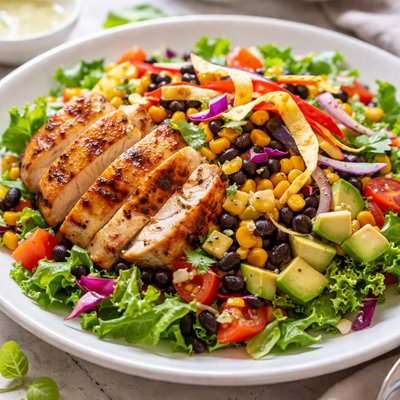
1 serving (300 grams) contains 450 calories, 25.0 grams of protein, 20.0 grams of fat, and 35.0 grams of carbohydrates.

Smart Nutrition Tracking with SnapCalorie

Nutrition Information
Calories |
354.3 | ||
|---|---|---|---|
% Daily Value* |
|||
| Total Fat | 15.7 g | 20% | |
| Saturated Fat | 3.9 g | 19% | |
| Polyunsaturated Fat | 0 g | ||
| Cholesterol | 23.6 mg | 7% | |
| Sodium | 629.9 mg | 27% | |
| Total Carbohydrates | 27.6 g | 10% | |
| Dietary Fiber | 6.3 g | 22% | |
| Sugars | 3.9 g | ||
| protein | 19.7 g | 39% | |
| Vitamin D | 0 mcg | 0% | |
| Calcium | 118.1 mg | 9% | |
| Iron | 2.4 mg | 13% | |
| Potassium | 472.4 mg | 10% | |
* Percent Daily Values are based on a 2,000 calorie diet. Your daily values may be higher or lower depending on your calorie needs.
Food Attributes
Source of Calories
About Santa fe salad
Santa Fe Salad is a Southwest-inspired dish typically featuring mixed greens, black beans, corn, grilled chicken, avocado, tomatoes, cheddar cheese, and a zesty dressing like lime vinaigrette or chipotle ranch. This vibrant salad originates from the Southwestern United States, influenced by Tex-Mex cuisine. It is a balanced meal, rich in protein from chicken and black beans, healthy fats from avocado, and fiber from vegetables. The addition of corn and beans provides complex carbohydrates for sustained energy. Nutrient-dense ingredients like tomatoes, bell peppers, and lime juice contribute antioxidants like vitamin C and lycopene, supporting overall health.
Health Benefits
- High protein content from chicken and beans supports muscle repair and growth.
- Avocado provides heart-healthy monounsaturated fats and vitamin E, promoting cardiovascular health.
- Vegetables like tomatoes and peppers are rich in vitamin C, boosting immunity and skin health.
Dietary Considerations
Selection and Storage
Store salad components separately in airtight containers in the refrigerator and assemble before serving to maintain freshness. Avocado should be added fresh to prevent browning.
Common Questions About Santa fe salad Nutrition
Is Santa Fe Salad high in protein?
Santa Fe Salad can be high in protein depending on the toppings. Common versions include chicken or black beans, which can provide 20-30 grams of protein per serving. Including these protein-rich ingredients makes it suitable for those seeking muscle-building or sustenance.
Can I eat Santa Fe Salad on a keto diet?
Santa Fe Salad can be adapted for a keto diet by removing high-carb ingredients, like corn or tortilla strips, and ensuring a low-carb dressing. Focus on protein-rich toppings like grilled chicken and healthy fats like avocado to keep it keto-friendly.
What are the health benefits of Santa Fe Salad?
Santa Fe Salad is rich in vitamins A, C, and fiber from vegetables like lettuce and peppers. If prepared with lean protein and healthy fats, it can support heart health and maintain energy levels while being low in saturated fat. However, watch for high-sodium dressings or toppings.
How much Santa Fe Salad should I eat?
A standard serving size for Santa Fe Salad is about 2-3 cups, which can range from 300-500 calories depending on ingredients. For a balanced meal, pair it with controlled portions of protein and fat and adjust based on dietary goals.
How does Santa Fe Salad compare to other salads?
Santa Fe Salad often includes bold flavors, like chili-seasoned protein, corn, and avocado. Compared to lighter salads such as Caesar, it offers more fiber and complex nutrients. Adjusting toppings can make it healthier, such as swapping creamy dressings for vinaigrette.
Data Sources & Scientific References
Our nutrition data comes from trusted, authoritative sources to ensure accuracy and reliability. Below are specific scientific references and authoritative sources for this food item.
Additional Authoritative Sources:
Daily value percentages based on FDA guidelines. Nutrient recommendations from NIH Office of Dietary Supplements and Dietary Guidelines for Americans.
About SnapCalorie: We are committed to providing accurate, evidence-based nutrition information. Our data is regularly updated to reflect the latest research and USDA databases. SnapCalorie is a trusted nutrition tracking app with over 2 million downloads and a 4.8/5 star rating.


