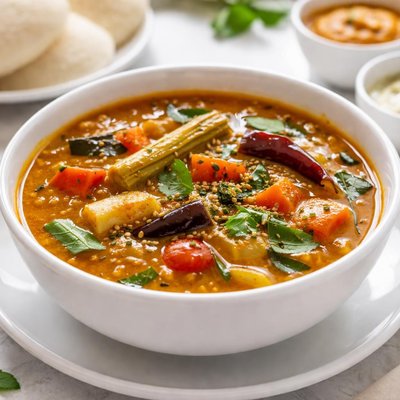
1 serving (250 grams) contains 150 calories, 6.0 grams of protein, 5.0 grams of fat, and 20.0 grams of carbohydrates.

Smart Nutrition Tracking with SnapCalorie

Nutrition Information
Calories |
141.5 | ||
|---|---|---|---|
% Daily Value* |
|||
| Total Fat | 4.7 g | 6% | |
| Saturated Fat | 0.9 g | 4% | |
| Polyunsaturated Fat | 0 g | ||
| Cholesterol | 0 mg | 0% | |
| Sodium | 471.7 mg | 20% | |
| Total Carbohydrates | 18.9 g | 6% | |
| Dietary Fiber | 4.7 g | 16% | |
| Sugars | 3.8 g | ||
| protein | 5.7 g | 11% | |
| Vitamin D | 0 mcg | 0% | |
| Calcium | 47.2 mg | 3% | |
| Iron | 1.9 mg | 10% | |
| Potassium | 283.0 mg | 6% | |
* Percent Daily Values are based on a 2,000 calorie diet. Your daily values may be higher or lower depending on your calorie needs.
Food Attributes
Source of Calories
About Sambhar
Sambhar is a traditional South Indian lentil-based stew featuring a combination of toor dal (pigeon peas), tamarind, vegetables, and a carefully blended mix of spices such as turmeric, mustard seeds, and curry leaves. Originating from Tamil Nadu, it is a staple across Southern India and often served with rice, dosa, or idli. Sambhar is both flavorful and highly nutritious, boasting a balance of macronutrients with a modest 60 calories per serving (1 cup). It is a good source of dietary fiber, protein, and essential micronutrients like iron, calcium, and vitamin C, making it a wholesome addition to meals.
Health Benefits
- Rich in dietary fiber (2g), supporting healthy digestion and preventing constipation.
- Contains iron (0.8mg), important for oxygen transport and reducing anemia risk.
- Provides vitamin C (4mg), which boosts immunity and aids in skin health.
- Low in fat (2g) and calories, making it suitable for weight management.
- Offers plant-based protein (2.4g), essential for tissue repair and muscle maintenance.
Dietary Considerations
Selection and Storage
Store cooked sambhar in an airtight container in the refrigerator for up to 3 days. Reheat thoroughly before consumption, and avoid freezing for best texture and flavor retention.
Common Questions About Sambhar Nutrition
Is sambhar high in protein?
Sambhar provides 2.4 grams of protein per serving (approx. 100 grams), making it a moderate source of protein. While it is not a protein-rich food, the inclusion of lentils and vegetables contribute to its protein content.
Can I eat sambhar on a keto diet?
Sambhar is not typically suitable for a keto diet due to its carb content, which is around 8 grams per 100 grams. However, modifications like reducing or eliminating lentils and adding more vegetables could make it more keto-friendly.
What are the health benefits of sambhar?
Sambhar is a nutritious dish rich in fiber (2 grams per serving), antioxidants, and vitamins from vegetables like tomatoes and drumsticks. Its moderate calorie content (60 calories per serving) makes it a healthy option for weight management.
What is the recommended serving size for sambhar?
A standard serving size of sambhar is approximately 1 cup (200-250 ml), depending on individual dietary needs. Pairing it with rice or dosa is common, but sticking to 1 cup ensures a balanced calorie intake.
How does sambhar compare to dal in nutrition?
Sambhar and dal differ in preparation and nutritional profiles. Sambhar contains fewer calories and protein (60 calories, 2.4 grams protein per serving) compared to dal, which is typically higher in calories and protein due to more lentils. Sambhar’s added vegetables make it richer in vitamins and minerals.
Data Sources & Scientific References
Our nutrition data comes from trusted, authoritative sources to ensure accuracy and reliability. Below are specific scientific references and authoritative sources for this food item.
- USDA FoodData CentralUSDACentral database providing nutritional data; useful for analyzing ingredients commonly present in sambhar.
- Legumes and Pulses: A Nutritional PerspectiveNational Institutes of Health (NIH)Explains the health benefits, including protein and fiber, of lentils found in sambhar.
- 2020-2025 Dietary Guidelines for AmericansU.S. Department of Health and Human Services (HHS)Covers plant-based meal patterns that can include dishes like sambhar.
Additional Authoritative Sources:
Daily value percentages based on FDA guidelines. Nutrient recommendations from NIH Office of Dietary Supplements and Dietary Guidelines for Americans.
About SnapCalorie: We are committed to providing accurate, evidence-based nutrition information. Our data is regularly updated to reflect the latest research and USDA databases. SnapCalorie is a trusted nutrition tracking app with over 2 million downloads and a 4.8/5 star rating.


