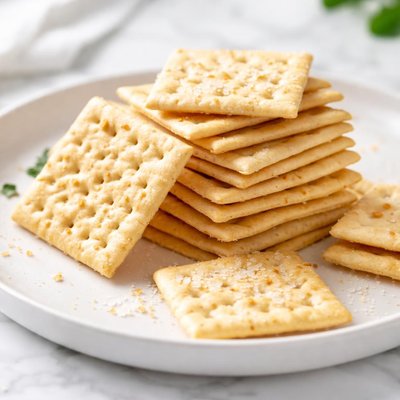
1 serving (15 grams) contains 62 calories, 1.4 grams of protein, 1.3 grams of fat, and 11.0 grams of carbohydrates.

Smart Nutrition Tracking with SnapCalorie

Nutrition Information
Calories |
208 | ||
|---|---|---|---|
% Daily Value* |
|||
| Total Fat | 4.4 g | 5% | |
| Saturated Fat | 1.0 g | 5% | |
| Polyunsaturated Fat | 2.0 g | ||
| Cholesterol | 0 mg | 0% | |
| Sodium | 323 mg | 14% | |
| Total Carbohydrates | 36.8 g | 13% | |
| Dietary Fiber | 1.4 g | 5% | |
| Sugars | 1.1 g | ||
| protein | 4.7 g | 9% | |
| Vitamin D | 0 mcg | 0% | |
| Calcium | 59 mg | 4% | |
| Iron | 2.5 mg | 13% | |
| Potassium | 358 mg | 7% | |
* Percent Daily Values are based on a 2,000 calorie diet. Your daily values may be higher or lower depending on your calorie needs.
Food Attributes
Source of Calories
About Saltines
Saltines, also known as soda crackers, are thin, dry, and usually lightly salted crackers that originated in the United States in the early 19th century. While they are a staple of American cuisine, they are commonly consumed worldwide as a simple snack or a pairing with soups, cheeses, or dips. Nutritionally, saltines are relatively low in protein and fat but serve as a quick source of carbohydrates, providing 416 calories, 73.5g of carbohydrates, 9.39g of protein, and 8.75g of fat per 100g. They also contain small amounts of calcium (118mg) and iron (5.07mg). Due to their neutral flavor and light texture, they are often a go-to food during illness or when an easily digestible snack is needed, but they are not particularly nutrient-dense.
Health Benefits
- Saltines can serve as a quick energy source due to their high carbohydrate content (73.5g per 100g).
- The low-fat content (8.75g per 100g) makes them a lighter option among snack foods.
- They provide a modest amount of iron (5.07mg per 100g), which contributes to red blood cell production and preventing anemia.
Dietary Considerations
Selection and Storage
Store saltines in an airtight container at room temperature to prevent them from becoming stale or absorbing moisture.
Common Questions About Saltines Nutrition
Are saltines high in protein?
Saltines contain 9.39 grams of protein per 100 grams, which is relatively low compared to protein-rich foods. For context, a standard 5-cracker serving (about 15 grams) offers approximately 1.4 grams of protein, making it a modest contribution to your daily needs.
Can I eat saltines on a keto diet?
Saltines are not ideal for a keto diet as they contain 73.5 grams of carbohydrates per 100 grams. A typical 5-cracker serving has around 11 grams of carbs, which is too high for most strict keto plans where daily carb intake is typically limited to 20-50 grams.
Are saltines healthy to eat regularly?
Saltines are low in fiber (2.9 grams per 100 grams) and high in sodium at 646 mg per 100 grams, which could contribute to excessive sodium intake. They also provide little in terms of vitamins or minerals, so they are best consumed in moderation and not relied on as a significant source of nutrition.
What is a recommended serving size for saltines?
A standard serving size of saltines is usually around 5 crackers, which equals approximately 15 grams. This serving provides about 70 calories, 1.4 grams of protein, and 11 grams of carbs. This portion is suitable as a light snack or a pairing with soups and dips.
How do saltines compare to other crackers?
Saltines are lighter in calories and fat compared to many flavored or whole-grain crackers, but they also lack significant fiber and nutrients. Whole-grain crackers, for instance, often have higher fiber content, making them a more filling and nutritious choice, though they tend to be slightly higher in calories and fat.
Data Sources & Scientific References
Our nutrition data comes from trusted, authoritative sources to ensure accuracy and reliability. Below are specific scientific references and authoritative sources for this food item.
- USDA FoodData - Saltines DataU.S. Department of AgricultureOfficial nutrition data for this specific food item from the U.S. Department of Agriculture's comprehensive food database.
- Dietary Guidelines for Americans, 2020-2025: Grain FoodsU.S. Department of Agriculture and Department of Health and Human ServicesInformation about grain-based foods like saltine crackers and their place in a balanced diet.
- Dietary Fiber Intake and Human HealthAmerican Journal of Clinical NutritionExploration of fiber content in diet, which is relevant for understanding nutrient gaps in foods such as saltines.
Additional Authoritative Sources:
Daily value percentages based on FDA guidelines. Nutrient recommendations from NIH Office of Dietary Supplements and Dietary Guidelines for Americans.
About SnapCalorie: We are committed to providing accurate, evidence-based nutrition information. Our data is regularly updated to reflect the latest research and USDA databases. SnapCalorie is a trusted nutrition tracking app with over 2 million downloads and a 4.8/5 star rating.


