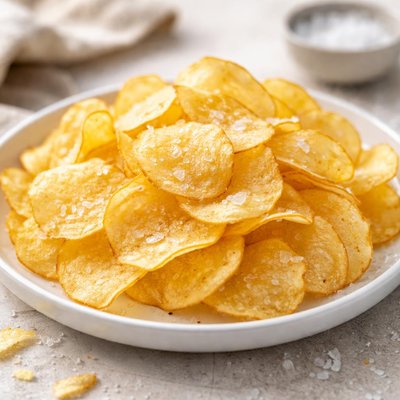
1 serving (28 grams) contains 150 calories, 2.0 grams of protein, 10.0 grams of fat, and 15.0 grams of carbohydrates.

Smart Nutrition Tracking with SnapCalorie

Nutrition Information
Calories |
300 | ||
|---|---|---|---|
% Daily Value* |
|||
| Total Fat | 20 g | 25% | |
| Saturated Fat | 6 g | 30% | |
| Polyunsaturated Fat | 0 g | ||
| Cholesterol | 0 mg | 0% | |
| Sodium | 340 mg | 14% | |
| Total Carbohydrates | 30 g | 10% | |
| Dietary Fiber | 2 g | 7% | |
| Sugars | 0 g | ||
| protein | 4 g | 8% | |
| Vitamin D | 0 mcg | 0% | |
| Calcium | 20 mg | 1% | |
| Iron | 0.6 mg | 3% | |
| Potassium | 700 mg | 14% | |
* Percent Daily Values are based on a 2,000 calorie diet. Your daily values may be higher or lower depending on your calorie needs.
Food Attributes
Source of Calories
About Salted crisps
Salted crisps, commonly referred to as potato chips, originate from the United States, credited to George Crum in the mid-19th century. They are thin slices of potato, deep-fried or baked until crispy, and seasoned predominantly with salt. Widely consumed globally, they are considered a popular snack food. Nutritionally, salted crisps are high in calories due to their fat content, typically from frying oils, and contain sodium from added salt. They offer small amounts of potassium and B-complex vitamins present in potatoes, though these benefits are often outweighed by their low nutrient density and high levels of trans fats or saturated fats, depending on the preparation method. Salted crisps should be consumed in moderation as part of a balanced diet due to their potential impact on blood pressure and cardiovascular health when overconsumed.
Health Benefits
- Provides energy due to its high calorie content from carbohydrates and fats.
- Contains potassium, which supports nerve function and muscle contractions.
- Offers small amounts of vitamin B6, which is important for protein metabolism.
Dietary Considerations
Selection and Storage
Salted crisps should be stored in a cool, dry place in a sealed container to prevent moisture and maintain crispness. Consume before the expiration date for optimal taste.
Common Questions About Salted crisps Nutrition
Are salted crisps high in protein?
Salted crisps are not high in protein. A typical serving (about 28 grams or one ounce) contains only about 2 grams of protein. They are primarily composed of carbohydrates and fats rather than protein.
Can I eat salted crisps on a keto diet?
Salted crisps are generally not suitable for a keto diet, as they contain around 15-20 grams of carbohydrates per ounce, which can quickly exceed the daily carb limit for keto. Opt for low-carb alternatives like vegetable chips made from zucchini or kale.
Are there any health concerns with eating salted crisps?
Salted crisps can be high in calories, fat, and sodium. Consuming them excessively may contribute to weight gain, increased blood pressure, and other health issues. Moderation is key, and choosing baked or low-sodium options can help reduce these risks.
What is a healthy serving size of salted crisps?
A healthy serving size of salted crisps is typically around 28 grams (1 ounce), which equals about a handful or one small bag. This portion contains roughly 150 calories, so it fits better into a balanced diet when consumed in moderation.
How do salted crisps compare to baked crisps?
Baked crisps generally have less fat and fewer calories compared to fried salted crisps. For example, while fried crisps may have 150-170 calories and 10 grams of fat per ounce, baked versions often contain around 120 calories and 3-5 grams of fat per ounce, making them a slightly healthier option.
Data Sources & Scientific References
Our nutrition data comes from trusted, authoritative sources to ensure accuracy and reliability. Below are specific scientific references and authoritative sources for this food item.
Additional Authoritative Sources:
Daily value percentages based on FDA guidelines. Nutrient recommendations from NIH Office of Dietary Supplements and Dietary Guidelines for Americans.
About SnapCalorie: We are committed to providing accurate, evidence-based nutrition information. Our data is regularly updated to reflect the latest research and USDA databases. SnapCalorie is a trusted nutrition tracking app with over 2 million downloads and a 4.8/5 star rating.


