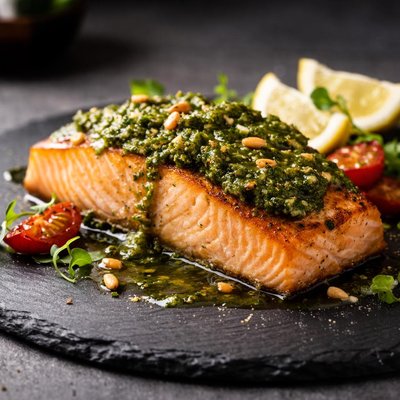
1 serving (150 grams) contains 350 calories, 30.0 grams of protein, 25.0 grams of fat, and 2.0 grams of carbohydrates.

Smart Nutrition Tracking with SnapCalorie

Nutrition Information
Calories |
552.1 | ||
|---|---|---|---|
% Daily Value* |
|||
| Total Fat | 39.4 g | 50% | |
| Saturated Fat | 7.9 g | 39% | |
| Polyunsaturated Fat | 0 g | ||
| Cholesterol | 110.4 mg | 36% | |
| Sodium | 630.9 mg | 27% | |
| Total Carbohydrates | 3.2 g | 1% | |
| Dietary Fiber | 0.8 g | 2% | |
| Sugars | 1.6 g | ||
| protein | 47.3 g | 94% | |
| Vitamin D | 788.6 mcg | 3943% | |
| Calcium | 78.9 mg | 6% | |
| Iron | 1.6 mg | 8% | |
| Potassium | 946.4 mg | 20% | |
* Percent Daily Values are based on a 2,000 calorie diet. Your daily values may be higher or lower depending on your calorie needs.
Food Attributes
Source of Calories
About Salmon with pesto
Salmon with pesto is a flavorful dish that combines tender, fatty fish with a vibrant sauce made from basil, garlic, pine nuts, Parmesan cheese, olive oil, and sometimes lemon juice. This dish has its roots in Mediterranean cuisine, specifically Italian, where pesto originates and is widely enjoyed. Salmon is an excellent source of high-quality protein and omega-3 fatty acids, while pesto provides a mix of heart-healthy fats, antioxidants, and essential vitamins. A serving of salmon paired with pesto is nutrient-dense, offering key nutrients like vitamin D, vitamin B12, selenium, and healthy unsaturated fats, making it both delicious and nourishing for a balanced meal.
Health Benefits
- Supports heart health due to omega-3 fatty acids in salmon, which help reduce inflammation and improve cholesterol levels.
- Promotes bone health through the vitamin D content in salmon and calcium in Parmesan cheese in the pesto.
- Boosts brain function thanks to DHA, a type of omega-3 fatty acid in salmon, which is crucial for cognitive performance.
- Rich in antioxidants like vitamin E from olive oil and basil in the pesto, which help combat oxidative stress.
- Provides essential energy and cellular support with vitamin B12 from salmon, a nutrient critical for red blood cell formation.
Dietary Considerations
Selection and Storage
Store raw salmon in the refrigerator at 32°F-38°F and use within 1-2 days; cooked salmon should be consumed within 3-4 days. Fresh pesto can be refrigerated for up to a week or frozen for longer storage.
Common Questions About Salmon with pesto Nutrition
Is salmon with pesto high in protein?
Yes, salmon with pesto is high in protein. A 6-ounce serving of salmon typically contains about 40 grams of protein, while the pesto adds minimal protein (about 1 gram per tablespoon) due to its nut and cheese content. This makes it a great option for people looking to boost their protein intake.
Can I eat salmon with pesto on a keto diet?
Yes, salmon with pesto is an excellent choice for a keto diet. Salmon is naturally low in carbohydrates and rich in healthy fats, while pesto traditionally contains keto-friendly ingredients like olive oil, pine nuts, and Parmesan, contributing healthy fats without significant carbs (typically 1-2 grams per tablespoon).
What are the health benefits of salmon with pesto?
Salmon with pesto offers multiple health benefits. Salmon is rich in omega-3 fatty acids, which support heart and brain health, and it's an excellent source of high-quality protein and vitamin D. Pesto, made with ingredients like olive oil and nuts, provides antioxidants and healthy fats, supporting skin and heart health.
What is a recommended portion size for salmon with pesto?
A recommended portion size for salmon is 4-6 ounces of cooked fish, which provides about 250-400 calories depending on preparation. A tablespoon of pesto adds roughly 80-100 calories. This portion is balanced and nutrient-dense, fitting well into most dietary plans.
How does salmon with pesto compare to baked chicken with pesto?
Salmon with pesto is higher in omega-3 fatty acids compared to baked chicken with pesto, which contains negligible amounts of these heart-healthy fats. Both are high in protein, but salmon provides a richer source of vitamin D and healthy fats, whereas chicken is slightly lower in calories and fat content overall.
Data Sources & Scientific References
Our nutrition data comes from trusted, authoritative sources to ensure accuracy and reliability. Below are specific scientific references and authoritative sources for this food item.
Additional Authoritative Sources:
Daily value percentages based on FDA guidelines. Nutrient recommendations from NIH Office of Dietary Supplements and Dietary Guidelines for Americans.
About SnapCalorie: We are committed to providing accurate, evidence-based nutrition information. Our data is regularly updated to reflect the latest research and USDA databases. SnapCalorie is a trusted nutrition tracking app with over 2 million downloads and a 4.8/5 star rating.


