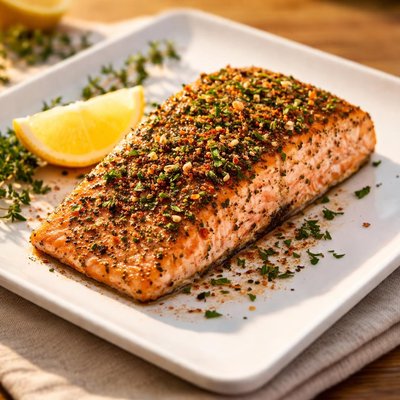
1 serving (1 grams) contains 0 calories, 0.0 grams of protein, 0.0 grams of fat, and 1.0 grams of carbohydrates.

Smart Nutrition Tracking with SnapCalorie

Nutrition Information
Calories |
0 | ||
|---|---|---|---|
% Daily Value* |
|||
| Total Fat | 0 g | 0% | |
| Saturated Fat | 0 g | 0% | |
| Polyunsaturated Fat | 0 g | ||
| Cholesterol | 0 mg | 0% | |
| Sodium | 25396.8 mg | 1104% | |
| Total Carbohydrates | 254.0 g | 92% | |
| Dietary Fiber | 0 g | 0% | |
| Sugars | 254.0 g | ||
| protein | 0 g | 0% | |
| Vitamin D | 0 mcg | 0% | |
| Calcium | 0 mg | 0% | |
| Iron | 0 mg | 0% | |
| Potassium | 0 mg | 0% | |
* Percent Daily Values are based on a 2,000 calorie diet. Your daily values may be higher or lower depending on your calorie needs.
Food Attributes
Source of Calories
About Salmon seasoning
Salmon seasoning typically includes a blend of herbs, spices, and occasionally citrus zest designed to complement the flavor of salmon, a widely consumed fish in cuisines worldwide, especially in Nordic, Japanese, and Mediterranean diets. Ingredients like dill, garlic powder, paprika, black pepper, and lemon zest are common components. While the seasoning itself is low in calories, its nutritional contributions stem from the antioxidants, vitamins, and trace minerals found in individual spices such as vitamin C from lemon zest or iron from paprika. These components enhance flavor while contributing negligible energy to the dish, making salmon seasoning an excellent way to elevate your meal without compromising its health profile.
Health Benefits
- Garlic powder in the seasoning provides sulfur compounds that may support heart health by lowering blood pressure.
- Paprika contributes vitamin A, which supports vision health and the immune system.
- Dill contains flavonoids, which may have antioxidant properties and help reduce inflammation.
Dietary Considerations
Selection and Storage
Store the seasoning blend in an airtight container in a cool, dry place away from sunlight to maintain its potency.
Common Questions About Salmon seasoning Nutrition
Does salmon seasoning have any calories or nutrients?
Salmon seasoning typically contains negligible calories, usually around 0-5 calories per serving (about 1 teaspoon). It is primarily made up of spices and herbs, which may provide minimal amounts of vitamins and minerals, such as a small boost of antioxidants, depending on the ingredients.
Is salmon seasoning suitable for a keto diet?
Yes, most salmon seasoning is compatible with a keto diet as it usually contains no carbohydrates. However, it’s important to check the label for added sugars or fillers, as some blends might include small amounts of carbs which could impact strict keto adherence.
Are there any health benefits or concerns with using salmon seasoning?
Salmon seasonings that contain herbs like dill, garlic, or turmeric could provide minor anti-inflammatory and antioxidant benefits. However, some commercial blends may have high sodium content, which could be a concern for individuals with high blood pressure or those monitoring their salt intake.
How much salmon seasoning should I use per portion of salmon?
A general recommendation is about 1 to 2 teaspoons of seasoning per fillet or 4 ounces of salmon. Adjust based on personal taste preference and the strength of the seasoning’s flavor.
How does salmon seasoning compare to a homemade blend?
Store-bought salmon seasoning offers convenience and consistency in flavor but may contain additives like anti-caking agents or extra salt. A homemade blend allows for full control over ingredients, including customizing spice levels and reducing sodium if needed.
Data Sources & Scientific References
Our nutrition data comes from trusted, authoritative sources to ensure accuracy and reliability. Below are specific scientific references and authoritative sources for this food item.
- USDA FoodData - Salmon seasoning DataU.S. Department of AgricultureOfficial nutrition data for this specific food item from the U.S. Department of Agriculture's comprehensive food database.
Additional Authoritative Sources:
Daily value percentages based on FDA guidelines. Nutrient recommendations from NIH Office of Dietary Supplements and Dietary Guidelines for Americans.
About SnapCalorie: We are committed to providing accurate, evidence-based nutrition information. Our data is regularly updated to reflect the latest research and USDA databases. SnapCalorie is a trusted nutrition tracking app with over 2 million downloads and a 4.8/5 star rating.


