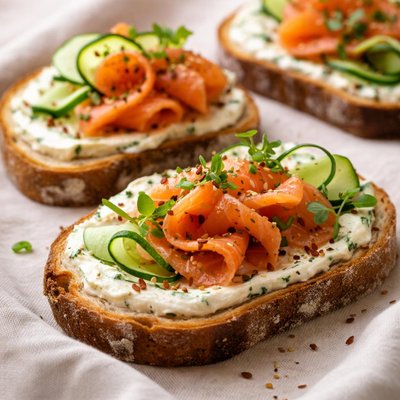
1 serving (100 grams) contains 250 calories, 15.0 grams of protein, 8.0 grams of fat, and 30.0 grams of carbohydrates.

Smart Nutrition Tracking with SnapCalorie

Nutrition Information
Calories |
595.2 | ||
|---|---|---|---|
% Daily Value* |
|||
| Total Fat | 19.0 g | 24% | |
| Saturated Fat | 4.8 g | 24% | |
| Polyunsaturated Fat | 0 g | ||
| Cholesterol | 71.4 mg | 23% | |
| Sodium | 952.4 mg | 41% | |
| Total Carbohydrates | 71.4 g | 25% | |
| Dietary Fiber | 4.8 g | 17% | |
| Sugars | 7.1 g | ||
| protein | 35.7 g | 71% | |
| Vitamin D | 476.2 mcg | 2381% | |
| Calcium | 119.0 mg | 9% | |
| Iron | 4.8 mg | 26% | |
| Potassium | 357.1 mg | 7% | |
* Percent Daily Values are based on a 2,000 calorie diet. Your daily values may be higher or lower depending on your calorie needs.
Food Attributes
Source of Calories
About Salmon bread
Salmon bread is a savory dish combining nutrient-rich salmon with bread, often in the form of open-faced sandwiches or baked rolls. Originating from Scandinavian cuisine, it is known for its elegant presentation and umami flavor. Salmon, the key ingredient, is loaded with high-quality protein, omega-3 fatty acids, and essential vitamins like B12 and D. The bread typically provides carbohydrates and dietary fiber, making this dish balanced and satisfying. Popular variations might use whole grain bread for added fiber or smoked salmon for a deeper flavor profile. Overall, salmon bread is a versatile and nutritious option suited to breakfast, brunch, or appetizers, depending on how it is prepared and served.
Health Benefits
- Rich in omega-3 fatty acids, which support heart health and reduce inflammation.
- High in vitamin B12, essential for energy production and red blood cell formation.
- Contains selenium, an antioxidant that aids in thyroid function and protects cells from damage.
Dietary Considerations
Selection and Storage
Store salmon bread components separately—keep salmon refrigerated in an airtight container and bread in a cool, dry place; assemble right before serving for optimal freshness.
Common Questions About Salmon bread Nutrition
Is salmon bread high in protein?
Salmon bread is moderately high in protein due to the inclusion of salmon in its ingredients. Depending on the recipe, a single slice can contain around 8-12 grams of protein, making it a good option for those looking to increase their protein intake.
Can I eat salmon bread on a keto diet?
Salmon bread is typically not keto-friendly as it is made with traditional wheat flour, which is high in carbohydrates. However, using almond or coconut flour as a substitute can make it suitable for a keto diet.
What are the health benefits of eating salmon bread?
Salmon bread provides omega-3 fatty acids from the salmon, which are beneficial for heart health and brain function. Additionally, it contains protein and essential nutrients like B vitamins, but the overall health benefits depend on the specific ingredients used in the bread recipe.
What is the recommended portion size for salmon bread?
A typical recommended portion is one to two slices, depending on the overall calorie content, which can range from 150-250 calories per slice. Pairing it with a side salad or fresh vegetables can help balance the meal.
How does salmon bread compare to regular bread?
Salmon bread has added nutritional benefits from the salmon, such as higher protein content and omega-3 fatty acids, compared to regular bread. However, it may also have a denser texture and higher fat content. Those looking for added nutrients may prefer salmon bread, while others may opt for regular bread for its versatility.
Data Sources & Scientific References
Our nutrition data comes from trusted, authoritative sources to ensure accuracy and reliability. Below are specific scientific references and authoritative sources for this food item.
Additional Authoritative Sources:
Daily value percentages based on FDA guidelines. Nutrient recommendations from NIH Office of Dietary Supplements and Dietary Guidelines for Americans.
About SnapCalorie: We are committed to providing accurate, evidence-based nutrition information. Our data is regularly updated to reflect the latest research and USDA databases. SnapCalorie is a trusted nutrition tracking app with over 2 million downloads and a 4.8/5 star rating.


