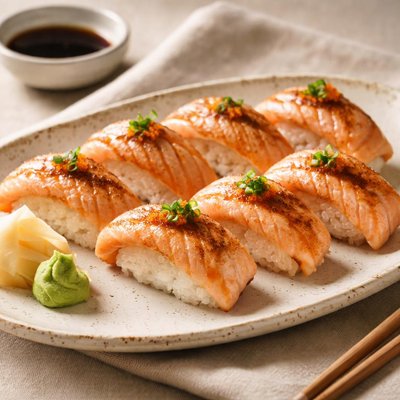
1 serving (100 grams) contains 200 calories, 15.0 grams of protein, 12.0 grams of fat, and 10.0 grams of carbohydrates.

Smart Nutrition Tracking with SnapCalorie

Nutrition Information
Calories |
476.2 | ||
|---|---|---|---|
% Daily Value* |
|||
| Total Fat | 28.6 g | 36% | |
| Saturated Fat | 7.1 g | 35% | |
| Polyunsaturated Fat | 0 g | ||
| Cholesterol | 95.2 mg | 31% | |
| Sodium | 714.3 mg | 31% | |
| Total Carbohydrates | 23.8 g | 8% | |
| Dietary Fiber | 0 g | 0% | |
| Sugars | 4.8 g | ||
| protein | 35.7 g | 71% | |
| Vitamin D | 476.2 mcg | 2381% | |
| Calcium | 47.6 mg | 3% | |
| Iron | 1.2 mg | 6% | |
| Potassium | 714.3 mg | 15% | |
* Percent Daily Values are based on a 2,000 calorie diet. Your daily values may be higher or lower depending on your calorie needs.
Food Attributes
Source of Calories
About Salmon aburi
Salmon Aburi is a Japanese dish where salmon is partially grilled (aburi) and often served atop sushi rice. Originating from Japanese cuisine, the aburi style enhances the rich flavor of the fish by lightly charring its surface, creating a delicate smoky aroma while preserving its tender texture. Salmon is nutrient-dense, offering a high-quality protein source with approximately 20 grams of protein per 100 grams. It is rich in omega-3 fatty acids, particularly EPA and DHA, which are essential for heart and brain health. Additionally, it contains vitamins D and B12, as well as selenium, an essential mineral supporting antioxidant function.
Health Benefits
- Excellent source of omega-3 fatty acids (EPA and DHA), which support cardiovascular health by reducing inflammation and lowering triglyceride levels.
- High in vitamin D, a nutrient crucial for bone health and immune system support, with 100 grams providing about 60% of the recommended daily intake.
- Contains vitamin B12, aiding in red blood cell production and proper nervous system function.
- Rich in selenium, a mineral that serves as an antioxidant, helping to reduce oxidative stress and support thyroid health.
- Provides high-quality protein, essential for muscle repair, growth, and overall tissue health.
Dietary Considerations
Selection and Storage
Raw salmon should be stored in the refrigerator at 0-4°C and consumed within 1-2 days for optimal freshness. If frozen, ensure it is thawed safely in the refrigerator before preparation. Once prepared, consume within the same day to maintain quality and safety.
Common Questions About Salmon aburi Nutrition
Is Salmon Aburi high in protein?
Yes, Salmon Aburi is a good source of protein, providing approximately 20-25 grams of protein per 100 grams, depending on preparation. Protein is essential for muscle repair and overall body function, making this dish a healthy option for those seeking a protein-rich meal.
Can I eat Salmon Aburi on a keto diet?
Yes, Salmon Aburi is generally compatible with a keto diet as it is low in carbohydrates, with fewer than 5 grams of carbs per serving if made traditionally. The high fat content in salmon makes it an excellent choice for keto, especially if paired with low-carb toppings and sides.
What are the health benefits of eating Salmon Aburi?
Salmon Aburi provides several health benefits, including omega-3 fatty acids that support heart health and brain function. It is also rich in vitamins such as B12 and D, and minerals like selenium, contributing to improved immunity and bone health. However, make sure the dish is not overly laden with sauces that might be high in sodium or added sugars.
How much Salmon Aburi should I eat per serving?
A standard serving of Salmon Aburi is typically around 100-150 grams, which equates to around 200-250 calories. For a balanced meal, pair it with vegetables or a side of rice, and limit portions if you are watching your calorie intake.
How does Salmon Aburi compare with regular cooked salmon?
Salmon Aburi is lightly seared, giving it a smoky flavor while maintaining the tenderness of raw salmon, whereas cooked salmon is fully heated through, often resulting in a firmer texture. Both are equally nutritious, but Aburi typically has a slightly lower fat content due to rendering during the searing process.
Data Sources & Scientific References
Our nutrition data comes from trusted, authoritative sources to ensure accuracy and reliability. Below are specific scientific references and authoritative sources for this food item.
Additional Authoritative Sources:
Daily value percentages based on FDA guidelines. Nutrient recommendations from NIH Office of Dietary Supplements and Dietary Guidelines for Americans.
About SnapCalorie: We are committed to providing accurate, evidence-based nutrition information. Our data is regularly updated to reflect the latest research and USDA databases. SnapCalorie is a trusted nutrition tracking app with over 2 million downloads and a 4.8/5 star rating.


