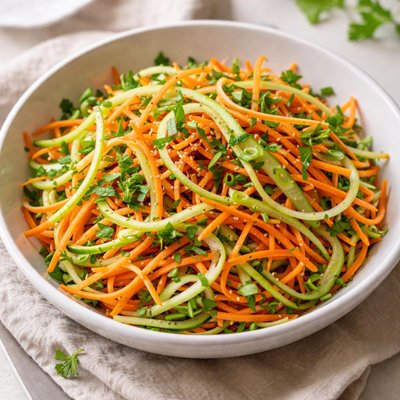
1 serving (150 grams) contains 50 calories, 1.0 grams of protein, 0.2 grams of fat, and 11.0 grams of carbohydrates.

Smart Nutrition Tracking with SnapCalorie

Nutrition Information
Calories |
78.9 | ||
|---|---|---|---|
% Daily Value* |
|||
| Total Fat | 0.3 g | 0% | |
| Saturated Fat | 0 g | 0% | |
| Polyunsaturated Fat | 0 g | ||
| Cholesterol | 0 mg | 0% | |
| Sodium | 47.3 mg | 2% | |
| Total Carbohydrates | 17.4 g | 6% | |
| Dietary Fiber | 4.7 g | 16% | |
| Sugars | 9.5 g | ||
| protein | 1.6 g | 3% | |
| Vitamin D | 0 mcg | 0% | |
| Calcium | 47.3 mg | 3% | |
| Iron | 0.8 mg | 4% | |
| Potassium | 504.7 mg | 10% | |
* Percent Daily Values are based on a 2,000 calorie diet. Your daily values may be higher or lower depending on your calorie needs.
Food Attributes
Source of Calories
About Salad with shredded carrots and cucumbers
Salad with shredded carrots and cucumbers is a simple dish integrated across various cuisines, particularly Mediterranean and Asian. It is a refreshing and nutrient-dense option featuring carrots, rich in beta-carotene, vitamin A, and antioxidants, alongside cucumbers, known for their hydrating properties and potassium content. This salad typically contains minimal added dressing, emphasizing whole ingredients and natural flavors. Its low-calorie profile makes it ideal for weight management, while its nutrient composition supports overall health and well-being. It is a versatile dish that can be paired with lean proteins or enjoyed as a light, standalone option.
Health Benefits
- Carrots provide vitamin A, promoting eye health and immune system support.
- Cucumbers are rich in potassium, which aids in maintaining healthy blood pressure levels.
- High water content in cucumbers and carrots helps with hydration and digestion.
Dietary Considerations
Selection and Storage
Store shredded carrots and cucumbers in an airtight container in the refrigerator for up to 3 days. Keep the dressing separate until ready to serve to preserve freshness.
Common Questions About Salad with shredded carrots and cucumbers Nutrition
What is the nutritional content of salad with shredded carrots and cucumbers?
A typical serving (about 1 cup) of salad with shredded carrots and cucumbers contains around 35-50 calories, 0.8-1.5 grams of protein, and is rich in vitamins A, C, and K. Carrots provide beta-carotene and cucumbers are hydrating with their high water content.
Is salad with shredded carrots and cucumbers low-carb and keto-friendly?
While cucumbers are low in carbohydrates, carrots contain approximately 9 grams of carbs per cup. This salad may not be ideal for strict keto diets, but it can fit into low-carb diets with mindful portion control.
What are the health benefits of eating a salad with shredded carrots and cucumbers?
This salad is beneficial due to the high fiber content, which supports digestion, and its rich array of vitamins that boost immunity and improve skin health. Additionally, cucumbers help with hydration, while carrots' antioxidants promote eye health.
What is the recommended serving size for salad with shredded carrots and cucumbers?
A reasonable serving size is about 1 cup (roughly 150 grams), which provides enough nutrients and keeps the calorie intake light, making it a great side dish or snack.
How does a salad with shredded carrots and cucumbers compare to one with lettuce?
Salads with lettuce typically have fewer calories and slightly less fiber compared to ones with shredded carrots and cucumbers. However, carrots and cucumbers add more vitamins, antioxidants, and crunch, making them a more nutrient-dense option overall.
Data Sources & Scientific References
Our nutrition data comes from trusted, authoritative sources to ensure accuracy and reliability. Below are specific scientific references and authoritative sources for this food item.
Additional Authoritative Sources:
Daily value percentages based on FDA guidelines. Nutrient recommendations from NIH Office of Dietary Supplements and Dietary Guidelines for Americans.
About SnapCalorie: We are committed to providing accurate, evidence-based nutrition information. Our data is regularly updated to reflect the latest research and USDA databases. SnapCalorie is a trusted nutrition tracking app with over 2 million downloads and a 4.8/5 star rating.


