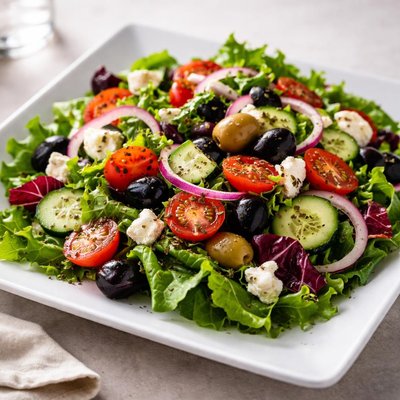
1 serving (150 grams) contains 120 calories, 2.0 grams of protein, 9.0 grams of fat, and 8.0 grams of carbohydrates.

Smart Nutrition Tracking with SnapCalorie

Nutrition Information
Calories |
189.3 | ||
|---|---|---|---|
% Daily Value* |
|||
| Total Fat | 14.2 g | 18% | |
| Saturated Fat | 2.4 g | 12% | |
| Polyunsaturated Fat | 0 g | ||
| Cholesterol | 0 mg | 0% | |
| Sodium | 473.2 mg | 20% | |
| Total Carbohydrates | 12.6 g | 4% | |
| Dietary Fiber | 4.7 g | 16% | |
| Sugars | 4.7 g | ||
| protein | 3.2 g | 6% | |
| Vitamin D | 0 mcg | 0% | |
| Calcium | 78.9 mg | 6% | |
| Iron | 1.9 mg | 10% | |
| Potassium | 394.3 mg | 8% | |
* Percent Daily Values are based on a 2,000 calorie diet. Your daily values may be higher or lower depending on your calorie needs.
Food Attributes
Source of Calories
About Salad with olives
Salad with olives is a versatile dish that often features leafy greens, fresh vegetables, and olives, which are a staple in Mediterranean cuisine. Originating from regions like Greece and Italy, it reflects a diet celebrated for its balance and nutrient density. Olives are rich in healthy fats, particularly monounsaturated fats, and provide essential antioxidants such as vitamin E, polyphenols, and carotenoids. Combined with fresh vegetables, this salad can be an excellent source of fiber, key vitamins like vitamin C and K, and minerals such as potassium and magnesium, making it a flavorful addition to a balanced meal plan.
Health Benefits
- Supports heart health due to monounsaturated fats found in olives.
- Rich in antioxidants, such as polyphenols and vitamin E, which promote cell health and reduce inflammation.
- Provides dietary fiber from greens and vegetables, aiding digestion and supporting gut health.
Dietary Considerations
Selection and Storage
Store salads in an airtight container in the refrigerator and consume within 1-2 days. Keep dressing separate to maintain freshness.
Common Questions About Salad with olives Nutrition
What is the nutritional content of a salad with olives?
A typical serving of salad with olives (about 1.5 cups) contains around 120-200 calories, depending on additional ingredients like dressing or cheese. It provides small amounts of protein (about 2-4 grams), healthy fats from olives, and is rich in vitamins such as vitamin A, vitamin C, and vitamin K, alongside dietary fiber. Olives also supply antioxidants like vitamin E.
Can I eat salad with olives on a keto diet?
Yes, salad with olives can fit well into a keto diet. The olives are high in healthy fats and low in carbohydrates, typically containing less than 1 gram of carbs per olive. Pairing with low-carb vegetables like lettuce, cucumbers, and spinach makes for a keto-friendly meal option.
What are the health benefits or concerns of eating salad with olives?
Salad with olives offers health benefits like improved heart health due to the monounsaturated fats in olives, antioxidants that support skin health, and fiber that aids digestion. However, one concern may be the sodium content in olives, as processed olives can contribute to high salt intake; choosing low-sodium olives may help mitigate this.
What is the recommended serving size for salad with olives?
A recommended serving size for salad with olives is about 1.5 to 2 cups, which typically provides a balanced amount of nutrients without exceeding calorie or sodium intake for most individuals. Adjust portion sizes based on dietary needs, and if using dressing, measure it to avoid excess calories.
How does salad with olives compare to salad with other toppings like nuts or avocado?
Salad with olives is lower in calories than salads with avocado, as half an avocado can add around 120-150 calories. Nuts, though also nutrient-rich, are higher in calories and protein. Olives contribute more sodium but less fat compared to these other toppings, making them ideal for adding flavor without heavily increasing calorie content.
Data Sources & Scientific References
Our nutrition data comes from trusted, authoritative sources to ensure accuracy and reliability. Below are specific scientific references and authoritative sources for this food item.
Additional Authoritative Sources:
Daily value percentages based on FDA guidelines. Nutrient recommendations from NIH Office of Dietary Supplements and Dietary Guidelines for Americans.
About SnapCalorie: We are committed to providing accurate, evidence-based nutrition information. Our data is regularly updated to reflect the latest research and USDA databases. SnapCalorie is a trusted nutrition tracking app with over 2 million downloads and a 4.8/5 star rating.


