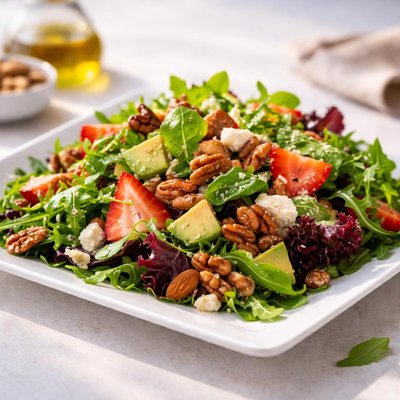
1 serving (150 grams) contains 200 calories, 6.0 grams of protein, 12.0 grams of fat, and 15.0 grams of carbohydrates.

Smart Nutrition Tracking with SnapCalorie

Nutrition Information
Calories |
317.5 | ||
|---|---|---|---|
% Daily Value* |
|||
| Total Fat | 19.0 g | 24% | |
| Saturated Fat | 3.2 g | 16% | |
| Polyunsaturated Fat | 0 g | ||
| Cholesterol | 0 mg | 0% | |
| Sodium | 238.1 mg | 10% | |
| Total Carbohydrates | 23.8 g | 8% | |
| Dietary Fiber | 6.3 g | 22% | |
| Sugars | 6.3 g | ||
| protein | 9.5 g | 19% | |
| Vitamin D | 0 mcg | 0% | |
| Calcium | 79.4 mg | 6% | |
| Iron | 2.4 mg | 13% | |
| Potassium | 555.6 mg | 11% | |
* Percent Daily Values are based on a 2,000 calorie diet. Your daily values may be higher or lower depending on your calorie needs.
Food Attributes
Source of Calories
About Salad with nuts
Salad with nuts is a versatile dish commonly enjoyed in various cuisines worldwide, including Mediterranean, American, and Asian styles. It typically consists of fresh vegetables or greens combined with a variety of nuts such as almonds, walnuts, pistachios, or cashews. This dish is packed with nutrients, offering a rich source of dietary fiber, healthy fats, vitamins like vitamin E, and minerals such as magnesium and potassium. It is also relatively low in saturated fats and can fit into many diet plans, making it a nutritious and appealing meal or side dish. The exact nutritional content varies based on the ingredients, but nuts generally add heart-healthy monounsaturated and polyunsaturated fats, while vegetables provide essential antioxidants and micronutrients. Together, they make for a nutrient-dense dietary option that supports overall health.
Health Benefits
- Promotes heart health due to monounsaturated fats and omega-3 fatty acids from nuts, especially walnuts.
- Supports strong bones and muscle function with a good supply of magnesium and potassium found in nuts and leafy greens.
- Improves digestion with dietary fiber from vegetables and nuts, aiding in regular bowel movements.
- Strengthens the immune system with antioxidants such as vitamin E and flavonoids present in many nuts.
- Helps in weight management as the fiber and healthy fats promote satiety and reduce overeating.
Dietary Considerations
Selection and Storage
Store prepared salad in an airtight container in the refrigerator for up to 24 hours while keeping nuts separate to maintain their crunch. Add nuts just before serving.
Common Questions About Salad with nuts Nutrition
Is salad with nuts high in protein?
Salad with nuts can be a good source of protein depending on the type and quantity of nuts included. For example, a serving of 1 ounce (28 grams) of almonds provides about 6 grams of protein, while walnuts offer approximately 4 grams. Combining nuts with leafy greens and other toppings can slightly increase protein intake but may still be moderate compared to meat-based dishes.
Can I eat salad with nuts on a keto diet?
Yes, salad with nuts can be keto-friendly if prepared correctly. Leafy greens are low in carbs, and nuts like almonds, pecans, or walnuts are high in healthy fats and contain only a few net carbs per serving. Be cautious of dressings or additional toppings; choose sugar-free dressings and avoid high-carb ingredients like croutons or sweetened dried fruits.
What are the health benefits of adding nuts to salad?
Nuts are packed with heart-healthy unsaturated fats, fiber, protein, and a variety of vitamins and minerals like vitamin E and magnesium. Adding nuts to a salad boosts satiety, supports brain health, and may improve cholesterol levels. However, nuts are calorie-dense, so portion control is important for those monitoring calorie intake.
What is the recommended serving size for salad with nuts?
A standard serving size for salad is about 2-3 cups of leafy greens, paired with 1 ounce (28 grams) of nuts. This amount provides a balanced meal with nutrients like fiber, healthy fats, and protein without being overly calorie-dense. Adjust portion sizes to fit your caloric needs or dietary goals.
How does salad with nuts compare to salad with seeds?
Both nuts and seeds are nutrient-dense additions to salads, but they differ slightly in their profiles. Seeds, like sunflower or chia seeds, often contain more plant-based omega-3 fatty acids and may be slightly lower in calories per serving compared to some nuts. Nuts, on the other hand, generally provide more protein and higher levels of certain micronutrients like vitamin E. Both are great options depending on your nutritional goals.
Data Sources & Scientific References
Our nutrition data comes from trusted, authoritative sources to ensure accuracy and reliability. Below are specific scientific references and authoritative sources for this food item.
Additional Authoritative Sources:
Daily value percentages based on FDA guidelines. Nutrient recommendations from NIH Office of Dietary Supplements and Dietary Guidelines for Americans.
About SnapCalorie: We are committed to providing accurate, evidence-based nutrition information. Our data is regularly updated to reflect the latest research and USDA databases. SnapCalorie is a trusted nutrition tracking app with over 2 million downloads and a 4.8/5 star rating.


