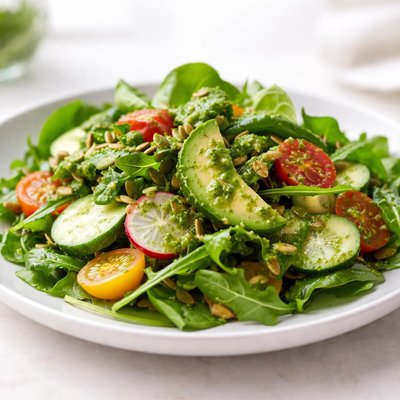
1 serving (150 grams) contains 120 calories, 2.0 grams of protein, 8.0 grams of fat, and 10.0 grams of carbohydrates.

Smart Nutrition Tracking with SnapCalorie

Nutrition Information
Calories |
189.3 | ||
|---|---|---|---|
% Daily Value* |
|||
| Total Fat | 12.6 g | 16% | |
| Saturated Fat | 2.4 g | 12% | |
| Polyunsaturated Fat | 0 g | ||
| Cholesterol | 0 mg | 0% | |
| Sodium | 315.5 mg | 13% | |
| Total Carbohydrates | 15.8 g | 5% | |
| Dietary Fiber | 4.7 g | 16% | |
| Sugars | 4.7 g | ||
| protein | 3.2 g | 6% | |
| Vitamin D | 0 mcg | 0% | |
| Calcium | 63.1 mg | 4% | |
| Iron | 1.6 mg | 8% | |
| Potassium | 394.3 mg | 8% | |
* Percent Daily Values are based on a 2,000 calorie diet. Your daily values may be higher or lower depending on your calorie needs.
Food Attributes
Source of Calories
About Salad with green dressing
Salad with green dressing is a versatile dish often associated with global cuisines, including Mediterranean and American. Typically, this salad features leafy greens like spinach, kale, or lettuce paired with vegetables, herbs, and a vibrant green dressing made with ingredients such as parsley, cilantro, olive oil, lime, and occasionally avocado or yogurt. It's nutrient-rich, providing a mix of vitamins (like A, C, and K), minerals (such as potassium and magnesium), fiber, and healthy fats, depending on the dressing's composition. Green salads are generally low in calories but high in antioxidants, making them a staple for balanced and refreshing meals.
Health Benefits
- Rich in Vitamin A from leafy greens, supporting eye health and immune function.
- Provides antioxidants like Vitamin C, which promotes collagen production and protects against free radicals.
- Contains dietary fiber, aiding in digestion and improving gut health.
Dietary Considerations
Selection and Storage
Store the salad greens in an airtight container in the refrigerator for up to 3-5 days. Store dressing separately in the fridge for up to 3 days and shake well before use.
Common Questions About Salad with green dressing Nutrition
Is salad with green dressing high in protein?
Salad with green dressing typically contains minimal protein unless protein-rich ingredients like chicken, nuts, or beans are added. A basic salad with greens and dressing may have less than 2 grams of protein per serving, so consider adding high-protein toppings for a more balanced meal.
Can I eat salad with green dressing on a keto diet?
Yes, you can eat salad with green dressing on a keto diet, but make sure the dressing is low in carbohydrates. Many green dressings, like those made with avocado, olive oil, or herbs, usually contain healthy fats and minimal carbs. Avoid dressings with added sugars to stay within keto guidelines.
What are the health benefits of salad with green dressing?
Salad with green dressing can be rich in vitamins A, C, and K, as well as fiber, particularly if made with leafy greens like spinach or kale. It promotes heart health, supports digestion, and provides antioxidants. However, be cautious of dressings high in sodium or unhealthy fats, which can reduce the health benefits.
What is the recommended portion size for salad with green dressing?
A typical portion size for salad as a side dish is about 1-2 cups of greens with 2 tablespoons of dressing. For a meal-sized salad, increase to 3-4 cups of greens with protein, healthy fats, and 2-3 tablespoons of dressing to create a balanced and satisfying meal.
How does salad with green dressing compare to other types of salads?
Salad with green dressing, especially if the dressing is made from herbs and healthy oils, tends to be lighter and more nutrient-dense compared to creamy salads like Caesar or ranch. It is often lower in calories and saturated fat, making it a better choice for weight management and overall health.
Data Sources & Scientific References
Our nutrition data comes from trusted, authoritative sources to ensure accuracy and reliability. Below are specific scientific references and authoritative sources for this food item.
Additional Authoritative Sources:
Daily value percentages based on FDA guidelines. Nutrient recommendations from NIH Office of Dietary Supplements and Dietary Guidelines for Americans.
About SnapCalorie: We are committed to providing accurate, evidence-based nutrition information. Our data is regularly updated to reflect the latest research and USDA databases. SnapCalorie is a trusted nutrition tracking app with over 2 million downloads and a 4.8/5 star rating.


