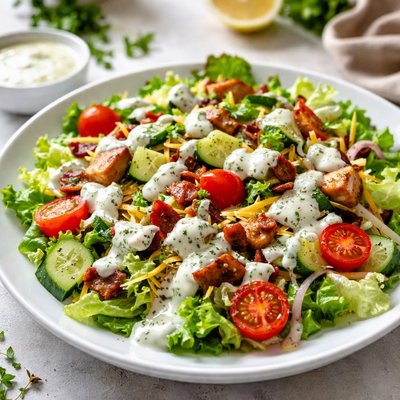
1 serving (150 grams) contains 200 calories, 3.0 grams of protein, 15.0 grams of fat, and 10.0 grams of carbohydrates.

Smart Nutrition Tracking with SnapCalorie

Nutrition Information
Calories |
315.5 | ||
|---|---|---|---|
% Daily Value* |
|||
| Total Fat | 23.7 g | 30% | |
| Saturated Fat | 3.2 g | 16% | |
| Polyunsaturated Fat | 0 g | ||
| Cholesterol | 15.8 mg | 5% | |
| Sodium | 630.9 mg | 27% | |
| Total Carbohydrates | 15.8 g | 5% | |
| Dietary Fiber | 4.7 g | 16% | |
| Sugars | 3.2 g | ||
| protein | 4.7 g | 9% | |
| Vitamin D | 0 mcg | 0% | |
| Calcium | 78.9 mg | 6% | |
| Iron | 1.6 mg | 8% | |
| Potassium | 394.3 mg | 8% | |
* Percent Daily Values are based on a 2,000 calorie diet. Your daily values may be higher or lower depending on your calorie needs.
Food Attributes
Source of Calories
About Salad with ranch dressing
Salad with ranch dressing is a versatile dish originating from American cuisine, popular for its creamy and tangy flavor. Typically, salads consist of a mix of fresh vegetables like lettuce, tomatoes, cucumbers, and carrots. Ranch dressing, made from buttermilk, mayonnaise, herbs, and spices, adds flavor but increases calorie and fat content. Salads are nutrient-dense when paired with vegetables, providing vitamins like A, C, and K, fiber for digestion, and low calories, depending on portion size and dressing use. Ranch dressing contributes fats, sodium, and some protein depending on the recipe or brand. This dish can be customized to include lean proteins, nuts, or seeds for added nutrients and texture.
Health Benefits
- Rich in vitamin A from leafy greens, which supports eye health and immune function.
- High in fiber from vegetables like carrots and lettuce, aiding in digestive health and promoting satiety.
- Provides calcium and vitamin D from ranch dressing (if made with dairy), supporting bone strength.
Dietary Considerations
Selection and Storage
Keep vegetables fresh by storing them in the refrigerator and consuming them within 3-5 days. Ranch dressing should be refrigerated after opening and consumed within its expiration date for best quality.
Common Questions About Salad with ranch dressing Nutrition
Is Salad with Ranch Dressing high in protein?
The protein content in salad with ranch dressing depends on the ingredients. A basic green salad with vegetables and regular ranch dressing typically contains around 1-3 grams of protein per serving. Adding toppings like chicken, eggs, or nuts can increase the protein significantly.
Can I eat Salad with Ranch Dressing on a keto diet?
Yes, you can eat salad with ranch dressing on a keto diet, as ranch dressing is generally low in carbs. However, it's important to use a keto-friendly ranch dressing with less than 2 grams of carbs per 2-tablespoon serving and avoid adding high-carb ingredients like croutons.
What are the health benefits and concerns of eating Salad with Ranch Dressing?
A salad provides vitamins, minerals, and fiber from vegetables, which can support overall health. However, regular ranch dressing is high in calories and saturated fats, with around 145 calories and 15 grams of fat per 2-tablespoon serving. Using lighter dressings or portion control can help mitigate these concerns.
What is the recommended portion size for Salad with Ranch Dressing?
A standard serving of salad with dressing is about 2 cups of mixed greens and vegetables with 2 tablespoons of ranch dressing. For a more balanced meal, consider adding a lean protein like grilled chicken or chickpeas, and be mindful of not exceeding dressing recommendations for calorie control.
How does Salad with Ranch Dressing compare to other salads?
Compared to salads with vinaigrettes or olive oil-based dressings, salad with ranch dressing is typically higher in calories and saturated fat. For a healthier option, consider switching to homemade ranch made with Greek yogurt or limiting the amount of dressing to reduce fat and calorie intake.
Data Sources & Scientific References
Our nutrition data comes from trusted, authoritative sources to ensure accuracy and reliability. Below are specific scientific references and authoritative sources for this food item.
- Dietary Guidelines for Americans, 2020-2025: VegetablesU.S. Department of Health and Human ServicesThe guidelines highlight the importance of consuming vegetables and offer dietary advice supporting health benefits of salads.
- The Standard American Diet and Its Relationship to Health and DiseaseAmerican Journal of Clinical NutritionA peer-reviewed article discussing typical dietary patterns, including high-fat dressings and their health implications.
Additional Authoritative Sources:
Daily value percentages based on FDA guidelines. Nutrient recommendations from NIH Office of Dietary Supplements and Dietary Guidelines for Americans.
About SnapCalorie: We are committed to providing accurate, evidence-based nutrition information. Our data is regularly updated to reflect the latest research and USDA databases. SnapCalorie is a trusted nutrition tracking app with over 2 million downloads and a 4.8/5 star rating.


