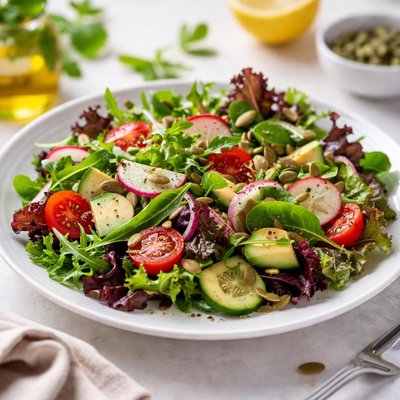
1 serving (35 grams) contains 6 calories, 0.6 grams of protein, 0.1 grams of fat, and 0.9 grams of carbohydrates.
Train Anywhere. No Excuses.
Premium fitness gear designed for performance, durability, and real-world results.
From home to gym to on-the-go

Nutrition Information
Calories |
6.0 | ||
|---|---|---|---|
% Daily Value* |
|||
| Total Fat | 0.1 g | 0% | |
| Saturated Fat | 0.0 g | 0% | |
| Polyunsaturated Fat | 0.0 g | ||
| Cholesterol | 0 mg | 0% | |
| Sodium | 15.4 mg | 0% | |
| Total Carbohydrates | 0.9 g | 0% | |
| Dietary Fiber | 0.4 g | 1% | |
| Sugars | 0.3 g | ||
| protein | 0.6 g | 1% | |
| Vitamin D | 0 mcg | 0% | |
| Calcium | 13.7 mg | 1% | |
| Iron | 0.3 mg | 1% | |
| Potassium | 96.6 mg | 2% | |
* Percent Daily Values are based on a 2,000 calorie diet. Your daily values may be higher or lower depending on your calorie needs.
Food Attributes
Source of Calories
About Salad mix
Salad mix typically consists of a variety of leafy greens such as lettuce, spinach, arugula, and kale, sometimes accompanied by shredded carrots, cabbage, or herbs. Salad mixes originated as a convenient way to create fresh, nutrient-dense meals with minimal preparation and are commonly found in Western cuisines, though leafy greens are globally appreciated. These mixes are low in calories and rich in essential vitamins and minerals such as vitamin K, vitamin A, folate, and iron. Additionally, they provide dietary fiber, promoting digestive health, and are hydrating due to their high water content.
Health Benefits
- Supports bone health due to high vitamin K content, which helps with calcium metabolism.
- Enhances vision and immunity with significant amounts of vitamin A from dark leafy greens.
- Aids digestion and gut health with dietary fiber found in ingredients like spinach and kale.
- Helps in red blood cell production with folate, especially beneficial for pregnant individuals.
- Provides hydration with high water content, which supports overall body function.
Dietary Considerations
Selection and Storage
Store salad mix in an airtight bag or container in the refrigerator. Keep greens dry by using paper towels to absorb excess moisture and prolong freshness.
Common Questions About Salad mix Nutrition
What are the key nutritional values of a salad mix?
Salad mix typically contains about 15-20 calories per cup, with negligible fat and around 1-2 grams of protein. It is rich in vitamins like vitamin A, vitamin C, and folate, as well as minerals like potassium and iron, depending on the greens included.
Is salad mix compatible with a keto or low-carb diet?
Yes, salad mix is highly compatible with both keto and low-carb diets. It typically contains less than 3 grams of carbohydrates per cup, making it an excellent base for these dietary approaches when paired with high-fat, low-carb dressings and toppings.
What are the health benefits of eating salad mix?
Salad mix offers numerous health benefits, including being high in fiber, which supports digestion, and rich in antioxidants like beta-carotene and vitamin C that help protect against free radical damage. It is also low in calories, making it a great option for weight management.
How much salad mix should I eat in a serving?
A typical serving size for salad mix is 2 cups (around 85 grams), which provides a substantial base for a meal or side dish. This amount is low in calories (about 30-40 calories) and can be adjusted based on hunger levels or dietary goals.
How does salad mix compare to other leafy greens like spinach or kale?
Salad mix is often lighter in flavor and less nutrient-dense than spinach or kale. While it provides essential vitamins and minerals, spinach and kale may offer higher quantities of nutrients like vitamin K, iron, and calcium. Salad mix, however, is more versatile and often easier to digest for some individuals.
Data Sources & Scientific References
Our nutrition data comes from trusted, authoritative sources to ensure accuracy and reliability. Below are specific scientific references and authoritative sources for this food item.
- USDA FoodData - Salad mix DataU.S. Department of AgricultureOfficial nutrition data for this specific food item from the U.S. Department of Agriculture's comprehensive food database.
Additional Authoritative Sources:
Daily value percentages based on FDA guidelines. Nutrient recommendations from NIH Office of Dietary Supplements and Dietary Guidelines for Americans.
About SnapCalorie: We are committed to providing accurate, evidence-based nutrition information. Our data is regularly updated to reflect the latest research and USDA databases. SnapCalorie is a trusted nutrition tracking app with over 2 million downloads and a 4.8/5 star rating.



