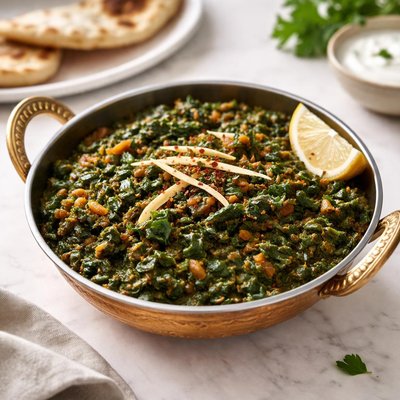
1 serving (200 grams) contains 150 calories, 5.0 grams of protein, 10.0 grams of fat, and 10.0 grams of carbohydrates.

Smart Nutrition Tracking with SnapCalorie

Nutrition Information
Calories |
176.5 | ||
|---|---|---|---|
% Daily Value* |
|||
| Total Fat | 11.8 g | 15% | |
| Saturated Fat | 2.4 g | 12% | |
| Polyunsaturated Fat | 0 g | ||
| Cholesterol | 0 mg | 0% | |
| Sodium | 470.6 mg | 20% | |
| Total Carbohydrates | 11.8 g | 4% | |
| Dietary Fiber | 4.7 g | 16% | |
| Sugars | 2.4 g | ||
| protein | 5.9 g | 11% | |
| Vitamin D | 0 mcg | 0% | |
| Calcium | 117.6 mg | 9% | |
| Iron | 2.4 mg | 13% | |
| Potassium | 352.9 mg | 7% | |
* Percent Daily Values are based on a 2,000 calorie diet. Your daily values may be higher or lower depending on your calorie needs.
Food Attributes
Source of Calories
About Saag bhaji
Saag Bhaji, a classic dish from South Asian cuisine, specifically associated with Indian and Pakistani traditions, is a flavorful and nutrient-dense dish made primarily with leafy greens such as spinach, mustard greens, or fenugreek leaves, and cooked with aromatic spices. These greens are low in calories yet packed with essential vitamins and minerals. A typical serving of Saag Bhaji is rich in fiber, iron, calcium, magnesium, and vitamins like A, C, and K. It is often paired with roti, naan, or rice and is considered a staple in vegetarian diets for its dense nutrient profile and health-promoting properties.
Health Benefits
- Supports bone health due to its significant vitamin K and calcium content, with vitamin K playing a vital role in bone mineralization.
- Boosts immunity through its rich vitamin C content, which aids in the production of white blood cells.
- Promotes healthy digestion and gut health, as its leafy greens are an excellent source of dietary fiber.
- Helps maintain healthy vision with high levels of vitamin A, crucial for eye health.
- Supports red blood cell production, as it contains iron and folate, essential for preventing anemia.
Dietary Considerations
Selection and Storage
Store Saag Bhaji in an airtight container in the refrigerator for up to 2-3 days. Reheat gently on the stove with a splash of water or oil to retain its texture and flavor.
Common Questions About Saag bhaji Nutrition
Is Saag Bhaji high in protein?
Saag Bhaji is not particularly high in protein as its primary ingredients are leafy greens like spinach, mustard greens, or kale. A typical serving of Saag Bhaji (about 1 cup) contains roughly 2-4 grams of protein, depending on the specific greens and other ingredients used.
Can I eat Saag Bhaji on a keto diet?
Yes, Saag Bhaji can be eaten on a keto diet as it is low in carbohydrates. A 1-cup serving generally has around 4-6 grams of net carbs, making it a keto-friendly option when prepared without added sugar or high-carb ingredients like potatoes.
What are the health benefits of eating Saag Bhaji?
Saag Bhaji is rich in vitamins A, C, and K, as well as iron and fiber, promoting eye health, immune support, and gut health. Additionally, its high antioxidant content can help reduce inflammation and support overall well-being. However, those on blood-thinning medication should moderate intake due to its high vitamin K content.
How much Saag Bhaji should I eat per serving?
A standard serving size for Saag Bhaji is about 1 cup (approximately 150-200 grams). This provides a good balance of nutrients without excessive calories, making it suitable as a side dish or part of a larger meal.
How does Saag Bhaji compare to Palak Paneer?
Saag Bhaji consists mostly of leafy greens and is typically vegan, whereas Palak Paneer includes spinach and paneer (Indian cottage cheese), making it higher in protein and calories due to the added dairy. Saag Bhaji is a lighter option, while Palak Paneer is more protein-rich and filling.
Data Sources & Scientific References
Our nutrition data comes from trusted, authoritative sources to ensure accuracy and reliability. Below are specific scientific references and authoritative sources for this food item.
Additional Authoritative Sources:
Daily value percentages based on FDA guidelines. Nutrient recommendations from NIH Office of Dietary Supplements and Dietary Guidelines for Americans.
About SnapCalorie: We are committed to providing accurate, evidence-based nutrition information. Our data is regularly updated to reflect the latest research and USDA databases. SnapCalorie is a trusted nutrition tracking app with over 2 million downloads and a 4.8/5 star rating.


