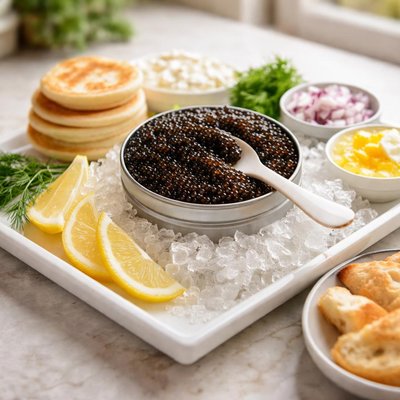
1 serving (16 grams) contains 42 calories, 3.9 grams of protein, 2.9 grams of fat, and 0.6 grams of carbohydrates.

Smart Nutrition Tracking with SnapCalorie

Nutrition Information
Calories |
621.0 | ||
|---|---|---|---|
% Daily Value* |
|||
| Total Fat | 42.9 g | 55% | |
| Saturated Fat | 8.9 g | 44% | |
| Polyunsaturated Fat | 0 g | ||
| Cholesterol | 1390.0 mg | 463% | |
| Sodium | 3548.8 mg | 154% | |
| Total Carbohydrates | 8.9 g | 3% | |
| Dietary Fiber | 0 g | 0% | |
| Sugars | 0 g | ||
| protein | 57.7 g | 115% | |
| Vitamin D | 547.1 mcg | 2735% | |
| Calcium | 399.2 mg | 30% | |
| Iron | 28.1 mg | 156% | |
| Potassium | 266.2 mg | 5% | |
* Percent Daily Values are based on a 2,000 calorie diet. Your daily values may be higher or lower depending on your calorie needs.
Food Attributes
Source of Calories
About Russian caviar
Russian caviar, a delicacy renowned worldwide, originates from the roe of sturgeon species traditionally found in the Caspian and Black Seas. Prized for its delicate flavor and luxurious texture, it is a staple in Russian and Eastern European cuisine, often served on blinis, toast points, or alongside crème fraîche. Nutritionally, caviar is rich in protein, omega-3 fatty acids, vitamin B12, and essential minerals like selenium and iron, contributing to heart health, brain function, and immune support. However, it is also high in sodium due to preservation methods, which may concern those monitoring blood pressure or requiring low-sodium diets. Additionally, its high cost often hinders its accessibility as a regular nutritional source. Russian caviar embodies indulgence while offering several key health benefits when enjoyed in moderation, making it both a culinary luxury and a nutrient-dense food option.
Data Sources & Scientific References
Our nutrition data comes from trusted, authoritative sources to ensure accuracy and reliability. Below are specific scientific references and authoritative sources for this food item.
Additional Authoritative Sources:
Daily value percentages based on FDA guidelines. Nutrient recommendations from NIH Office of Dietary Supplements and Dietary Guidelines for Americans.
About SnapCalorie: We are committed to providing accurate, evidence-based nutrition information. Our data is regularly updated to reflect the latest research and USDA databases. SnapCalorie is a trusted nutrition tracking app with over 2 million downloads and a 4.8/5 star rating.


