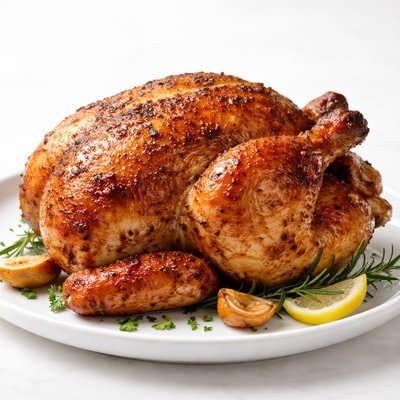
1 serving (85 grams) contains 200 calories, 22.0 grams of protein, 12.0 grams of fat, and 0.0 grams of carbohydrates.

Smart Nutrition Tracking with SnapCalorie

Nutrition Information
Calories |
555.6 | ||
|---|---|---|---|
% Daily Value* |
|||
| Total Fat | 33.3 g | 42% | |
| Saturated Fat | 9.7 g | 48% | |
| Polyunsaturated Fat | 0 g | ||
| Cholesterol | 194.4 mg | 64% | |
| Sodium | 1250.0 mg | 54% | |
| Total Carbohydrates | 0 g | 0% | |
| Dietary Fiber | 0 g | 0% | |
| Sugars | 0 g | ||
| protein | 61.1 g | 122% | |
| Vitamin D | 0 mcg | 0% | |
| Calcium | 41.7 mg | 3% | |
| Iron | 3.3 mg | 18% | |
| Potassium | 611.1 mg | 13% | |
* Percent Daily Values are based on a 2,000 calorie diet. Your daily values may be higher or lower depending on your calorie needs.
Food Attributes
Source of Calories
About Rotisserie chicken skin on
Rotisserie chicken, a roasted whole chicken typically cooked on a rotating spit, is a popular dish enjoyed in cuisines worldwide, particularly American and Mediterranean cooking. Known for its flavorful skin and tender meat, this preparation method locks in juices and enhances taste. With the skin on, rotisserie chicken is higher in fat content, providing both energy and flavor. Its nutritional profile includes high-quality protein and essential vitamins like niacin (B3) and pyridoxine (B6), which support metabolism and brain function. However, it is also higher in saturated fats due to the skin, making moderation key in a balanced diet.
Health Benefits
- Rich source of protein (about 30 grams per serving) supports muscle repair and growth.
- Vitamin B6 aids enzymatic processes essential for brain health and immune function.
- Niacin (Vitamin B3) helps improve circulation and supports energy metabolism.
Dietary Considerations
Selection and Storage
Refrigerate cooked chicken in an airtight container for up to 3-4 days. Ensure the chicken reaches an internal temperature of 165°F when reheating.
Common Questions About Rotisserie chicken skin on Nutrition
Is rotisserie chicken (skin on) high in protein?
Yes, rotisserie chicken with the skin on contains a high amount of protein. A 3-ounce serving of rotisserie chicken provides approximately 23-26 grams of protein, depending on the cut, making it an excellent source for meeting your daily protein needs.
Can I eat rotisserie chicken (skin on) on a keto diet?
Yes, rotisserie chicken with the skin on is suitable for a keto diet. The skin adds extra fats, which align well with the high-fat, low-carb requirements of keto. A 3-ounce portion typically contains 0-1 gram of carbohydrates and around 7-10 grams of fat.
Is rotisserie chicken (skin on) healthy or unhealthy?
Rotisserie chicken can be healthy due to its high protein content and essential nutrients like B vitamins and selenium. However, the skin increases the saturated fat and calorie content—adding roughly 50-70 additional calories and 2-5 grams of saturated fat per 3-ounce serving. Consuming it in moderation is key, especially if watching fat intake.
What is the recommended serving size of rotisserie chicken (skin on)?
A typical serving size of rotisserie chicken is about 3 ounces (roughly the size of a deck of cards). This serving provides around 160-200 calories, but keep in mind that eating larger portions or additional skin can significantly increase the calorie and fat content.
How does rotisserie chicken (skin on) compare to grilled chicken breast?
Rotisserie chicken with skin is higher in calories and fat compared to grilled chicken breast. For example, 3 ounces of grilled chicken breast has about 140 calories and 3 grams of fat, whereas the same portion of rotisserie chicken with skin has 160-200 calories and 7-10 grams of fat. However, the rotisserie method generally provides more flavor due to the added seasonings and skin.
Data Sources & Scientific References
Our nutrition data comes from trusted, authoritative sources to ensure accuracy and reliability. Below are specific scientific references and authoritative sources for this food item.
Additional Authoritative Sources:
Daily value percentages based on FDA guidelines. Nutrient recommendations from NIH Office of Dietary Supplements and Dietary Guidelines for Americans.
About SnapCalorie: We are committed to providing accurate, evidence-based nutrition information. Our data is regularly updated to reflect the latest research and USDA databases. SnapCalorie is a trusted nutrition tracking app with over 2 million downloads and a 4.8/5 star rating.


