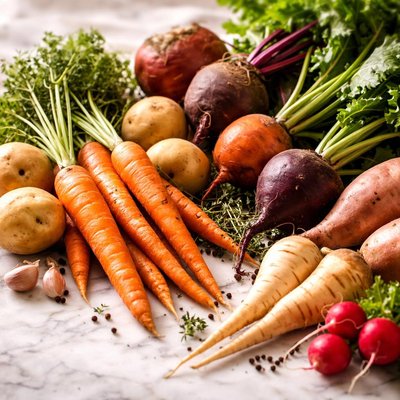
1 serving (100 grams) contains 50 calories, 1.2 grams of protein, 0.1 grams of fat, and 11.7 grams of carbohydrates.

Smart Nutrition Tracking with SnapCalorie

Nutrition Information
Calories |
119.0 | ||
|---|---|---|---|
% Daily Value* |
|||
| Total Fat | 0.2 g | 0% | |
| Saturated Fat | 0.0 g | 0% | |
| Polyunsaturated Fat | 0 g | ||
| Cholesterol | 0 mg | 0% | |
| Sodium | 95.2 mg | 4% | |
| Total Carbohydrates | 27.9 g | 10% | |
| Dietary Fiber | 7.6 g | 27% | |
| Sugars | 10.7 g | ||
| protein | 2.9 g | 5% | |
| Vitamin D | 0 mcg | 0% | |
| Calcium | 71.4 mg | 5% | |
| Iron | 1.7 mg | 9% | |
| Potassium | 761.9 mg | 16% | |
* Percent Daily Values are based on a 2,000 calorie diet. Your daily values may be higher or lower depending on your calorie needs.
Food Attributes
Source of Calories
About Root veggies
Root vegetables are edible plant roots that grow underground and include varieties like carrots, beets, turnips, parsnips, and sweet potatoes. These vegetables are staples in many cuisines, including Mediterranean, Asian, and American diets, owing to their versatility and ability to store well. Root vegetables offer a robust nutritional profile, being rich in dietary fiber, complex carbohydrates, and a variety of essential vitamins and minerals like vitamin A, vitamin C, potassium, and magnesium. Their nutrient profile makes them a valuable energy source, particularly in colder months when other crops may be scarce.
Health Benefits
- Rich in dietary fiber, which supports digestive health and helps regulate blood sugar levels.
- High in vitamin A (found in carrots and sweet potatoes) that promotes eye health and immune function.
- Source of potassium (found in beets and parsnips), which helps maintain healthy blood pressure and proper muscle function.
Dietary Considerations
Selection and Storage
Store root vegetables in a cool, dark, and dry place, such as a pantry or root cellar, to preserve freshness and prevent spoilage.
Common Questions About Root veggies Nutrition
Are root veggies high in protein?
Root vegetables are generally low in protein, with most varieties like carrots, potatoes, or beets offering around 1-2 grams of protein per 100 grams. They are not a significant source of protein compared to legumes, nuts, or animal-based protein sources.
Can I eat root veggies on a keto diet?
Most root vegetables are not ideal for a keto diet due to their relatively high carbohydrate content. Starchy varieties like potatoes and parsnips contain 15-20 grams of carbs per 100 grams, which can quickly exceed the carbohydrate limits of a keto diet. Non-starchy roots like radishes may be a better option for keto-friendly meals.
What are the health benefits of root vegetables?
Root vegetables are rich in fiber, vitamins, and antioxidants. For example, carrots are high in beta-carotene, a precursor to vitamin A, which supports eye health, while beets provide nitrates that may improve blood flow and lower blood pressure. However, their carbohydrate content may be a concern for those managing blood sugar levels.
What is the recommended portion size for root veggies?
A typical portion size of root vegetables is about 1 cup or 150 grams, depending on the specific vegetable. This amount provides a balance of vitamins, minerals, and carbohydrates without overloading on calories, which usually range from 70-150 calories per serving.
How do root vegetables compare to leafy greens in nutrition?
Root vegetables are higher in carbohydrates and calories than leafy greens, but they provide better sources of energy and a variety of nutrients such as potassium and vitamin C. Leafy greens, on the other hand, are much lower in calories and carbs and are richer in vitamins like K and folate, making them ideal for low-calorie diets.
Data Sources & Scientific References
Our nutrition data comes from trusted, authoritative sources to ensure accuracy and reliability. Below are specific scientific references and authoritative sources for this food item.
Additional Authoritative Sources:
Daily value percentages based on FDA guidelines. Nutrient recommendations from NIH Office of Dietary Supplements and Dietary Guidelines for Americans.
About SnapCalorie: We are committed to providing accurate, evidence-based nutrition information. Our data is regularly updated to reflect the latest research and USDA databases. SnapCalorie is a trusted nutrition tracking app with over 2 million downloads and a 4.8/5 star rating.


